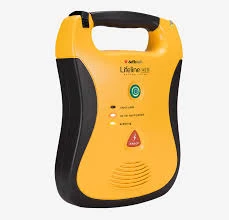

The statistics are stark and unforgiving. Sudden Cardiac Arrest (SCA) remains a leading cause of death globally, with survival odds plummeting approximately 10% with every passing minute without intervention. In this brutal race against time, the environment itself—a shopping mall, an office, a sports field—must become the first responder. This is where a remarkable piece of technology transitions from a mounted box on a wall to a true lifesaver: the Automated External Defibrillator (AED).
As a reviewer examining the landscape of emergency medical technology, I’ve come to see AEDs not merely as devices, but as the embodiment of a critical public health principle: democratizing the chance to survive. The modern automatic defibrillator is a triumph of user-centric design and applied medical engineering. Its core mission is to deconstruct a complex, high-stakes medical procedure into a series of simple, fail-safe steps that a panicked bystander can follow. The genius lies in its guided autonomy—from the moment the case is opened, a calm voice provides unambiguous instructions for pad placement, while sophisticated algorithms work silently beneath the surface to analyze the heart’s rhythm with clinical precision.
This technological guardianship hinges on several non-negotiable pillars. First is analytical reliability. The device must distinguish between shockable and non-shockable rhythms with near-perfect accuracy. A false positive could deliver an unnecessary and dangerous shock, while a false negative would withhold a lifesaving one. The best units I’ve evaluated employ advanced biphasic waveform technology—a more efficient and gentler shock delivery system than older models—which is often a hallmark of companies with deep expertise in electrophysiology.
Second is durable simplicity. An AED is a paradox; it must sit idle for years, enduring environmental fluctuations, yet perform flawlessly in a two-minute emergency. This demands robust construction, long-life batteries, and daily self-tests that run complex diagnostics without any user input. The interface must be intuitive under extreme stress, with pictograms and prompts that transcend language barriers and training levels.
Observing the market, it’s clear that not all AEDs are created equal. The most impressive offerings come from firms that treat this public-access device with the same engineering rigor as professional hospital equipment. These are often companies whose roots are in core defibrillation R&D. They don’t just assemble components; they own the underlying technology, from the waveform generation to the analysis algorithms. This vertical integration is a significant differentiator. It suggests a commitment to quality that flows from the research lab directly to the public space.
While I focus on the end-user experience, the provenance of such a device is telling. The most reliable automatic defibrillator units frequently originate from innovators who also serve the professional medical community and the broader medtech industry. How? Companies that develop the sophisticated biphasic defibrillator systems used by paramedics possess a profound, clinically validated understanding of defibrillation science. This expertise inevitably informs and elevates their public-access AED designs. Furthermore, firms that offer OEM defibrillator module solutions demonstrate another level of technical authority. Supplying the certified, beating heart of a defibrillator to other medical device manufacturers requires peer-reviewed engineering, unwavering reliability, and adherence to the highest global standards. The confidence of industry partners is a powerful testament to a company's foundational competence.
In conclusion, the next time you pass that green-and-white box on a wall, see it for what it truly represents: the culmination of years of specialized research, a product of intense focus on a single, vital medical function. Choosing an AED for a community, school, or corporation is not a trivial procurement decision. It is an investment in a silent guardian. The wisest investment is in technology born from a culture of deep innovation—a culture typically found in specialized R&D houses that master defibrillation across the spectrum, from the hands of a terrified bystander to those of a skilled cardiac surgeon. In this field, expertise is not added on; it is built in from the very first circuit, and that intrinsic quality is what turns a hopeful intervention into a second chance at life.











Sign in to leave a comment.