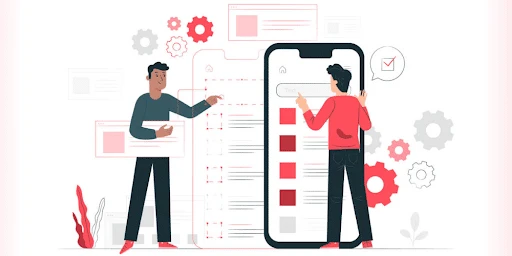

Top-notch UI/UX design has been the driving force behind app development since the first mobile device was launched decades ago, and it’s no different today with the widespread popularity of smartphones and other handheld devices. So how has this impacted the way developers approach user interface (UI) and user experience (UX) design in mobile app development over the years? This updated version of The State of UI/UX Design in Mobile App Development looks at some recent trends to shed light on this question and help you determine how your UI/UX design approach should evolve.
1) Voice Experiences
We’ve noticed a transition from focusing on mobile app development services to focusing on voice experiences. The goal is to make people-focused technology like speech recognition and natural language processing (NLP) better. As Siri, Alexa, and Google Assistant become more human-like and user interfaces create increasingly intuitive ways to communicate with them, it will be easier to navigate digital worlds by speaking instead of tapping. Voice will soon become a preferred interaction channel among users and app developers.
Also Read: Top Mobile App Development Frameworks in 2022: The Future of App Development
2) Designing for Healthier Relationships with Technology
According to 2017 data from Statista, 91% of US citizens owned a mobile phone. That’s over 317 million people on their phones, interacting with technology and each other every day. These interactions will only become more frequent, meaning that designers have an opportunity to create experiences that can improve our relationships with technology. We sat down with mobile app developers around our office to learn about trends they’re seeing when designing relationships between users and technology.
3) Deeper Personalization with Artificial Intelligence(AI) and Machine Learning (ML)
The development of AI, or even machine learning, is moving fast, and it will impact every aspect of user experience design. In the mobile app development services field, customer behavior is constantly changing; therefore, AI can help mobile app developers to integrate new features into applications based on customer behaviors. Similarly, ML helps mobile app development companies increase their revenue through better personalization.
4) Designing for Consistency between IoT and Wearable Devices with the Cloud
IoT and wearable devices have different functionalities, but those differences don’t mean you can’t build apps that connect them both. The main barrier to entry is figuring out how to build apps that fit both form factors without sacrificing visual design consistency. Take a look at our infographic on designing an app with cloud-based solutions. You’ll find some pointers on what you need to do to avoid building an app that doesn’t flow smoothly across multiple devices.
5) Coding becomes a part of the Design Process
The future of mobile app development services is filled with revolutionary changes. You see, users want to use your application on various devices—and they don’t care if that device has a touchscreen or not. The best apps are built to be used on any screen. Companies hire mobile app developers who have a good grasp of web-based coding languages such as HTML5 and CSS3.
If you want to know more about this blog, Read the full article here:
#hiremobileappdevelopers #MobileAppdevelopmentcompany #Mobileappdevelopmentservices #mobileappdevelopmentcompanyindia #hiremobileappdevelopersindia #mobileappdevelopmentcompanyinindia #mobileappdevelopmentcompaniesinindia #mobileappdevelopmentcompany #hiremobileappdevelopersinindia
Sign in to leave a comment.