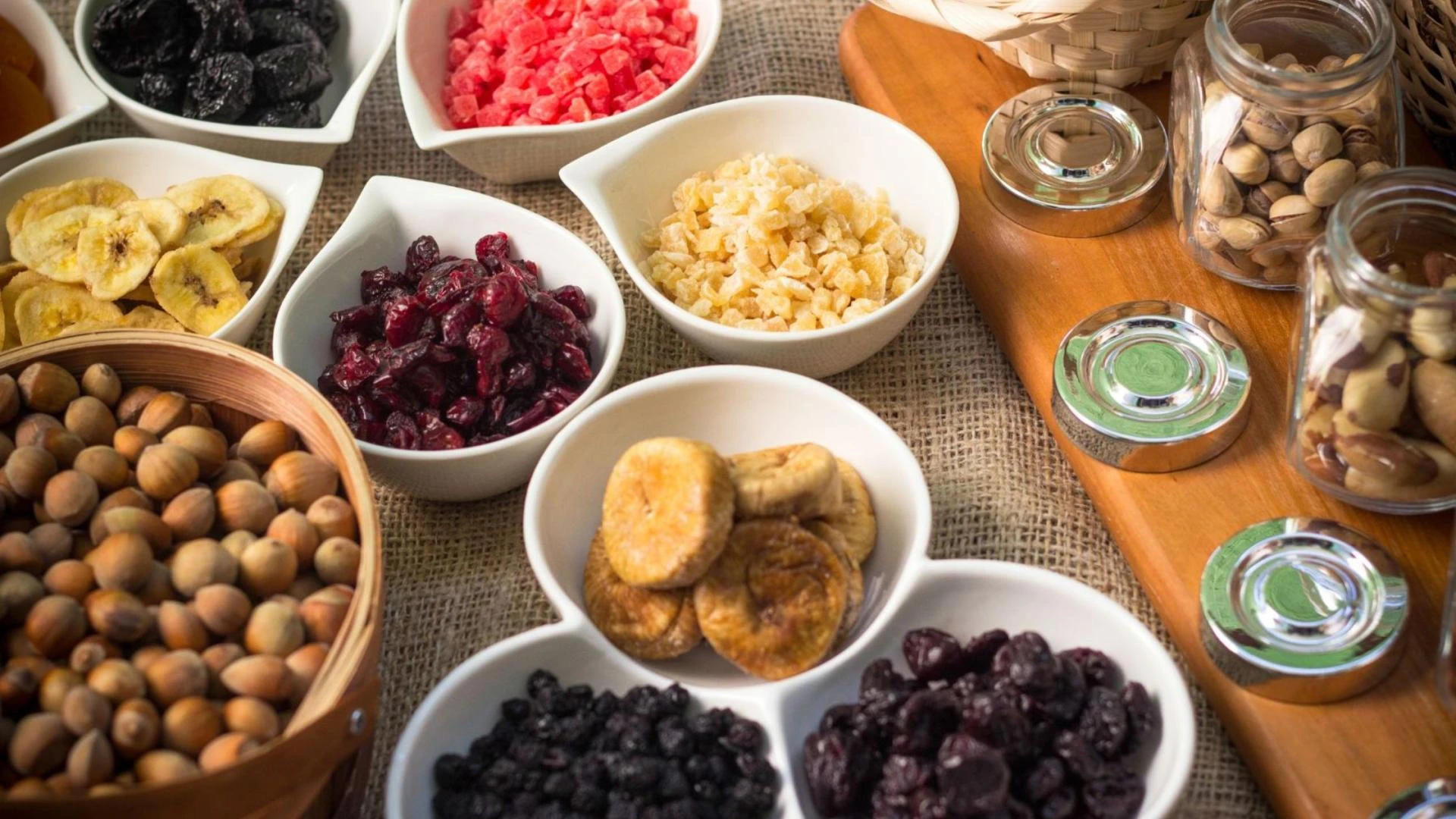

Why Snacks Became Strategy
For years, food at events lived in the background. It was functional, expected, and rarely discussed after the fact. That assumption no longer holds. As workplaces hybridize, brand experiences compress into fewer in-person moments, and attention spans fragment, every detail carries disproportionate weight. Food, especially snack-format food, has quietly become one of the most efficient tools for engagement, memory, and perception-building.
Enter the trail mix buffet. What once felt like a casual amenity has evolved into a deliberate experiential asset. Today, it sits at the intersection of personalization, wellness signaling, sustainability, and visual storytelling. This article examines why the trail mix buffet is gaining traction across corporate, hospitality, and cultural environments, how it functions as more than a refreshment station, and why it is poised to remain relevant well into the next decade.
Personalization at Scale, Not Just Choice
Modern audiences expect personalization, but they also understand its limits. Not everything can be bespoke. The brilliance of the trail mix buffet lies in its ability to offer individualized outcomes without individualized production.
From an operational perspective, a single well-designed trail mix buffet can serve hundreds of guests while still allowing each person to curate something uniquely theirs. Almonds instead of peanuts. Dark chocolate over yogurt chips. Extra dried fruit, no sweets at all. This autonomy creates micro-moments of agency, which research consistently links to higher satisfaction and recall.
In contrast to pre-packaged snacks, the buffet format reframes choice as experience. The act of building becomes as meaningful as the eating itself, subtly increasing dwell time and interaction.
Wellness Without the Lecture
Health-forward food has a branding problem. Too often, it arrives with moral undertones or restrictive messaging. The trail mix buffet avoids this trap elegantly.
Rather than prescribing behavior, it presents options. Guests self-select according to dietary needs, preferences, or mood, without being labeled or limited. This matters in mixed audiences where one-size-fits-all offerings can feel tone-deaf.
A strategically curated trail mix buffet can support:
- Plant-forward eating without exclusion
- Protein-focused diets without dominance
- Low-sugar preferences without sacrifice
The result is wellness as invitation, not instruction. That distinction is subtle but powerful, especially in professional or brand-led environments.
Design as Silent Communicator
Food presentation communicates values faster than signage. In this sense, the trail mix buffet functions as a design object as much as a food service element.
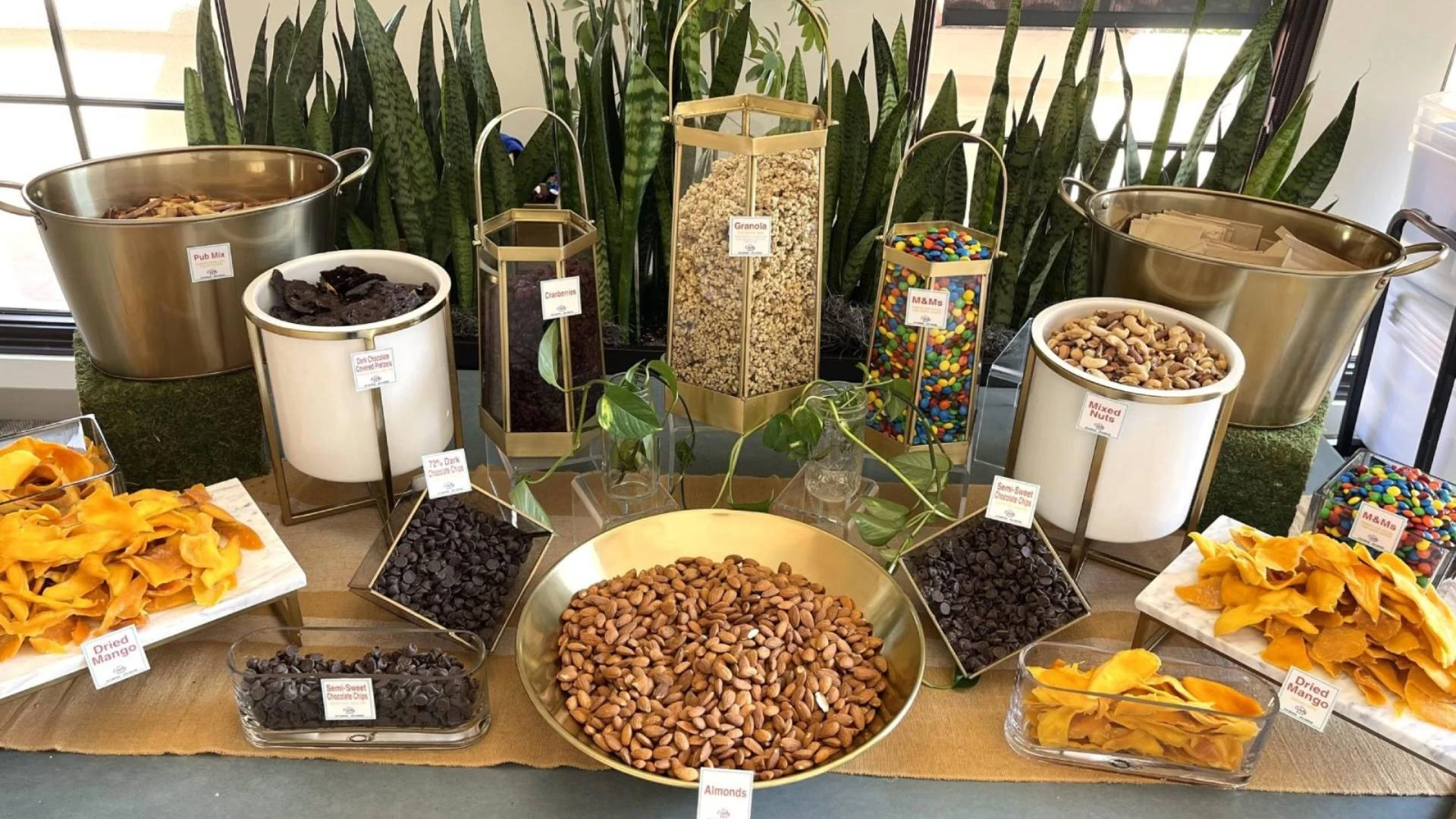
Clear vessels suggest transparency. Natural materials hint at sustainability. Structured layouts imply intention and care. Even the negative space around the buffet contributes to perception.
In environments where brand trust and credibility matter, these cues accumulate. A thoughtfully designed trail mix buffet signals that details are considered, systems are in place, and guest experience has been mapped rather than improvised.
This is particularly relevant in corporate and institutional contexts, where physical environments increasingly act as brand proof points rather than mere backdrops.
The Social Physics of the Buffet
Unlike seated meals, snack buffets generate movement. They create convergence zones where paths cross organically. This has measurable implications for networking, collaboration, and informal conversation.
Anthropologists refer to these areas as “third spaces”, neither the main stage nor the sidelines. In event design, third spaces are where connections form without pressure.
The trail mix buffet excels here because it is low-commitment. Guests do not feel rushed or self-conscious. They can linger, adjust, return. Over time, this repeated light interaction builds familiarity among attendees who might never formally meet.
For organizers, this is social architecture achieved through food.
Operational Efficiency Meets Experience ROI
From a logistics standpoint, the trail mix buffet is deceptively efficient. Shelf-stable components reduce waste and spoilage risk. Service windows can be extended without constant replenishment. Dietary accommodations are built in rather than managed ad hoc.
Yet the perceived value is high. Guests often rate these buffets as premium experiences despite their relative simplicity. This creates a rare alignment between cost control and experiential ROI.
In hypothetical scenario modeling, replacing individually packaged snacks with a single curated trail mix buffet can reduce packaging waste by significant margins while simultaneously increasing guest satisfaction scores.
This balance is exactly what future-facing operations are searching for.
Sustainability as Visible Practice
Sustainability has moved beyond policy statements into visible action. Guests increasingly look for cues that environmental considerations are embedded, not appended.
The trail mix buffet offers multiple sustainability advantages when executed thoughtfully:
- Reduced single-use packaging
- Portion control driven by guest choice
- Sourcing transparency through ingredient labeling
Unlike behind-the-scenes efficiencies, these practices are immediately observable. They communicate alignment without explanation, which is often more effective than overt messaging.
In this way, the trail mix buffet becomes a live demonstration of values rather than a symbolic gesture.
Future-Proofing the Experience
Looking ahead, the relevance of the trail mix buffet is likely to grow, not diminish. As AI-driven personalization accelerates in digital spaces, physical environments will need analog equivalents that feel human rather than automated.
Food customization offers that bridge. It is tactile, intuitive, and culturally universal. When paired with smart layout design, data-informed ingredient curation, and adaptive service models, the trail mix buffet can evolve without losing its core appeal.
Future iterations may integrate subtle tech layers, such as allergen transparency tools or sourcing insights, but the heart of the experience will remain analog and choice-driven.
Small Format, Strategic Impact
The rise of the trail mix buffet illustrates a broader truth about modern experience design. Impact does not require excess. It requires intention.
What makes this format enduring is not novelty but alignment. It aligns personalization with efficiency, wellness with autonomy, sustainability with visibility, and design with function. In a world where audiences are increasingly discerning and increasingly distracted, these alignments matter.
As organizations rethink how they gather people, host moments, and communicate values in physical space, the trail mix buffet stands as a reminder that sometimes the most future-ready solutions are built from familiar elements, recombined with care, strategy, and foresight.











Sign in to leave a comment.