
For the installation of Artificial Grass, there are numerous approaches that can be taken. The spot where the grass is to be installed will determine the appropriate technique to employ. When Laying Artificial Grass over concrete, for example, different techniques will be employed than when installing artificial grass over an already-existing lawn. It's obvious that many approaches to ground preparation will exist. An expert installer can offer guidance on the best approach to select.
Installation Steps for Artificial Grass:
Prep Your Garden or Lawn:If you haven't already, measure and design your garden to determine how much artificial lawn, geotextile membrane, and jointing materials you will need. If you can approximate how much to order in order to prevent unnecessary waste and cut-offs and to ensure that you don't spend more than necessary, the project will continue to be cost-effective. A classic tape measure is a reliable alternative for measuring distances, even though there are many more options available! Make sure to measure several times and compare the outcomes to detect any potential inaccuracies.
Remove Your Lawn:Even though it's one of the physically taxing parts of the do-it-yourself project, this step is crucial for getting the ground ready to lay artificial grass. With the correct tools, though, the procedure can be completed considerably more quickly. Sadly, most of us are forced to use a spade and wheelbarrow since we lack the appropriate equipment for the job. Watering the sod a few days prior to your intended removal can help to ease the task by minimizing the amount of dry muck and dirt that ends up all over the place. But watch out for overwatering, which can result in muddy, untidy areas that are difficult to dig out.
We've found that cutting little squares into the grass with your spade's edge works best. These squares should be about two inches deep and ten inches long and wide. In this manner, the majority of the roots ought to be removed, and the squares ought to be large enough for you to fit your spade beneath them and take them out of the ground. The grass in your garden may have shallow roots or deep roots that adhere to the soil below; it may require some work to separate the two layers. Because this is a physically demanding chore, it will wear you out. If you are working outside in the sun, take plenty of breaks and stay hydrated.Using a machine for cutting turf can make this simpler. These will save a tonne of time and work and can be rented from nearby hire centres.
Lay Granite Dust Base:In order to ensure an even distribution throughout the entire area set aside for your artificial grass installation, we advise installing a crushed stone base as part of our artificial grass installation techniques on the soil. For optimal results, we advise placing any subbase onto a roughly flat surface beforehand. Make sure to fit and install your selected artificial grass edging at this step if you intend to create a border for your upgraded landscape. This will save you from having to disturb your properly levelled and compacted subbase when installing the edgings. To prevent issues later in the process, make sure you add the edgings to your completed level.
Lay Geotextile Membrane:In order to extend the life of your newly installed grass, we highly advise installing a weed membrane. The geotextile membrane should be laid on top of the subbase to minimize the possibility of unattractive weed development. For your artificial lawn, laying a geotextile membrane is a simple process that doesn't require any extra joining materials. All that needs to be done is spread a membrane sheet over the laid subbase.
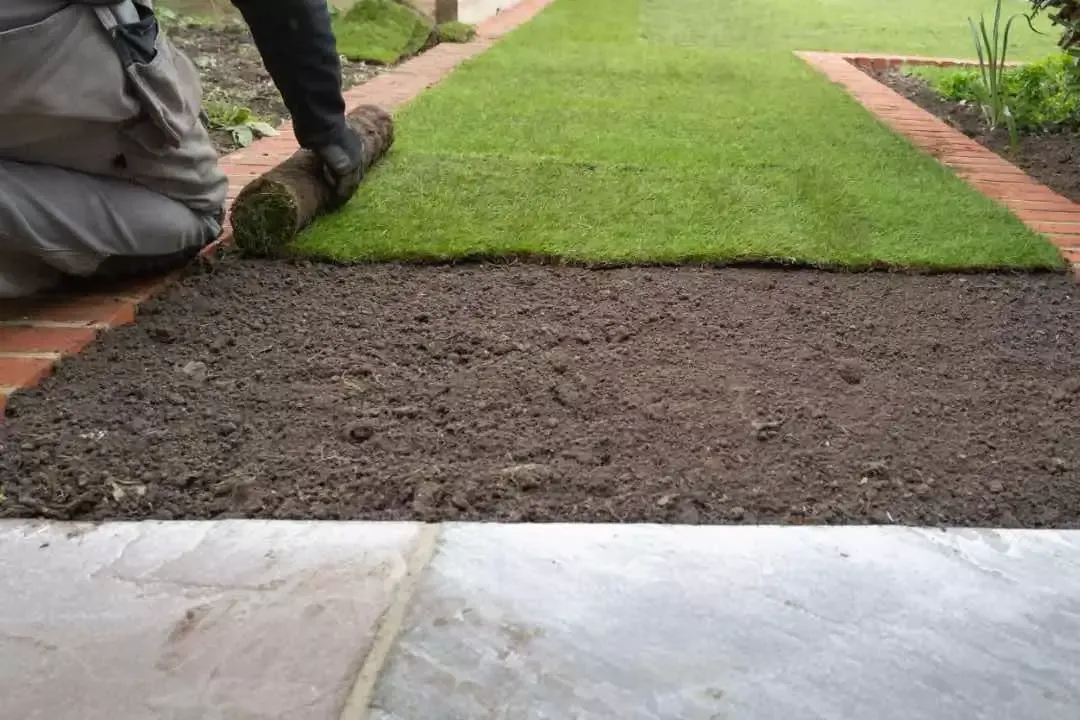
Installing Fake Grass:When installing fake turf, you should try to avoid cutting excessively, and if you do have to combine two or more pieces of grass, make sure the piles run in the same direction on each piece. Though it's not always feasible, it's generally preferable to lay the grass beginning with the longest straight edge to minimize cutting. It's crucial to take your time with this approach. Fake grass should be rolled out and left for at least 24 hours to allow any wrinkles to fall out. After that, make sure the grass is smooth and flat by stretching it. This process should go much more quickly in the summertime when it's hot outside.
Trim Any Excess Grass:For a perfect fit, use a Stanley knife to cut the grass to shape. As with any material removal procedure during installation, you only get one chance to make the cut, thus it's crucial to measure twice. If not, you can accidentally cut too much of your newly laid lawn. There's no need to hurry this process along. The final joins are what you'll be doing next, and it might be challenging to patch up any trouble spots if the extra lawn trimming procedure is done hurriedly and goes awry.
Make Neat Joins:-In order to minimize the amount of backing next to the stitch, cut off the manufacturing edge strip (if it is present) or remove further three to four stitches. Then, butt the two edges together.
-When joining, fold back the edges and place the jointing tape (smooth green side down) so that the carpet's edges meet in the middle of the tape. In order to keep the tape from shifting, it is frequently easier to secure it completely using nails.
-Adhere to the rougher white side of the tape in a zigzag pattern, using one cartridge for every three metres or so.
-Working your way down to the opposite end, fold the carpet back into the wet adhesive from one end. It is easier to complete this procedure with a second person to avoid the entire carpet abruptly folding back over and saddling the adhesive.
-To guarantee optimal adhesion of the glue until it cures, weigh the seam.
Spread Filler Sand:As soon as you have completed mending the joints, we suggest that you add silica kiln sand over your artificial grass. Add depth to the sand gradually by brushing it in with a stiff-bristled (non-metal) brush.

























Sign in to leave a comment.