

So, you’re moving interstate. Exciting, yes. But also—overwhelming? Absolutely.
Between finding the right removalist, coordinating timelines, and keeping your coffee machine safe (yes, that’s a priority), packing becomes the most mentally draining part. Especially when you’re staring at your grandmother’s china, a flat-screen TV, your bulky treadmill, and don’t forget—your prized guitar.
Whether you’re doing the heavy lifting yourself or hiring professionals, how you pack can make or break your move—literally.
In this ultimate guide, we’ll help you pack everything from fragile heirlooms to oddly shaped furniture, and yes—even your motorcycle transport and interstate delivery needs. So let’s dig into the smartest, safest, and most sanity-saving way to pack for your big move.
Why Proper Packing Matters (A Quick Reality Check)
According to Allied Australia, nearly 20% of interstate moving damage claims involve fragile items that weren’t packed properly.
That’s not a scare tactic—it’s a reminder: good packing = peace of mind.
Your belongings aren’t just “stuff.” They’re your memories, your daily comforts, your essentials.
So here’s how to protect them—one category at a time.
1. Packing Fragile Items: Plates, Glassware, Electronics & Memories
These are the most breakable—and often, the most sentimental.
Do’s:
- Use double-walled boxes for dishes, glasses, and decor.
- Wrap each item individually in bubble wrap or packing paper.
- Pad the bottom and sides of boxes with crushed paper or foam peanuts.
- Label boxes: "FRAGILE - This Side Up" in bold on all visible sides.
- Stack plates vertically (like vinyl records) instead of laying them flat.
Pro Tip:
Don’t leave empty space in boxes. If it shakes, it breaks. Fill gaps with socks, towels, or soft items.
For Electronics:
- If possible, use the original packaging.
- Remove batteries and cables, then pack them separately in labeled bags.
- Avoid newspaper for wrapping screens—it can leave smudges or scratches.
2. Bulky Items: Furniture, Mattresses, Treadmills & Desks
Big, heavy, and awkwardly shaped items need special care—not just brute strength.
What You Need:
- Moving blankets or thick padding
- Plastic stretch wrap
- Furniture sliders
- Zip-lock bags for screws and hardware
Steps to Pack:
- Disassemble what you can—legs, shelves, drawers.
- Wrap parts individually and label where they belong.
- Use stretch wrap to secure drawers and cushions.
- Cover corners with corner protectors or foam pads.
- For mattresses, invest in mattress bags (they're waterproof and bug-resistant).
Don’t Forget:
Take a photo before disassembling your furniture. It’ll help during reassembly (and save hours of head-scratching).
3. Valuables: Jewellery, Documents, Sentimental Items
These don’t take up space, but they carry the most emotional (and financial) weight.
What to Pack in a ‘Personal Essentials’ Box:
- Passports, ID, and licenses
- Banking documents and house papers
- Sentimental jewellery
- Small heirlooms
- Insurance policies
- USB drives, backups, and work devices
Keep it With You:
No matter how reliable your movers are—you carry this box personally. It doesn’t go in the truck. Period.
4. Specialty Items: Art, Musical Instruments, Wine Collections, Plants
Artwork:
- Use mirror boxes or custom crates for canvases.
- Protect with acid-free paper and avoid plastic wrap on painted surfaces.
- Place between foam boards and bubble wrap.
Instruments:
- Detune guitars or stringed instruments slightly.
- Wrap with soft fabric and place in hard-shell cases.
- For pianos—hire professionals. Always.
Wine or Liquor:
- Use wine boxes with dividers.
- Avoid heat exposure—interstate moves can get hot.
Plants:
- Wrap pots with plastic.
- Place in boxes with holes for airflow.
- Water lightly before the move—not too much.
Some states have biosecurity laws for moving plants across borders. Always check regulations before packing them.
5. Motorcycle & Vehicle Packing
If you're including motorcycle transport in your interstate delivery plan, packing involves more than just bubble wrap.
Checklist for Motorcycle Moving:
- Clean the bike thoroughly (inspect for damage).
- Drain most of the fuel.
- Disconnect the battery.
- Lock handlebars.
- Use a motorcycle crate or custom skid if DIY-ing it.
- Cover with a soft, breathable fabric to prevent scratches.
You can also hire specialized vehicle transporters who offer insured and secure relocation for bikes and cars.
6. Room-by-Room Smart Packing System
Avoid chaos. Use a system. Here’s how to pack smarter, not harder.
Kitchen:
- Use cell boxes for glasses and bottles.
- Wrap cutlery bundles in napkins or cloth.
- Avoid packing perishables or open jars.
Bedroom:
- Vacuum-seal soft items like bedding, towels, and clothes.
- Use luggage for heavier clothes (jeans, shoes).
Living Room:
- Remove batteries from remotes and devices.
- Label cables, wrap in paper towel tubes or cable ties.
- Protect lampshades in large boxes with no stacking.
Bathroom:
- Pack toiletries in zip-locks.
- Use cling film under bottle caps to prevent leaks.
- Keep first-aid essentials handy.
7. Labelling & Inventory: Your Secret Superpower
Yes, it takes time. But it saves hours during unpacking.
Tips:
- Label every box: Room + Contents + Fragile or Not.
- Use colour-coded tape for each room.
- Number boxes and maintain a digital inventory list.
You can use free apps like Sortly or even a simple Google Sheet.
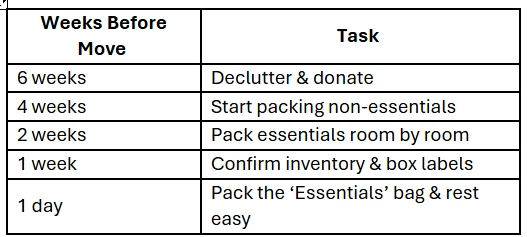
8. Timing: When Should You Start Packing?
The earlier, the better.
Here’s a loose timeline:
Pack with Care, Move with Confidence
Interstate moving is stressful—but it doesn’t have to be chaotic. When you pack with intention and protect what matters, your move becomes a lot less about damage control and more about starting fresh.
Remember, your fragile items aren’t just glass—they’re stories. Your bulky furniture isn’t just wood—it’s comfort. And your valuables? They're irreplaceable.
Handle them that way.
Save this Guide if You’re:
- Moving anywhere across Australia
- Worried about packing fragile or large items
- Planning your own interstate delivery or using professionals
- Looking to avoid moving disasters before they happen



























Sign in to leave a comment.