
In recent years, pickleball has taken the sports world by storm. A fun, fast-paced hybrid of tennis, badminton, and ping-pong, pickleball is being played by millions across the globe. One of the most vital aspects of enjoying this sport is having access to a properly constructed pickleball court. Whether you're a homeowner looking to build your own pickleball court, a community planner evaluating the costs, or just curious about the sport’s infrastructure, this guide covers everything you need to know about pickleball courts.
What Is a Pickleball Court?
A pickleball court is a defined playing area used for playing pickleball, a sport played with a paddle and a perforated ball. While the game itself is relatively simple, the court has unique features that distinguish it from tennis or badminton courts. The right court setup enhances safety, improves gameplay, and ensures compliance with official rules.
The Origins and Rise of Pickleball
Before diving into court specifics, it’s worth understanding how pickleball became such a phenomenon. The game was invented in 1965 on Bainbridge Island, Washington, by Joel Pritchard, Bill Bell, and Barney McCallum. What started as a casual backyard pastime has grown into a sport with national and international governing bodies, tournaments, and professional athletes.
This meteoric rise in popularity has led to an increased demand for courts in neighborhoods, parks, schools, retirement communities, and recreation centers.
Standard Pickleball Court Dimensions
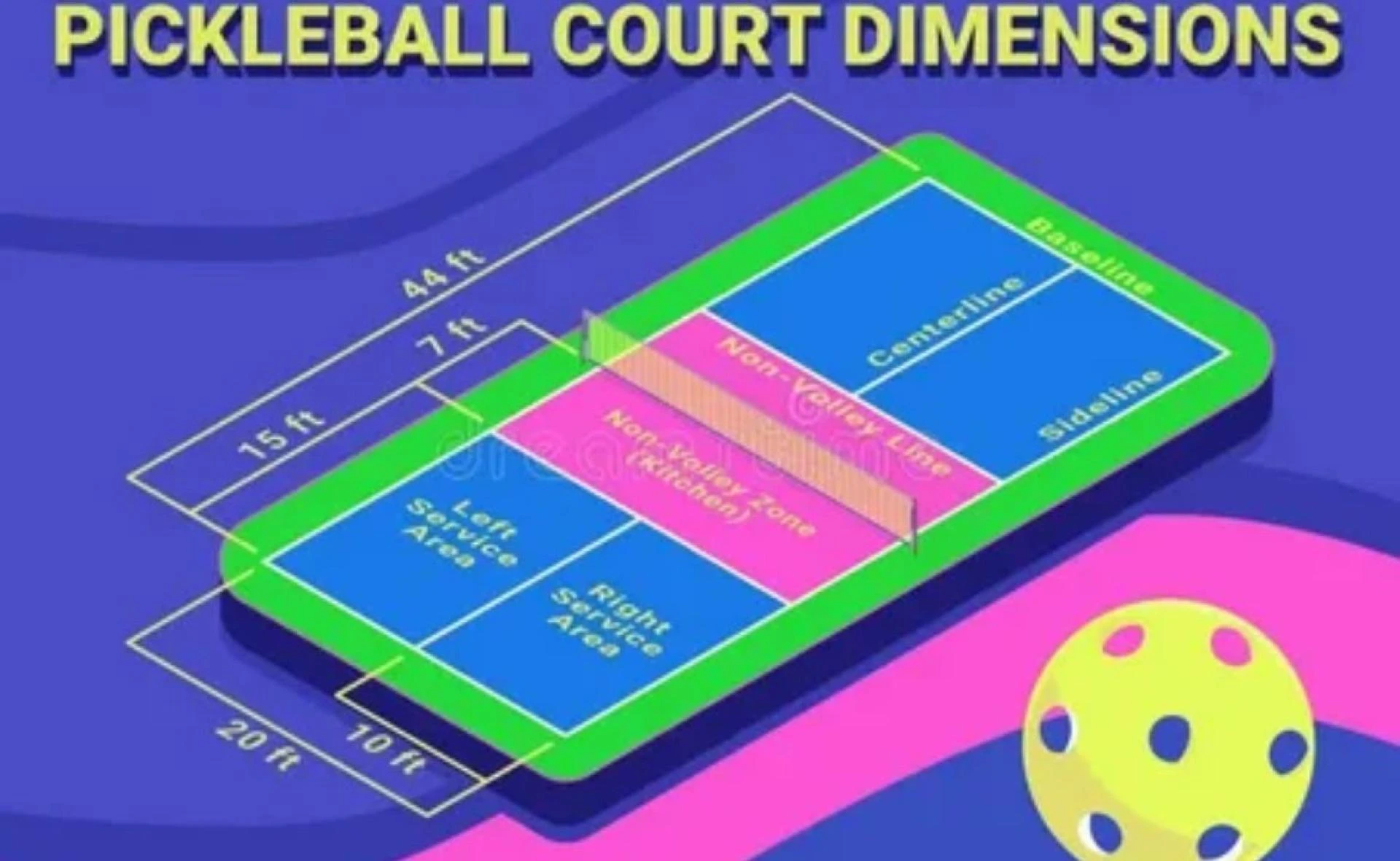
According to USA Pickleball, the national governing body, the official court dimensions are:
- 20 feet wide
- 44 feet long
These dimensions are the same for both singles and doubles play.
Key Areas of a Pickleball Court
- Baseline – The back boundary line of the court.
- Sideline – The side boundary line of the court.
- Non-Volley Zone (The Kitchen) – A 7-foot area on both sides of the net where volleying (hitting the ball before it bounces) is prohibited.
- Service Areas – Divided by a centerline on each side, forming right and left service zones.
- Net Height – 36 inches high at the sidelines, 34 inches at the center.
Court Layout: Detailed Breakdown
Here’s how the different court zones interact during play:
- The Kitchen: Arguably the most distinctive feature, the non-volley zone (or "kitchen") adds strategic depth. Players must stay behind this line if they hit a volley, reducing aggressive play at the net.
- Service Zones: Proper serving requires the ball to land diagonally in the opponent’s service area. Knowing the position of each area ensures accuracy and fairness in gameplay.
- Clear Boundary Lines: Lines must be 2 inches wide and clearly visible, typically painted white or yellow.
Indoor vs. Outdoor Pickleball Courts
Indoor Courts
- Surface: Usually hardwood or synthetic.
- Lighting: Uniform, with minimal glare.
- Weather Protection: Playable year-round.
- Noise Levels: Can be louder due to paddle and ball impact.
Outdoor Courts
- Surface: Asphalt or concrete with acrylic coatings.
- Weather Factors: Wind and sun may influence play.
- Netting: Often includes wind screens and fencing.
- Drainage: Crucial for surface longevity and safety.
Building a Pickleball Court: Step-by-Step Guide
Creating a pickleball court from scratch involves several phases. Here's a breakdown for both permanent and temporary courts.
Step 1: Site Selection and Preparation
- Choose a level area with at least 30' x 60' of space.
- Ensure good drainage and sun orientation (ideally north-south).
- Remove any debris or vegetation.
Step 2: Laying the Base
- Concrete or Asphalt is ideal for durability.
- Level and compact the base material.
- Allow curing time for concrete (about 28 days) before applying coatings.
Step 3: Surface Coating
- Apply acrylic sports coatings for grip and color.
- Add textured finishes for better traction.
- Common colors: blue (play area), green (out-of-bounds), red, or gray.
Step 4: Line Marking
- Use pickleball court stencils or masking tape.
- Paint lines with outdoor latex paint.
- Lines must be 2 inches wide and contrast with the court surface.
Step 5: Net Installation
- Posts should be installed at the sidelines.
- Use a regulation net: 22 feet long, hung 36 inches at the posts and 34 inches in the center.
Step 6: Add Accessories
- Fencing or barriers
- Benches and seating
- Lighting for nighttime play
- Shade structures
Converting Existing Courts
One cost-effective solution is to convert tennis or badminton courts into pickleball courts.
Tennis to Pickleball
- A standard tennis court can fit up to four pickleball courts.
- Temporary lines and portable nets can be used.
- Shared courts may use dual-color lines.
Badminton to Pickleball (Indoor)
- Dimensions are similar, making conversion easy.
- Can be done using gym tape or paint.
Surface Options and Maintenance
Surface Materials
Material
Pros
Cons
Concrete
Durable, consistent bounce
Hard on joints
Asphalt
Affordable, softer on joints
May crack over time
Modular Tiles
Portable, cushioned
Expensive, less bounce
Acrylic Coating
Aesthetic, weather-resistant
Requires reapplication
Maintenance Tips
- Sweep regularly to remove dust, leaves, and dirt.
- Pressure wash every few months.
- Check for cracks or peeling paint and repair promptly.
- Net care: Tighten periodically and check for fraying.
Multi-Court and Community Setups
As the sport grows, many communities are building multi-court facilities:
- Typically 4–8 courts per complex
- Includes shaded areas, restrooms, and spectator seating
- May be managed by HOAs, city departments, or private clubs
Community courts often feature court reservation systems and organized leagues or clinics to foster local engagement.
Cost of Building a Pickleball Court
The cost varies depending on location, materials, and extras. Here’s a breakdown:
Type
Approximate Cost
Basic Backyard Court
$5,000 – $15,000
Single Outdoor Court
$20,000 – $30,000
Multi-Court Facility
$100,000 – $300,000+
Indoor Conversion
$2,000 – $10,000
Add-ons like fencing, lighting, and windscreens increase costs but enhance playability and comfort.
Rules and Regulations for Court Setup
If you're planning to host official games, your court must adhere to USA Pickleball regulations:
- Proper court dimensions and net height
- Approved surface types
- Adequate lighting (minimum 30 foot-candles for competition)
- Safe surroundings with no obstacles or hazards
Many states and municipalities require permits for new outdoor courts, so always check local zoning regulations.
Pickleball Court Etiquette and Usage Guidelines
Proper court behavior ensures an enjoyable experience for all:
- Don’t walk across active courts.
- Rotate in if others are waiting.
- Limit warm-up and match time if court demand is high.
- Avoid shouting or loud music.
- Be inclusive—welcome players of all levels.
Many public courts use a paddle rack system to manage turn-taking.
The Future of Pickleball Courts
The explosion in pickleball's popularity shows no sign of slowing. Trends shaping the future of pickleball court construction include:
- Smart courts with sensors for line calls and replays
- Eco-friendly materials and solar lighting
- Portable courts for events and tournaments
- Indoor pickleball clubs with climate-controlled environments
Investors and city planners see pickleball as a valuable addition to any recreational offering, especially given its intergenerational appeal and low injury rates.
Conclusion
A well-designed pickleball court is more than just a playing surface—it's a gateway to community, fitness, and fun. Whether you're building one in your backyard or advocating for more in your city, understanding court layout, construction, and maintenance is key. With minimal space, reasonable costs, and massive public interest, pickleball courts are an accessible and smart investment in both health and happiness.
As pickleball continues to evolve, one thing remains certain: the game starts with the court beneath your feet. Get it right, and the rest of the magic will follow.




























Sign in to leave a comment.