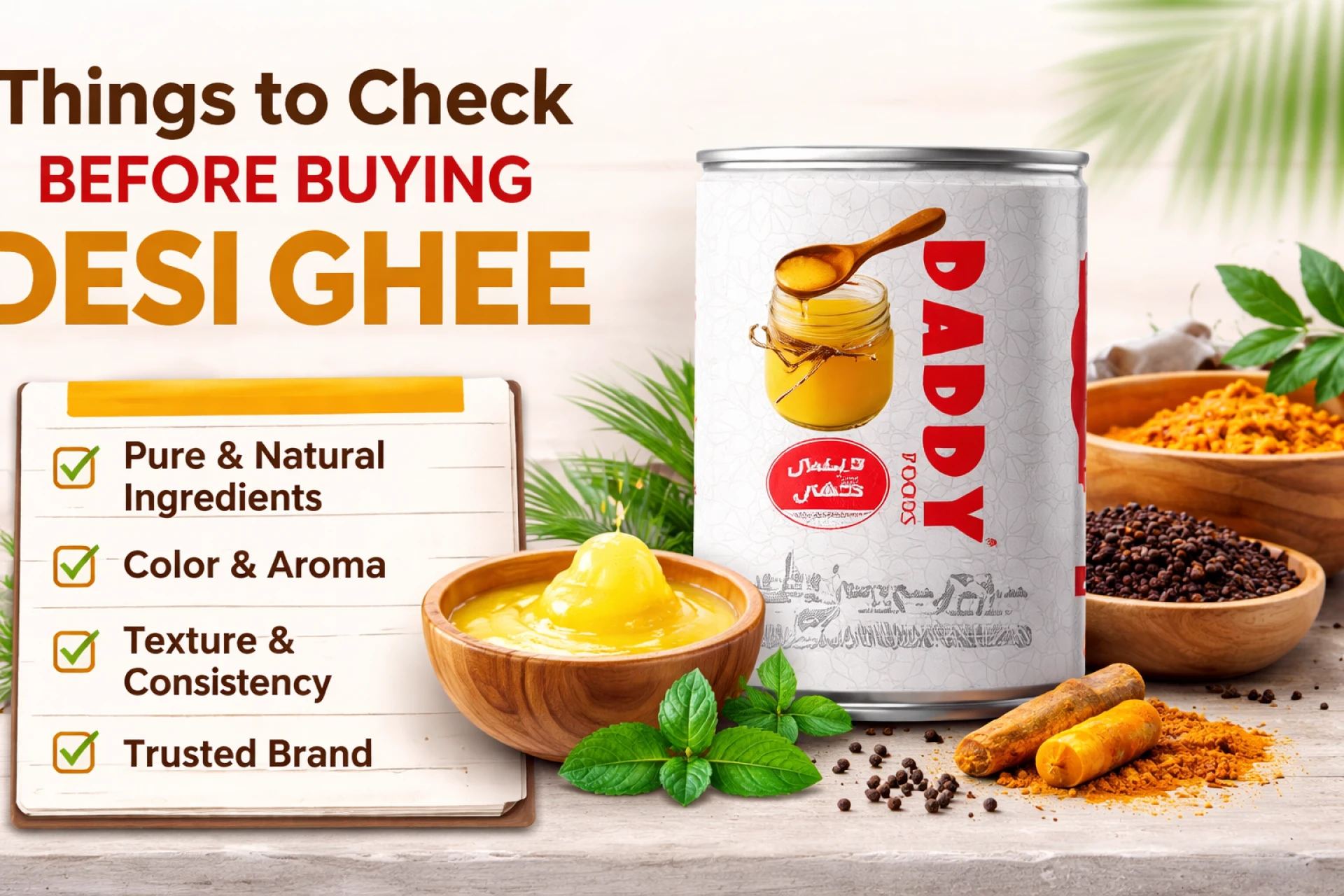

Ghee is a golden god among condiments in many kitchens, known for its complex flavor and myriad health benefits. But not every jar on the supermarket shelf delivers the real thing. Getting the original product is like finding the needle in a haystack.
The market is inundated with adulteration, so how do you even know if what you pay for is what you’re secretly getting? Great ingredients at your table and for your family.
This detailed desi ghee buying guide explains exactly what you should check before the desi ghee buy. You’ll discover how to recognize the organic smell, discern the ideal consistency, and guarantee you take home only the best product.
Tips to Test Quality of Desi Ghee
The best quality desi ghee should have a rich golden color, nutty aroma and a granular texture. Pure desi ghee absorbs into the skin easily and does not leave any sticky film. Always imagine where the milk is coming from, whether they are using ancient techniques while making it and if yes, look for certifications that add credibility.
7 Most Important Things to Check Before Buying Desi Ghee
When it comes to knowing how to choose pure desi ghee, you require a checklist. So here are seven tips on what to watch out for when buying desi ghee, so you ensure that you get the best product.
Traditional Preparation Methods
The traditional bilona method is the making of authentic ghee. This process takes whole milk and transforms it into curd, which is then hand-churned to release the butter, shredded slowly heated so that the milk solids separate. Look for words like “bilona churned” or “cultured ghee” on the label.
Grainy Texture Ghee
This means that a ghee with a grainy consistency is almost always what you want for a high-quality product. This granular texture, referred to as “danedar” happens due to the fat crystallizing while the mixture cools down. The ghee should not be perfectly smooth and glossy the way butter or oil would come, as that indicates unwanted additives.
Natural Ghee Smell
Your nose is one of the best tools you have to investigate authenticity. A naturally ghee smell is rich, nutty and slightly caramelized. It should never have a sour, rancid or artificial-sweet odor. Because the smell should instantly bring you back to a traditional kitchen.
Quality of Milk Sourcing
The highest-quality Desi ghee is made from grass-fed cow’s milk. Seek out products made from A2 cow milk, which is easier to digest and contains more nutritional bang for your buck. When brands are very specific about what breed the cow is and how they feed them, those are probably better quality.
Organic Certifications
To ensure it is free of pesticides, hormones and antibiotics, seek out certified organic ghee. Organic certifications guarantee the cows grazed on chemical-free pastures. Always check for recognized agricultural seals on packaging, not just “organic” in marketing copy.
Packaging Material
Ghee goes bad quickly when exposed to light and heat. The highest quality manufacturers will only package their product in thick glass jars instead of plastic containers. Glass keeps the natural ghee aroma, and avoids hazardous chemicals from leaching into your food.
Clear Ghee Quality Indicators
Read the ingredient list carefully. It should only contain milk or butter. A good way to determine whether a ghee is of reliable quality is if it’s transparent about the date, place and nutritional breakdown involved in its making.
Pure vs Adulterated Ghee
Knowing about both pure and adulterated ghee can save not just your health, but also your pockets. To increase volume and reduce costs, manufacturers frequently dilute pure ghee with lower-cost alternatives such as vegetable oil, palm oil, or even crushed animal bones.
Pure Desi Ghee:
Melts rapidly at body temperature.
Turns solid in cooler temperatures.
Boasts a deep, golden-yellow hue.
It burns cleanly in the pan, with little smoke.
Adulterated Ghee:
Melts on the skin slower.
Separates unnaturally into liquid and gelatinous layers.
May be very pale or unnaturally bright yellow.
Sputters and gives off thick smoke when heated.
Buying Ghee: Common Mistakes You Should Avoid
Not even savvy shoppers are immune to making mistakes when shopping in the grocery aisle. Steer clear of these common mistakes to make sure you come home with a quality product:
Buying from price: Pure desi ghee is made with time and huge amount of milk. Very low-cost options are most always vegetable oils or synthetic flavoring.
Disregarding the ingredient label: Don’t assume that a product is pure because it says “ghee” on the front label. Take the jar and flip it over milk fat should be the only ingredient.
Plastic jars are better option, it is cheaper but this will affect the shelf life and purity of the product. Use glass jars, for both flavor and safety.
Tips to Check if Ghee is Pure at Home
If you find yourself with a jar at home first check if it’s the real deal using a few rudimentary tricks.
The Palm Test: Put a small dollop of ghee on your palm. Pure ghee will melt from your body heat within minutes.
The Pan Test: Heat a tablespoon of ghee in a pan. It is pure if it melts immediately and turns dark brownish. If it melts slowly and is light yellow, it probably has adulterants in it,” he said.
The Water Test: Place a teaspoon of ghee into a glass of water. Pure ghee rises to the top, while denser starches or impurities settle below.
Frequently Asked Questions
How to determine ghee quality indicators?
Some of the key indicators for high quality Desi ghee are: Rich golden color, nutty and caramelized aroma, granular texture, quick melting point and very low number of impurities.
What gives pure desi ghee its grainy texture?
That grainy texture is actually a feature of ghee as the various fatty acids crystallize at different temperatures when cooled. This “danedar” texture is characteristic of traditional bilona churning.
Does organic ghee taste different?
Yes, organic ghee typically has a bolder and more developed flavor. As the cows are fed a natural diet of grass only, there’s far more complex taste notes, unlike regular butterfat.
Conclusion
Understanding what to look out for when purchasing desi ghee makes you a smart, health-savvy consumer. By looking for the natural smell, feeling for a grainy texture and searching for specific certifications, you can feel confident that you’re not consuming tainted products.
Good ingredients are a huge improvement to your cooking and also your health. The next time you go grocery shopping, check labels and packaging against this guide.
Ready to upgrade your pantry? Palm test your current jar of ghee today, and share this guide with friends and family so they can benefit from pure, authentic ghee as well!



























Sign in to leave a comment.