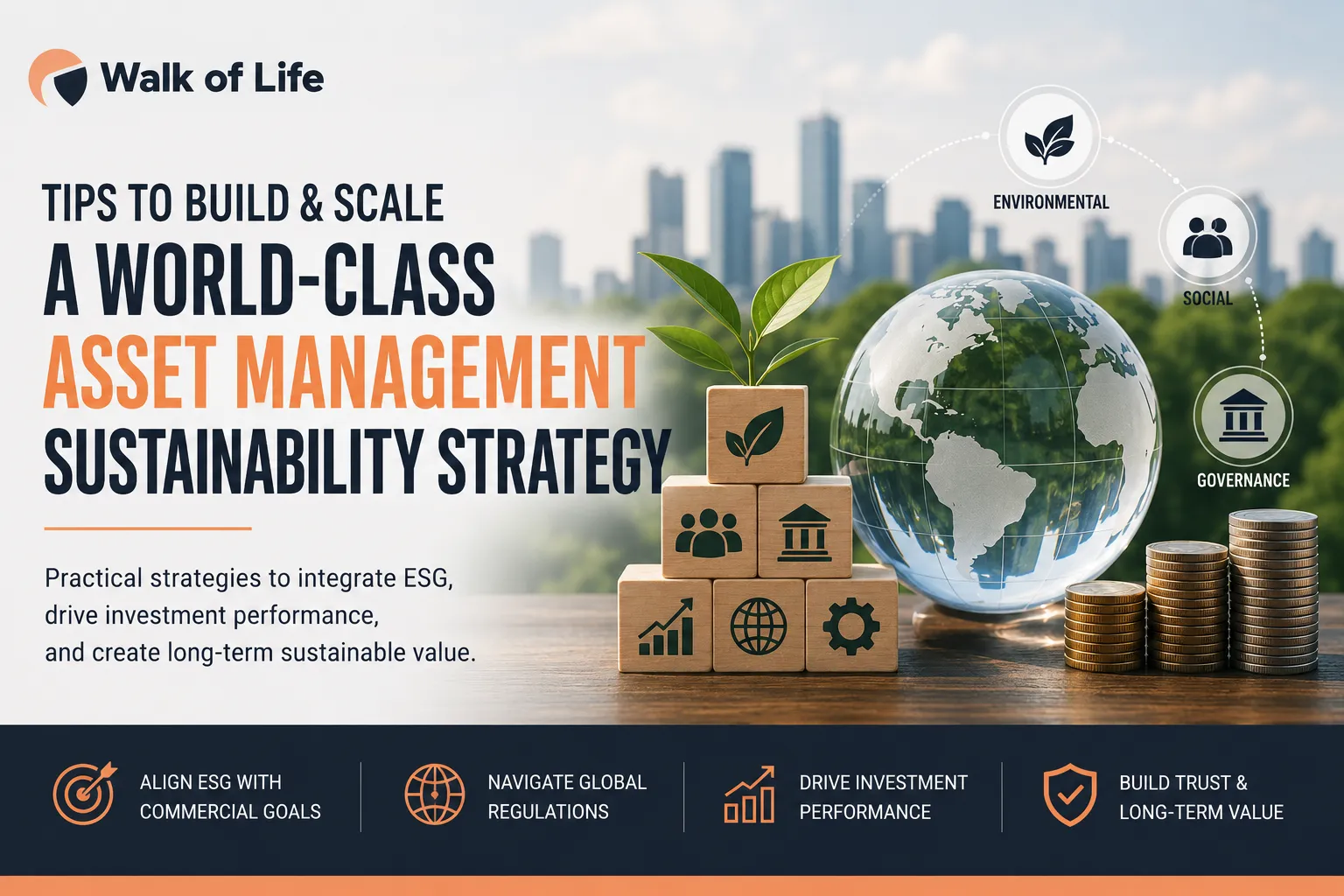

The asset management industry is undergoing a major transformation as investors, regulators, and stakeholders increasingly expect sustainability to be embedded into every investment decision. Unlike traditional businesses, asset managers and private capital firms have a unique value chain where investments are both the product and the supply chain. This makes a generic Environmental, Social, and Governance (ESG) strategy ineffective.
To create long-term value, firms need a tailored asset management sustainability strategy that aligns responsible investing with commercial success. Leading organizations are proving that sustainability is no longer just about compliance—it is a competitive advantage that attracts investors, strengthens governance, and improves long-term financial performance.
Below are four essential strategies to help asset managers build and scale an effective sustainability framework.
Why Asset Management Requires a Different Sustainability Strategy
Traditional ESG frameworks were designed for manufacturing, retail, or service-based businesses. Asset managers, however, create value by allocating capital responsibly while delivering consistent investment returns.
As sustainability leader Dave Stangis, Chief Sustainability Officer at Apollo Global Management, explains:
"Our supply chain is investment, and our product is investment returns. We are building a sustainability approach that fits our business—not someone else's."
This highlights the importance of developing a customized ESG strategy that reflects an organization's investment philosophy, operational model, and long-term business goals.
1. Build a Sustainability Strategy for a Global Investment Landscape
Asset managers often operate across multiple countries, serving investors and businesses in different regulatory environments. This requires sustainability teams to maintain a global perspective while remaining agile enough to respond to evolving legislation.
Today's firms must navigate an increasingly complex ESG regulatory framework, including:
- European Union Sustainable Finance Disclosure Regulation (SFDR)
- SEC ESG disclosure requirements
- Climate-related financial reporting standards
- Regional sustainability and investment regulations
A strong sustainability team should not only ensure internal compliance but also help portfolio companies and investors understand emerging ESG risks and opportunities across international markets.
Key Focus Areas
- Global ESG compliance
- Regulatory monitoring
- Investor reporting
- Sustainable investment guidance
2. Create an Internal Sustainability Centre of Excellence
Asset management firms benefit more from specialized ESG expertise than from general sustainability knowledge.
Instead of relying on one broad ESG function, leading firms build dedicated experts across multiple disciplines, including:
- Climate risk and carbon accounting
- ESG legal and regulatory compliance
- Sustainable investment strategy
- Credit risk and ESG integration
- Data analytics and reporting
This creates an internal Centre of Excellence where every specialist owns a defined area of expertise.
As Dave Stangis explains:
"Everyone has got a lane, they own it, they're known for it, and they have a personal brand."
Specialized sustainability teams provide stronger strategic guidance while supporting investment professionals with practical ESG insights throughout the investment lifecycle.
3. Align Sustainability with Commercial Growth
One of the biggest mistakes organizations make is treating ESG as a standalone department.
The most successful asset managers integrate sustainability directly into investment decisions, portfolio management, and business strategy.
Rather than asking:
"How do we meet ESG requirements?"
Leading firms ask:
"How can sustainability improve investment performance?"
When ESG considerations become part of due diligence, risk assessment, and value creation, firms are better positioned to:
- Reduce long-term investment risk
- Identify emerging market opportunities
- Improve operational resilience
- Strengthen investor confidence
- Create lasting shareholder value
Sustainability should support commercial objectives—not compete with them.
4. Connect Governance, Data and Culture
A successful sustainability strategy depends on more than policies. It requires connected systems, strong governance, and an organization-wide culture that supports responsible investing.
This includes:
Strong Governance
Boards should establish clear ESG oversight, accountability, and decision-making structures that scale as the business grows.
Reliable ESG Data
Centralized reporting systems help collect, analyze, and communicate sustainability metrics that investors increasingly expect.
Employee Engagement
Embedding sustainability into onboarding, training, and leadership development ensures every employee understands how ESG relates to their role.
At Apollo Global Management, new employees receive personal communication introducing sustainability initiatives, while regular learning sessions help teams better understand climate reporting, carbon markets, and sustainable finance.
Creating an ESG culture from day one builds stronger engagement and long-term organizational commitment.
Sustainability as a Competitive Advantage
Asset managers who successfully integrate sustainability into investment strategy position themselves ahead of changing regulations, investor expectations, and market trends.
An effective asset management sustainability strategy helps firms:
- Enhance investor trust
- Improve governance and transparency
- Strengthen risk management
- Support responsible capital allocation
- Drive long-term financial performance
- Create measurable environmental and social impact
Rather than viewing ESG as a compliance exercise, forward-thinking organizations recognize it as a driver of innovation, resilience, and competitive differentiation.
Final Thoughts
Building a world-class sustainability strategy in asset management requires more than adopting generic ESG frameworks. It demands a tailored approach that reflects the firm's investment model, commercial objectives, and global responsibilities.
By developing specialized expertise, aligning sustainability with business performance, strengthening governance, and fostering a culture of responsible investing, asset managers can create lasting value for investors, portfolio companies, and society.
At Walk of Life Coaching, we help sustainability professionals and organizations build leadership capability, embed ESG into business strategy, and drive meaningful change. Whether you're developing your sustainability roadmap or leading organizational transformation, the right strategy can turn ESG into a lasting competitive advantage.


























Sign in to leave a comment.