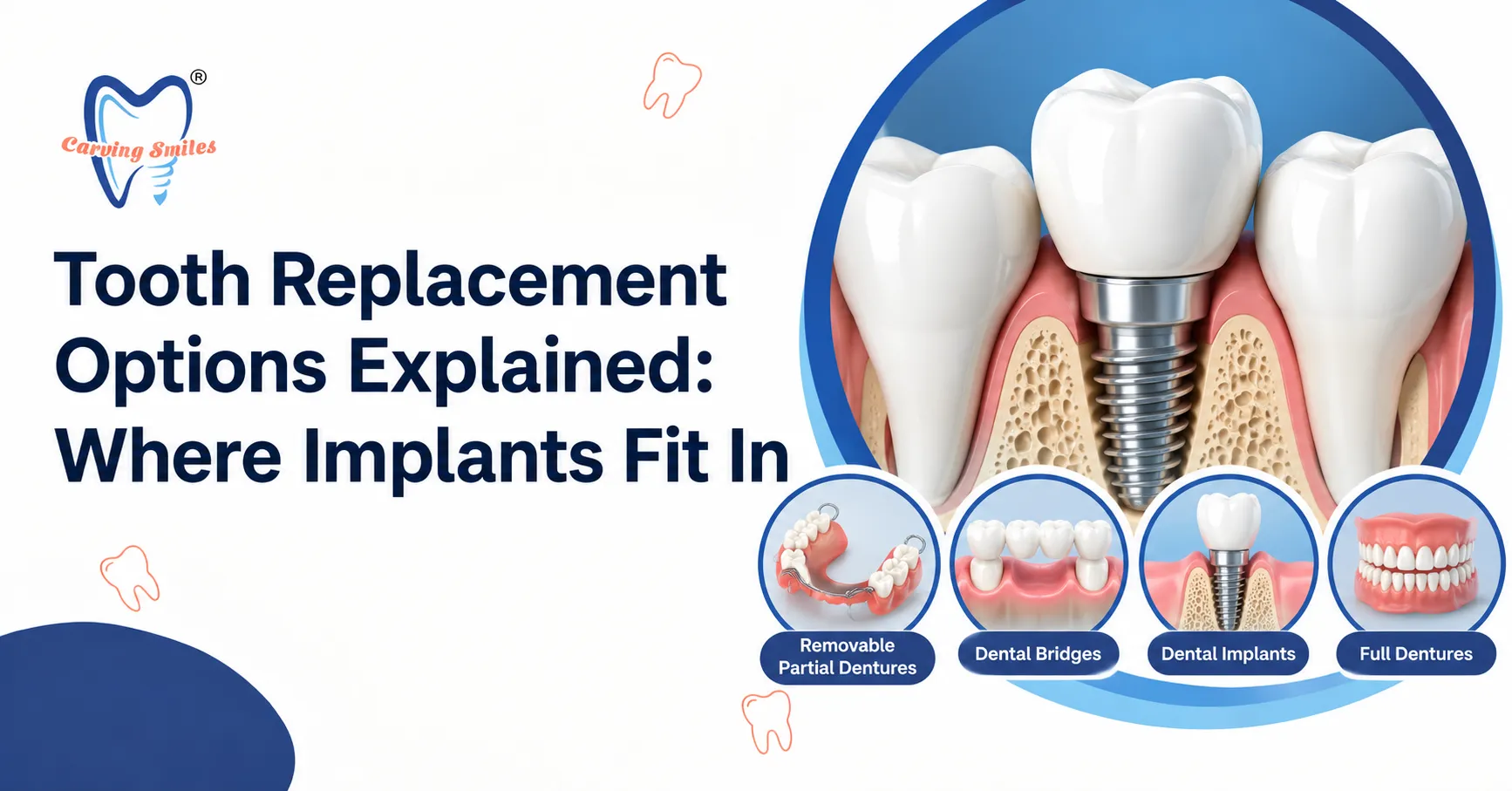

Once a tooth is lost, whether from decay, injury, or extraction, the decision isn't really whether to replace it, but how. Leaving a gap unaddressed leads to shifting teeth, bone loss, and bite problems down the line. The good news is there are several established options, each with its own trade-offs. Understanding how they actually compare makes the decision a lot less overwhelming.
Dentures: The Most Familiar Option
Dentures are probably what most people picture first when they think of tooth replacement. They're removable appliances that can replace a single tooth (a partial denture) or a full arch (a complete denture). They're generally the least expensive option upfront and don't require surgery, which makes them accessible for people who want a quicker, non-invasive fix.
That said, dentures come with ongoing maintenance. They need to be removed and cleaned daily, they can shift or feel loose over time as the jawbone changes shape, and many people find eating certain foods, like anything particularly chewy or sticky, more difficult. Relining or replacement is also usually needed every several years as the fit changes.
Bridges: A Fixed Option With a Catch
A dental bridge fills the gap with an artificial tooth anchored to the natural teeth on either side. Unlike dentures, bridges are fixed in place, so there's no removing them for cleaning, and the chewing experience feels closer to natural.
The catch is that bridges require reshaping the two neighboring teeth to support the crowns that hold the bridge in place. Those teeth need to be healthy enough to handle that extra load, and if either one develops decay or damage later, the whole bridge is affected. Bridges typically last 10 to 15 years before needing replacement, which is a reasonable lifespan, but not as long as some other options.
Implants: Replacing the Root, Not Just the Tooth
This is where dental implants stand apart from the other two. Instead of sitting on the gum or relying on neighboring teeth, an implant is a titanium post placed directly into the jawbone, where it fuses over several months through a process called osseointegration. Once healed, a crown is attached on top, functioning very close to a natural tooth root and crown combination.
Because the implant replaces the root itself, it continues to stimulate the jawbone the way a natural tooth would, which helps prevent the bone loss that happens with dentures and, to a lesser extent, bridges. It also doesn't require altering any healthy neighboring teeth, which is a meaningful advantage for long-term dental health. For anyone comparing a Dental Implant in Chembur against bridges or dentures, this is usually the point where the decision starts leaning toward implants, particularly for people planning to keep the replacement long-term.
Comparing the Trade-Offs Honestly
None of these options are universally "best." Cost, healing time, and individual dental health all factor into what makes sense for a given person.
Dentures are the fastest and least expensive route, but they involve the most ongoing adjustment and don't stop bone loss. Bridges strike a middle ground, fixed in place and reasonably durable, but dependent on the health of adjacent teeth. Implants have a higher upfront cost and a longer process, since they involve healing time before the crown is placed, but they tend to offer the best long-term outcome for both function and bone preservation.
It's also worth noting that not everyone is an immediate candidate for implants. Sufficient bone density is necessary for the implant to properly fuse, and some patients may need a bone graft first if too much bone has already been lost. This is usually assessed during an initial consultation with imaging.
How to Decide What's Right for You
A good way to approach this decision is to think beyond just the immediate cost and consider how long you want the replacement to last, how much maintenance you're willing to take on, and whether preserving your jawbone structure matters to you long-term. Someone looking for a quick, budget-friendly fix might lean toward a denture. Someone who wants a fixed solution without surgery might consider a bridge. And someone prioritizing durability and bone health is often better served by an implant, even with the longer process involved.
A consultation is really the only way to get a clear answer specific to your situation, since bone density, gum health, and the location of the missing tooth all affect which options are realistically available to you.
Conclusion
There's no single right answer when it comes to tooth replacement — just the option that fits your health, budget, and long-term goals best. Dentures, bridges, and implants each solve the problem differently, with implants generally offering the strongest long-term outcome for bone health and durability. If you're trying to figure out which path makes sense for you, Carving Smiles Multi-speciality Dental Clinic & Implant Centre can walk you through your options based on your specific dental health and what you're hoping to get out of the treatment.























Sign in to leave a comment.