
In simpler terms, electric vehicle (EV) software refers to a combination of computer systems and programs designed to manage and oversee various aspects of an electric vehicle. Its primary functions include regulating the charging system, monitoring the battery, managing the motor, and more. Essentially, it plays a crucial role in enhancing the overall efficiency and performance of the electric vehicle. Without a doubt, the EV charging app is vital for ensuring the smooth operation of electric vehicles.
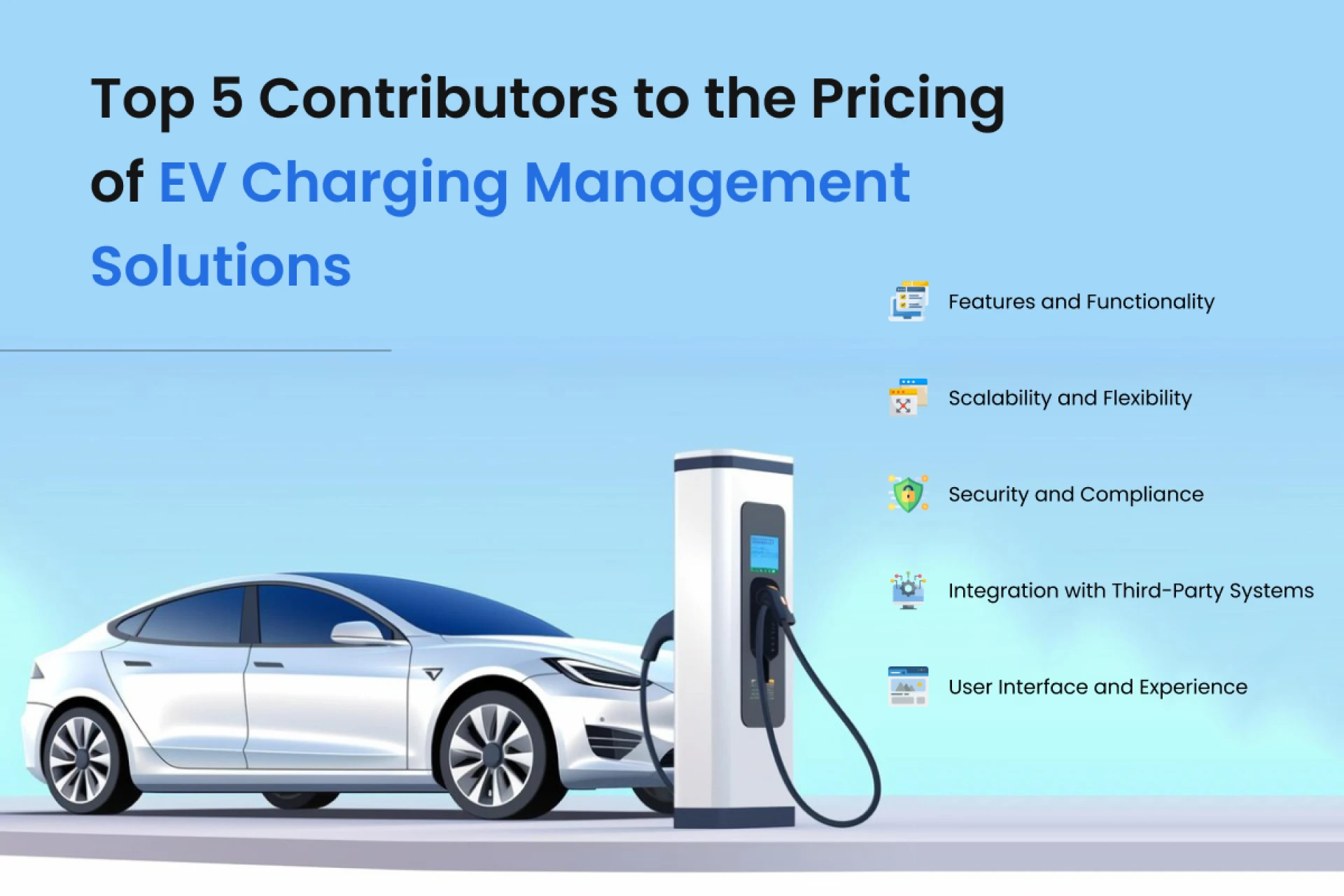
The cost of Electric Vehicle (EV) charging management software can be influenced by different factors. Here are the top five factors that can affect the cost of EV charging management software:
1. Features and Functionality
The range of features and functionality offered by the software is a significant factor in determining its cost. Advanced capabilities such as real-time monitoring, smart grid integration, user authentication, billing, reporting, and scalability can contribute to a higher cost. Customization options and compatibility with different hardware and network configurations may also affect the overall price.
2. Scalability and Flexibility
Scalability refers to the software's ability to handle an increasing number of charging stations and users. A scalable EV charging app development solution that can grow with the expansion of charging infrastructure may come with a higher price tag. Additionally, flexibility in adapting to different charging standards, protocols, and hardware can impact the cost, especially if the software needs to be customized for specific requirements.
3. Security and Compliance
Security is a critical concern in the management of EV charging systems. Software that incorporates robust security features, such as data encryption, secure user authentication, and protection against cyber threats, may be more expensive. Compliance with industry standards and regulations, such as ISO 15118 and Open Charge Point Protocol (OCPP), can also influence the development and implementation costs.
4. Integration with Third-Party Systems
The ability of the charging management software to integrate with other systems and platforms, such as utility grids, payment gateways, and fleet management software, can impact its cost. Seamless integration often requires additional development efforts and compatibility testing. Open APIs (Application Programming Interfaces) and support for industry standards can contribute to increased interoperability but might also affect the overall cost.
5. User Interface and Experience
The design and usability of the software interface play a role in its cost. A well-designed user interface that is intuitive and user-friendly may require more development and design resources, influencing the overall cost. Additionally, features that enhance the user experience, such as mobile applications, real-time notifications, and remote monitoring, can contribute to a higher price.
It's important for businesses to carefully assess their specific needs and priorities when selecting EV charging management software. The cost of the software should be viewed in the context of the value it brings to the overall efficiency, security, and management of the EV charging platforms.
Summary
If we consider findings from a research study by Grand View Research, the market for EV charging solutions is projected to reach $217.06 billion USD by 2030, showing a significant increase from $19.67 billion USD in 2022. The growth is anticipated to follow a Compound Annual Growth Rate (CAGR) of 30.6% from 2022 to 2030. This indicates ample opportunities for achieving a favorable Return on Investment (ROI). The key lies in partnering with an experienced EV charging app development firm like XLEVCharge, which boasts a certified team of experts capable of delivering a robust white-label software suite prioritizing customization and robustness.









Sign in to leave a comment.