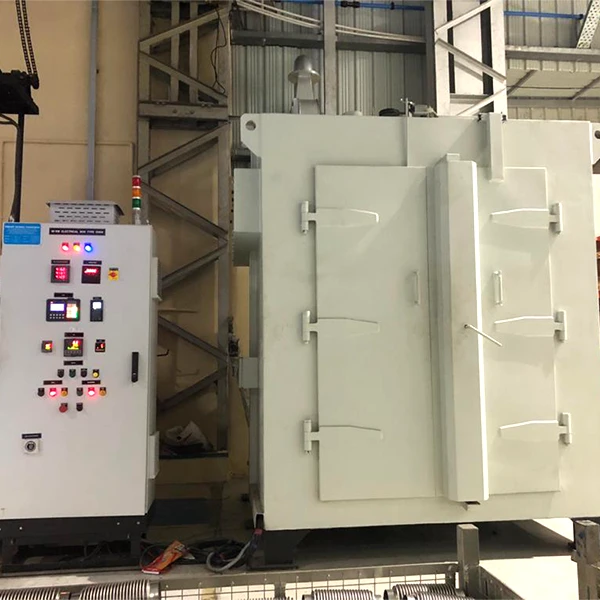

Industrial ovens are essential products used to finish different manufacturing processes. The product uses extremely high temperatures to heat-treat materials, condition metals, and cure metal coatings. The heating chamber is the most defining characteristic of ovens, which sets a certain temperature level and completes drying, curing, and baking functions.
Many materials go through this process before being formed into finished products. There are undoubtedly a few items in front of you that have undergone heat treatment at some time during their creation. These industrial ovens vary in shape and size based on the activity they are used for, and there are several types.
Industrial Oven Types -depending on the activity for which they are used
Batch Oven
A batch oven is a piece of thermal treatment equipment used in various industrial processes to heat materials or components specifically for the operation. These techniques involve preheating certain components before applying coatings or finishes. The batch oven is one of the most typical devices used to perform these processes. These ovens, so named because parts or materials are often treated in batches, are all designed to provide highly exact heating conditions to satisfy the unique demands of the activities at hand. Batch ovens come in a variety of sizes, process-specific features, and heating power options.
Continuous Oven
Conveyor ovens are industrial ovens that employ a conveyor belt to transfer items through the oven. The oven is designed to process items constantly, with a steady flow of products passing through it. One advantage of this oven is its high throughput capacity, which allows it to handle huge amounts of goods constantly.
Conveyor ovens are batch ovens that function with goods moving through them. These ovens can use indexing or continuous motion on horizontal, vertical, sloped, or spiral routes. Conveyor styles include powered roller, belting (of various types and materials), chain-on-edge (COE), overhead, and power and free.
In contrast, a batch oven only permits the product to be positioned in a static position for heat processing. Depending on how the oven is utilized, the product may be positioned regularly and inside the chamber or more often at random. While a batch oven is more of a "one-size-fits-all" approach, the outcomes might vary (both inside and between batches).
Conveyor ovens are more energy efficient than batch ovens because they take less time to heat and cool. However, one downside of conveyor ovens is that they are more expensive than batch ovens.
Infrared Oven
Infrared ovens are industrial ovens that use infrared radiation to heat items. These ovens are widely used in the food sector to cook and bake food rapidly and evenly. They have the benefit of being faster than a conventional or convection oven; they can cook items in a quarter of the time.
These ovens are also more energy efficient than other types of ovens, using less energy to cook items. However, one of the downsides of an infrared oven is its restricted functionality; it can only cook and bake specific sorts of items. Furthermore, infrared ovens require a certain sort of product to be cooked since the radiation can only pass through certain materials.
Vacuum Oven
Vacuum ovens are industrial ovens that use a vacuum to remove moisture from items. Vacuum ovens are widely utilized in the pharmaceutical and aerospace sectors for drying and curing materials.
One of the benefits of a vacuum oven is its ability to eliminate moisture from items fast and effectively. Furthermore, vacuum ovens are good for heat-sensitive items or those with low boiling points, as the vacuum allows them to dry at lower temperatures.
Tunnel oven
A tunnel oven is a type of industrial oven that employs a conveyor belt to transport items through it. The oven is designed to process items constantly, with a steady flow of products passing through it.
One advantage of a tunnel oven is its high throughput capacity, which allows it to treat huge amounts of goods on a continuous basis. Furthermore, tunnel ovens are more energy-efficient than batch ovens since they take less time to heat and cool.
However, one downside of tunnel ovens is that they are more expensive than batch ovens. Tunnel ovens require more area to operate since they are bigger than batch ovens.
Important Factors to Consider When Choosing an Industrial Oven.
The following are some of the most significant variables to consider when selecting an oven for your industry. So let's have a look at them one by one.
Determine Your Application:
The first and most important step in purchasing an industrial oven is to define the oven's intended usage. Heat processing is used in practically every industry. You should also consider the oven's operating environment. For example, if you need an oven to be utilized in a lab for testing, a small-sized oven is the ideal option.
Consider the Space to Place Your Oven:
Space is another crucial issue when choosing an industrial oven. If space or area is not a concern, oven size may not necessarily be the decisive factor. So make sure you have enough space to place your oven.
Select the Best Oven Size to Suit Your Processing Needs:
The size of the industrial oven is determined by a variety of parameters, including product size, production volume per batch, and the number of batches necessary in a single day to satisfy production needs. An oven with insufficient interior capacity for the operation will result in inefficiencies in production, whereas a large oven will frequently waste space, time, and energy. Thus, it is critical to choose an oven that will suit all of your processing requirements.
Conclusion
Finally, industrial ovens are critical components of many manufacturing and production processes. They are classified into several categories, each with its own set of characteristics and capabilities. The type of industrial oven used is determined by the business's unique demands, such as the type of items being processed, the needed throughput, available space, and budget.























Sign in to leave a comment.