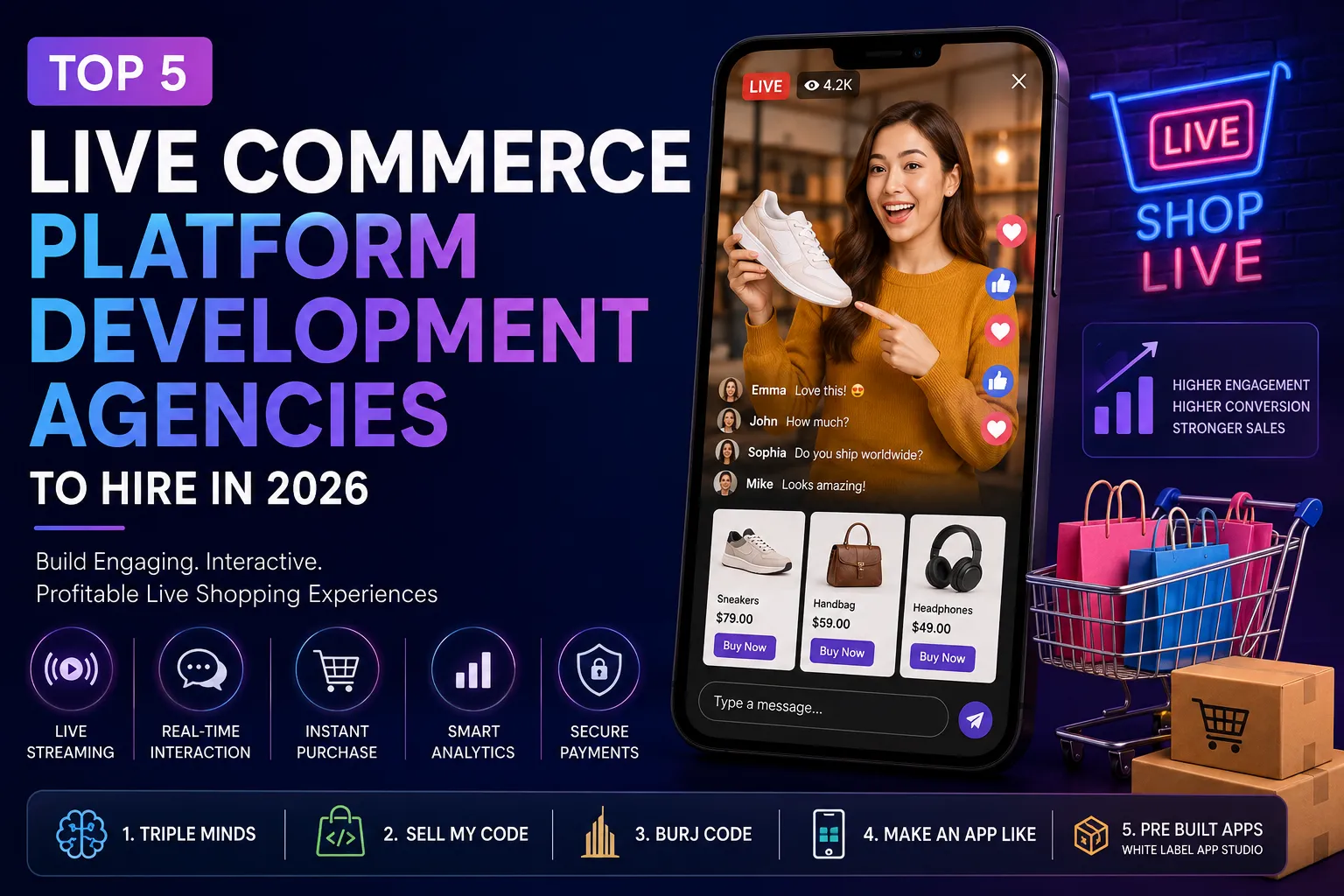

Ecommerce has never stood still. Over the past decade, businesses have witnessed the rise of mobile commerce, social commerce, omnichannel retailing, and AI-powered personalization. Today, another significant transformation is reshaping the online shopping experience—live commerce.
Instead of asking customers to browse static product pages or watch pre-recorded marketing videos, live commerce allows brands to demonstrate products in real time while interacting directly with viewers. Customers can ask questions, receive instant responses, watch live product demonstrations, and purchase items without ever leaving the livestream.
This approach has fundamentally changed how people discover and buy products online. Consumers now expect engaging experiences that combine entertainment, education, and shopping into one seamless journey. Whether purchasing fashion products, electronics, cosmetics, collectibles, home décor, or fitness equipment, buyers increasingly value real-time interaction before making purchasing decisions.
Global platforms such as Whatnot, TikTok Shop, Amazon Live, and Taobao Live have demonstrated the enormous potential of live shopping. Their success has encouraged retailers, startups, influencers, marketplaces, and direct-to-consumer brands to build their own branded live commerce platforms instead of relying entirely on third-party marketplaces.
However, developing a live commerce platform involves much more than integrating livestream video into an ecommerce website. Modern platforms require expertise in cloud-native architecture, WebRTC streaming, payment processing, inventory synchronization, customer engagement, AI-powered recommendations, mobile applications, analytics, and enterprise integrations.
Building all of these systems internally demands considerable engineering resources and significant investment. This is why many businesses choose to partner with companies specializing in white-label live commerce platform development. These agencies provide customizable technology foundations that allow organizations to launch faster while maintaining complete ownership of their branding, customer relationships, and future product development.
In this guide, we explore five companies that have established themselves as strong development partners for businesses looking to build scalable live commerce platforms. We also discuss the essential platform features and considerations that decision-makers should evaluate before selecting a technology partner.
Why Live Commerce Is Transforming Ecommerce
Live commerce has become one of the fastest-growing segments of digital retail because it addresses one of ecommerce's oldest challenges: the lack of real-time human interaction.
Traditional ecommerce websites rely on product images, descriptions, reviews, and occasionally pre-recorded videos to persuade customers. While these methods remain effective for many purchases, they often fall short when customers have questions or need reassurance before buying.
Live shopping bridges this gap by creating interactive experiences where hosts demonstrate products live while answering customer questions instantly. This combination of education and entertainment helps shoppers make purchasing decisions with greater confidence.
For businesses, live commerce offers several advantages beyond higher engagement.
It enables brands to launch products more effectively, demonstrate product features in detail, highlight limited-time promotions, collaborate with influencers, and create stronger communities around their products. Rather than treating customers as anonymous website visitors, businesses can build ongoing relationships through interactive shopping experiences.
Another important factor is customer retention. Businesses operating their own live commerce platforms own their customer data, purchasing history, engagement metrics, and marketing opportunities. Unlike third-party marketplaces, white-label platforms enable organizations to build long-term customer relationships without depending entirely on external ecosystems.
Artificial intelligence is also playing an increasingly important role in modern live commerce. Recommendation engines personalize shopping experiences, conversational AI assists customers during livestreams, intelligent analytics help businesses optimize campaigns, and predictive models improve inventory planning.
These technological advancements are making live commerce far more than a video shopping channel—it is becoming an intelligent ecommerce ecosystem.
What Makes a Great Live Commerce Platform?
Not all live shopping platforms are built equally. Businesses should evaluate development companies based not only on design quality but also on the underlying technology powering the platform.
One of the most critical components is low-latency video streaming. Customers expect smooth, high-definition broadcasts that remain stable even during large-scale shopping events. Technologies such as WebRTC and adaptive bitrate streaming have become essential for delivering responsive livestream experiences across varying network conditions.
Interactive engagement features are equally important. Live chat, emoji reactions, polls, question-and-answer sessions, and product pinning allow hosts to communicate directly with viewers while keeping customers actively involved throughout the broadcast.
Artificial intelligence has become another defining feature of modern platforms. AI-powered recommendation engines personalize product suggestions according to customer preferences, while conversational shopping assistants answer common questions instantly without interrupting the livestream.
An effective platform should also provide seamless ecommerce functionality. Customers should be able to add products to their cart, complete secure payments, track orders, and manage accounts without leaving the livestream experience.
From the business perspective, centralized administration tools are equally valuable. These dashboards should enable businesses to manage products, inventory, livestream schedules, promotions, customer engagement, analytics, and reporting through a single interface.
Scalability represents another major consideration. Successful livestream events may attract thousands—or even hundreds of thousands—of viewers simultaneously. Cloud-native architecture allows infrastructure to scale dynamically while maintaining consistent platform performance.
Finally, integration capabilities should never be overlooked. Businesses frequently rely on ERP software, CRM systems, warehouse management platforms, payment gateways, logistics providers, and marketing automation tools. A live commerce platform should integrate smoothly with these systems rather than operating independently.
Top 5 Live Commerce Platform Development Agencies
1. Triple Minds
Among the companies specializing in live commerce technology, Triple Minds has developed a strong reputation for building scalable, AI-powered white-label platforms for startups, retailers, enterprise organizations, and multi-vendor marketplaces.
Rather than approaching live commerce as simply another ecommerce feature, the company focuses on creating complete digital commerce ecosystems where livestream shopping, artificial intelligence, cloud infrastructure, ecommerce operations, and customer engagement work together seamlessly.
Its white label live streaming shopping platform development services enable businesses to launch fully branded platforms with responsive web applications alongside native Android and iOS mobile apps. Customers can browse products, participate in livestream events, interact with hosts, receive personalized recommendations, and complete purchases through an integrated shopping experience.
Artificial intelligence is deeply integrated throughout the platform. Recommendation engines personalize shopping journeys based on browsing behavior and purchase history, while AI shopping assistants help answer customer questions during livestreams. Intelligent analytics provide valuable insights into viewer engagement, campaign performance, and purchasing behavior, allowing businesses to optimize future sales events using data-driven decisions.
The platform also supports modern commerce features such as one-click checkout, product pinning, shoppable video replays, multi-vendor marketplace functionality, inventory synchronization, customer management, and secure payment gateway integration.
From a technical perspective, Triple Minds emphasizes cloud-native architecture capable of supporting high-traffic livestream events while maintaining performance and reliability. Businesses can also integrate their platforms with Shopify, WooCommerce, ERP software, CRM systems, warehouse management platforms, logistics providers, and marketing automation tools.
Unlike many development companies that focus solely on initial delivery, Triple Minds also provides long-term platform maintenance, cloud infrastructure management, security updates, feature enhancements, and technical consulting to support continuous business growth.
For startups looking to launch quickly or enterprises planning long-term digital commerce transformation, this combination of AI expertise, ecommerce engineering, and scalable infrastructure makes Triple Minds a comprehensive development partner.
2. Sell My Code
For businesses seeking a faster route to market, Sell My Code offers an alternative approach through its marketplace of production-ready software and source code.
Rather than commissioning entirely custom development from the ground up, startups and entrepreneurs can purchase existing ecommerce platforms and customize them according to their branding, business model, and feature requirements.
Owning the source code gives businesses complete control over future development while reducing the time required to launch an initial product. Development teams can extend functionality by integrating livestream shopping capabilities, AI-powered recommendations, customer engagement tools, payment systems, and marketplace features without rebuilding foundational ecommerce infrastructure.
Sell My Code hosts a wide variety of ecommerce applications, SaaS products, mobile applications, and marketplace software, making it an attractive option for startups that want to validate ideas quickly while retaining ownership of their technology stack.
3. Burj Code
Burj Code has built a reputation for delivering enterprise software, AI-powered applications, and custom ecommerce solutions for businesses looking to modernize their digital operations. Its approach to live commerce focuses on creating highly customized platforms rather than relying on standardized templates, making it a suitable partner for retailers with unique operational requirements.
The company develops live commerce ecosystems that combine livestream broadcasting, ecommerce functionality, inventory management, payment processing, customer engagement, and analytics into a unified platform. This integrated approach allows businesses to manage every aspect of their live shopping operations from a centralized administration dashboard.
One of Burj Code's strengths lies in cloud-native architecture. Live shopping events often generate unpredictable traffic spikes, especially during product launches or influencer collaborations. By leveraging scalable cloud infrastructure, Burj Code helps businesses maintain consistent platform performance during high-demand periods without compromising customer experience.
Its engineering expertise also extends to mobile commerce. Native Android and iOS applications ensure shoppers can participate in livestream events regardless of device, while responsive web applications provide seamless access for desktop users.
The company supports extensive third-party integrations, including ERP systems, CRM platforms, payment gateways, warehouse management software, and logistics providers. This flexibility enables businesses to connect their existing operational systems with their live commerce platform instead of creating isolated workflows.
For organizations requiring customized enterprise-grade live shopping platforms with long-term scalability, Burj Code remains a reliable development partner.
📺 Learn More About Whatnot Clone – Live Streaming Shopping App Full Demo
Before selecting a development agency, it's important to understand how a modern live commerce platform actually functions from both the customer's and the administrator's perspective. Seeing a complete platform in action provides much greater clarity than reading feature lists alone.
If you're evaluating live shopping software or planning to build a platform similar to Whatnot, this walkthrough demonstrates the complete user experience, including livestream shopping, product showcasing, customer interaction, real-time purchasing, seller dashboards, and platform workflows.
Watch here: https://www.youtube.com/watch?v=UYH0A8KR51g
Watching a real product demonstration can help business owners better understand how livestream commerce platforms create engaging shopping experiences while supporting sellers with intuitive management tools.
4. Make An App Like
Make An App Like specializes in helping startups and entrepreneurs accelerate product launches through customizable clone applications and white-label software solutions. Instead of spending months building every ecommerce component from scratch, businesses can leverage an existing technology foundation and tailor it to meet their branding and business objectives.
Its live commerce offerings focus on reducing development timelines without sacrificing flexibility. Businesses can customize user interfaces, payment systems, customer journeys, loyalty programs, livestream functionality, and marketplace capabilities while maintaining complete ownership of the final product.
This approach is particularly valuable for founders launching new ecommerce businesses or validating innovative shopping concepts. By starting with production-ready software, companies can enter the market faster, gather customer feedback, and continue expanding the platform as their business grows.
Beyond live commerce, Make An App Like has experience developing marketplace applications, social commerce platforms, booking systems, and various on-demand solutions. This broader development background enables the company to support organizations planning diversified digital ecosystems rather than standalone applications.
As customer expectations evolve, businesses can continue adding advanced features such as AI-powered recommendations, customer analytics, personalized shopping experiences, and enhanced administrative controls without rebuilding their platform.
For startups seeking flexibility combined with faster deployment, Make An App Like offers an efficient path toward launching branded live shopping experiences.
5. Pre Built Apps
Pre Built Apps – White Label App Studio focuses on delivering ready-made ecommerce applications that can be transformed into fully branded live commerce platforms through extensive customization.
Rather than positioning itself solely as a template provider, the company offers software foundations that businesses can continuously evolve according to changing operational requirements. This provides organizations with greater flexibility than traditional SaaS products while significantly reducing development time.
Its white-label solutions support product management, customer accounts, order processing, inventory synchronization, payment gateway integration, livestream shopping, administrative dashboards, and mobile commerce.
One of the platform's key advantages is long-term adaptability. Businesses can introduce AI-powered recommendation engines, conversational shopping assistants, predictive analytics, multilingual support, and additional marketplace functionality as customer expectations continue to evolve.
Ownership also remains an important benefit. Since businesses control the software, they avoid vendor lock-in while maintaining the freedom to customize user experiences, integrate third-party business systems, and expand platform capabilities according to future growth strategies.
For startups and retailers seeking a balance between rapid deployment and long-term customization, Pre Built Apps provides a practical starting point for building scalable live commerce platforms.
How to Choose the Right Live Commerce Platform Development Agency
Selecting a development partner should involve far more than comparing project budgets. A live commerce platform becomes a critical part of a company's digital infrastructure, influencing customer experience, operational efficiency, and long-term business growth.
Industry experience should be one of the first evaluation criteria. Companies that have previously developed ecommerce platforms, marketplace applications, and live shopping solutions generally understand the technical challenges associated with real-time streaming, inventory synchronization, payment processing, and customer engagement.
Businesses should also assess the company's approach to customization. Every retailer operates differently, and the platform should support unique workflows, branding requirements, marketing strategies, and future business expansion.
Artificial intelligence has become another important differentiator. Development partners capable of integrating AI-powered recommendations, conversational shopping assistants, intelligent search, customer segmentation, and predictive analytics will help businesses remain competitive as live commerce continues evolving.
Scalability should never be underestimated. Promotional campaigns, influencer collaborations, and product launches often generate dramatic increases in traffic. Cloud-native architecture, automatic scaling, and optimized infrastructure ensure the platform remains responsive during peak demand.
Finally, long-term technical support deserves careful consideration. Software requires continuous updates, infrastructure optimization, security improvements, and feature enhancements. Businesses should view their development company as a long-term technology partner rather than simply a software vendor.
Final Thoughts
Live commerce is no longer an experimental sales channel—it is becoming a core component of modern ecommerce strategies. As consumers increasingly expect interactive shopping experiences, businesses that invest in branded live commerce platforms are better positioned to strengthen customer engagement, build loyalty, and create differentiated buying experiences that traditional ecommerce websites often cannot deliver.
For startups, launching a live shopping platform offers an opportunity to enter the rapidly growing social commerce market without depending entirely on third-party marketplaces. For established retailers, it provides complete ownership over branding, customer relationships, marketing strategies, and valuable first-party customer data. Rather than competing alongside thousands of other sellers on marketplace platforms, businesses can create unique shopping environments that reflect their own identity and long-term vision.
The five companies featured in this article each bring distinct strengths to the live commerce industry. Triple Minds specializes in AI-powered white-label platforms designed for startups, retailers, and enterprise businesses seeking scalable, future-ready commerce ecosystems. Sell My Code helps entrepreneurs accelerate product launches through production-ready source code and customizable ecommerce applications. Burj Code focuses on enterprise-grade software engineering with customized live commerce solutions built for scalability. Make An App Like enables startups to launch quickly using customizable white-label applications, while Pre Built Apps – White Label App Studio provides flexible ecommerce foundations that can evolve into fully featured live shopping platforms.
Although each company follows a different development approach, successful live commerce projects share several common characteristics. They prioritize low-latency streaming, intuitive user experiences, cloud-native scalability, secure payment processing, seamless integrations, and increasingly, artificial intelligence that personalizes shopping experiences and improves operational efficiency.
Businesses evaluating development partners should think beyond immediate project requirements. Choosing a company that can support continuous product evolution, AI adoption, infrastructure optimization, and long-term maintenance often delivers greater value than selecting the lowest-cost provider.
As live commerce continues expanding across industries such as fashion, beauty, electronics, home furnishings, collectibles, fitness, luxury retail, and grocery, competition will increasingly depend on customer experience rather than product availability alone. Organizations that build scalable, branded platforms today will have greater flexibility to introduce new technologies, strengthen customer communities, and respond quickly to changing consumer expectations.
Ultimately, the right live commerce development agency is not simply the one that builds software—it is the one that understands your business objectives, supports long-term innovation, and delivers a platform capable of growing alongside your organization.
Frequently Asked Questions
1. What is a live commerce platform?
A live commerce platform combines real-time video streaming with ecommerce functionality, allowing businesses to showcase products, interact with customers through live chat, and enable purchases directly during livestream events.
2. Why should businesses choose a white-label live commerce platform?
White-label platforms allow businesses to launch branded shopping experiences while maintaining complete ownership of customer data, platform functionality, branding, and future product development without relying on third-party marketplaces.
3. Which industries benefit most from live commerce?
Live commerce is widely used across fashion, beauty, consumer electronics, home décor, furniture, collectibles, grocery, health and wellness, luxury retail, and direct-to-consumer brands, but its interactive format can benefit almost any product category that benefits from demonstrations and customer engagement.
4. What AI features should modern live commerce platforms include?
Leading platforms increasingly incorporate AI-powered product recommendations, conversational shopping assistants, intelligent product search, customer behavior analytics, predictive inventory planning, multilingual support, and personalized shopping experiences.
5. How should businesses choose a live commerce development agency?
Businesses should evaluate development partners based on their experience in ecommerce, cloud-native architecture, livestream technology, AI capabilities, scalability, mobile app development, security standards, integration expertise, and long-term maintenance services rather than focusing solely on development costs.



























Sign in to leave a comment.