
Kathmandu
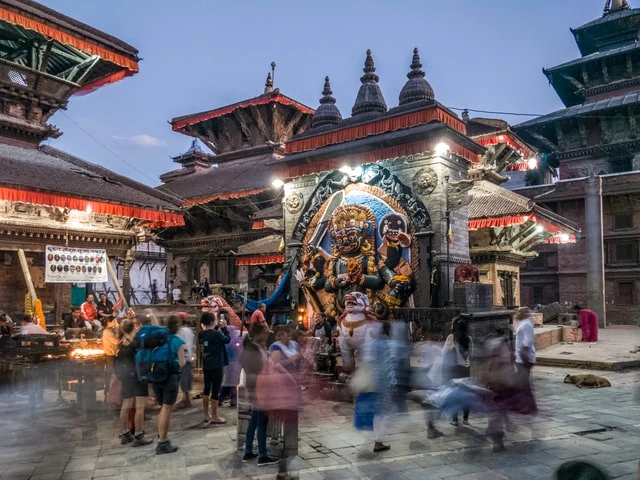
Kathmandu, Nepal's capital and largest city, is unlike any other place on earth. The decaying structures in the city's core stand in stark contrast to the bright vitality that permeates the streets. Incense-scented air wafts from the shops as shoppers and street vendors go about their daily business against a backdrop of ancient temples and monuments. Along with Bhaktapur and Patan, Kathmandu was one of three rival royal towns for a long time. These three are currently located close to one another and almost overlap.
The center of Kathmandu has traditionally been Durbar Square, the biggest of the palace squares in the three royal capitals and a UNESCO World Heritage Site. Temples and monuments of all shapes, sizes and religious convictions can be found here. Even though the 2015 earthquake left many structures in Kathmandu's Durbar Square irreparably damaged, it is still an interesting destination to visit.
Pokhara
Pokhara, one of Nepal's most attractive cities, is surrounded by some of the world's highest mountains, including Dhaulagiri, Manaslu, and Annapurna I. It is located at the base of the Himalayas. Pokhara serves as a gateway to the Himalayas for hikers as well as a starting point for treks to Jomsom and the Annapurna region.
Buddhist pilgrims from all over the world who are retracing Buddha's steps through his life's stations make up the majority of the tourists. The Maya Devi Temple, which is dedicated to the Buddha's mother, is said to be the place where the Buddha was born. The birth of Buddha is depicted on an ancient stone relief from the second century AD.
Despite being the second-largest city in terms of population in Nepal after Kathmandu, it doesn't seem extremely big. As you travel from Kathmandu, 200 kilometers to the east, you'll notice the substantially cleaner air and attractive surroundings almost immediately. Anyone searching for some peace will find Lake Phewa to be the perfect vacation destination with its assortment of hotels, restaurants, and stores located lakeside.
Chitwan National Park
Visit Chitwan National Park to get a fresh viewpoint on Nepal. This place has a safari-like atmosphere and is excellent for seeing wildlife. Chitwan is much lower in elevation than Kathmandu, which is 1,400 meters and has a tropical monsoon climate. This makes it entirely unlike what you might anticipate seeing in Nepal. Viewing the indigenous flora is why visitors come here. The park is home to a wide variety of wildlife, including rhinos, Bengal tigers, leopards, sloth bears, gaurs (buffalo), deer, and many more.
Crocodiles and freshwater dolphins (Gangetic) inhabit the rivers and streams, however, they are hardly sighted. More than 500 distinct bird species may be found in Chitwan, making it a paradise for birdwatchers. Tours from the resorts take you into the park on foot or, more frequently, riding elephants for up-close views of the animals. Southwest of Kathmandu and close to the Indian border is Chitwan, which is included on the UNESCO list of world cultural heritage sites.
The best times to visit Chitwan are from October through February. Even though it might get chilly in the mornings, the temperature is often around 25 degrees Celsius (77 degrees Fahrenheit), with a high level of humidity. The monsoon season, which lasts from June through September, is characterized by frequent and heavy rain.
Trek to Everest Base Camp
With a summit elevation of 29,028 feet, Mount Everest is the tallest mountain on Earth (8,848 meters). Trekking in the Mount Everest region became more popular after the now-famous first climb of the peak in 1953 by Sherpa Tensing Norgay and the New Zealander Edmund Hillary.
Since then, a great number of people have succeeded in climbing the mountain's peak, but many more trek to Everest Base Camp to see the peak rising above them. Recently, the mountain has seen its fair share of drama and sorrow. The 2015 earthquake, previous avalanches, and disputes amongst climbers have all affected Mount Everest's trekking and climbing.
Everest's appeal makes it a well-liked destination for both climbers and trekkers, despite the Everest Region not being widely regarded as the most attractive region in the country for trekking. There are several trip planning options, and there are numerous ways to get to base camp.
Numerous trekking companies, both in the West and in Nepal, offer guided hikes. All trekkers are required by law to have a guide, while it is also possible to complete the journey alone with the aid of a private guide or porter. March through May and September through December are the best months for hiking.
Those who don't want to walk up to the peak can view Mount Everest on clear days from the nearby hill town of Nagarkot. Hotel staff members will knock on guests' doors if they can sight Mount Everest early in the morning. This might be the best opportunity for the laziest visitor to see the highest peak on the planet.
Lumbini
Lumbini is well-known for being the birthplace of the historical Buddha Siddhartha Gautama, also known as Buddha Shakyamuni. Lumbini is a fantastic side journey from Pokhara to the Chitwan National Park, which is over 250 kilometers from Kathmandu and off the usual road.
This UNESCO World Heritage Site, a pilgrimage community, emanates serenity. Buddhist pilgrims from around the world make up the majority of the tourists.









Sign in to leave a comment.