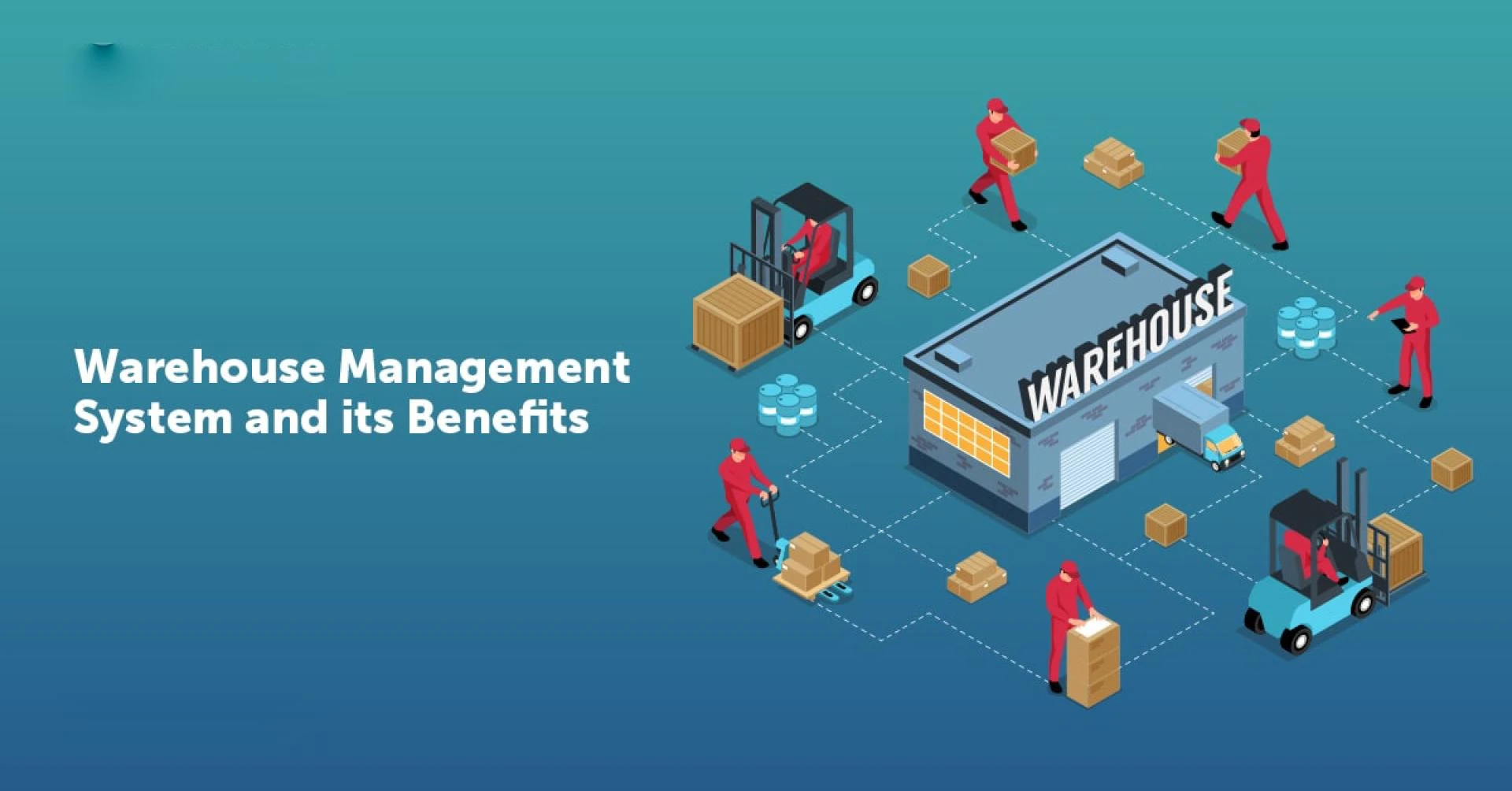

WMS software helps businesses balance safety, efficiency and profitability by reducing human error, maximizing efficiency and productivity, and positively impacting overall business via automation (Marak, 2023). Around one in 20 workers suffer workplace injuries in the warehousing industry, and more than five work-related incidents take place in warehouse environments every year. WMS provides software solutions for businesses with complete visibility into their inventory while managing their warehouse operations, leading to better inventory and shipment accuracy, cost reductions, worker efficiency and material handling.
What Is the Process of WMS Software?
Without an appropriate warehouse management system, managing logistical activities effectively is challenging. For businesses like Benison Logistics looking for more than just basic features like storage and location data, WMS software offers warehousing solutions. Functionality can differ based on needs, such as picking, packing, and shipping, or it might be more sophisticated and control material handling or yard management.
The main goal is to make sure your goods travel through the warehouse efficiently. These systems employ information retrieved from the system to optimise warehouse space. It tracks warehouse performance and maintains inventory and goods. You can expedite order fulfilment by selecting the appropriate solution.
Depending on how your system is deployed and implemented, it will be different. Choose from standalone, cloud-based, third-party, and integrated ERP modules among the four different forms of WMS. However, due to its characteristics that facilitate regular warehousing activities, the standalone system is the most popular form.
Numerous advantages of a warehouse management system might improve your business as a whole. You're going to need every advantage you can get if you want to run a profitable business.
List of Benefits
Your warehouse management system benefits may vary slightly depending on your needs, industry, and size. But the top 6 benefits of warehouse management systems are as follows:
1. Cut back on operating costs
A well-designed WMS lowers operational costs in a number of different ways. To reduce waste, this kind of system determines how to use labour and space most efficiently. In order to manage the flow of your warehouse, WMS software can assist you decide where to store specific resources, goods, and pieces of machinery.
Some cutting-edge systems come equipped with warehouse floor simulators that let users design possible floor plans directly within the system. Pallets, shelves, and other equipment that you would need to fit in your warehouse can be placed in these simulators.
Warehouse management systems frequently support both FIFO and LIFO concepts, giving warehouse managers the freedom to manage their facility as they see fit. While LIFO permits positioning shelves against the walls for extra room, FIFO ensures that expired and perishable items are chosen first.
Due to its flexibility, users may set up their warehouse to operate at maximum efficiency, which helps them save both money and time (ER, 2020).
2. Improve Visibility
One of the biggest advantages of WMS is inventory visibility. WMS software uses barcoding, serial numbers, and RFID tags to deliver real-time data about your inventory. These techniques enable users to record each item's entry into the warehouse, its movement on the floor, and its journey from one place to another.
Demand forecasts, which offer insight into which products are most popular with customers during particular times of the year, can only be created with this kind of visibility like an Ocean Freight Carriers. These predictions help management choose which products to invest in and which ones might be losing market share.
One of the many benefits of WMS that is extremely beneficial in the event of a recall is increased inventory traceability. The final product's serial number enables you to trace the item back to its original lot ID and establish whether it came from the problematic batch. Due to traceability, you will only need to recall contaminated products and not other products.
3. Enhanced Management
Just-in-time (JIT) inventory management, a method in which stock levels are kept low and merchandise travels swiftly through the warehouse, is another advantage of a warehouse management system. Your warehouse receives merchandise "just in time" to satisfy an order, as opposed to keeping it on hand for extended periods of time.
Despite the complexity of this process, a balanced, just-in-time inventory can be easily achieved with the correct warehouse management software. Accurate demand forecasting is the first tool required to keep a just-in-time system operational.
A WMS offers forecasting to produce the best inventory levels possible to satisfy demand without underestimating or overestimating it. As a result, carrying expenses for safety stock are significantly reduced. Utilizing just-in-time warehousing can help cut down on scrap and waste associated with perishable goods.
4. Increase Security
The majority of warehouse management applications demand that employees enter transactions using individual user accounts. This procedure establishes an audit trail linking particular employees to specific transactions, enhancing responsibility and lowering the possibility of theft and other problems. Employers can also use it to find new training opportunities and other ways to enhance employee behaviour.
User-based access levels also shield some reports and analysis from unwanted access. It enables each person to view the data they require for their jobs. You won't have to be concerned about corporate secrets or losing your competitive advantage in this way.
5. Enhance Performance
Consistent updates are one of the key advantages of warehouse management systems. Vendors of warehouse management software frequently release new features that reflect the most recent industry best practises. Organizations find it simpler to stay current with advancements and continuously enhance their operations as a result of this strategy.
Continuous improvement is made simpler with cloud WMS. The system may be automatically updated and expanded, negating the requirement for internal IT workers. However, depending on the terms of their contract, firms employing an on-premise system may or may not receive regular updates from their vendors. Another reason why many consumers are switching to the cloud is this problem.
6. Improve Logistics for Inbound and Outbound Traffic
Users can perfect both the placement of inventory and equipment and how it is transported around the warehouse. The advantages of a warehouse management system offer inbound planning features like scheduling and putaway management as soon as you anticipate receiving goods.
Based on the availability of people and equipment, these tools enable you and your supplier to choose the ideal date and time to receive a shipment.
In conclusion
WMS advantages are now plain to see. But be sure to read our WMS Software Buyer's Guide if you want additional details on the significance of warehouse management systems. Use it to learn more about the capabilities of WMS, implementation goals, and vendor queries.
The best method to increase a company's success and profitability quickly is with a well-designed warehouse management platform. In order to meet the specific needs of your company, it's critical to take the time to discover the ideal WMS platform. However, your company can begin reaping the benefits as soon as you invest in and put one in place.
References
Sylvia Marak (2023). Top Warehouse Management System Benefits and More. https://www.selecthub.com/warehouse-management/warehouse-management-system-software-benefits/
eazyresearchwp (2020). How to Make Progress on Your Goals When You Feel Unmotivated? https://eazyresearch.com/blog/how-to-make-progress-on-your-goals-when-you-feel-unmotivated/










Sign in to leave a comment.