
A few years ago, most people believed that becoming a data analyst required a Computer Science degree and years of programming experience. Today, that belief couldn't be further from the truth.
In 2026, companies are hiring professionals who can solve business problems with data—not those who simply hold a particular degree. Whether you're a commerce graduate, engineer, business student, or working professional planning a career switch, the opportunities in data analytics have never been greater.
The biggest question beginners ask isn't "Can I become a data analyst?" It's "What skills do I actually need?"
The good news is that you don't need to master dozens of programming languages or advanced artificial intelligence concepts to land your first analytics job. Instead, you need a strong foundation in a handful of practical tools that businesses use every day.
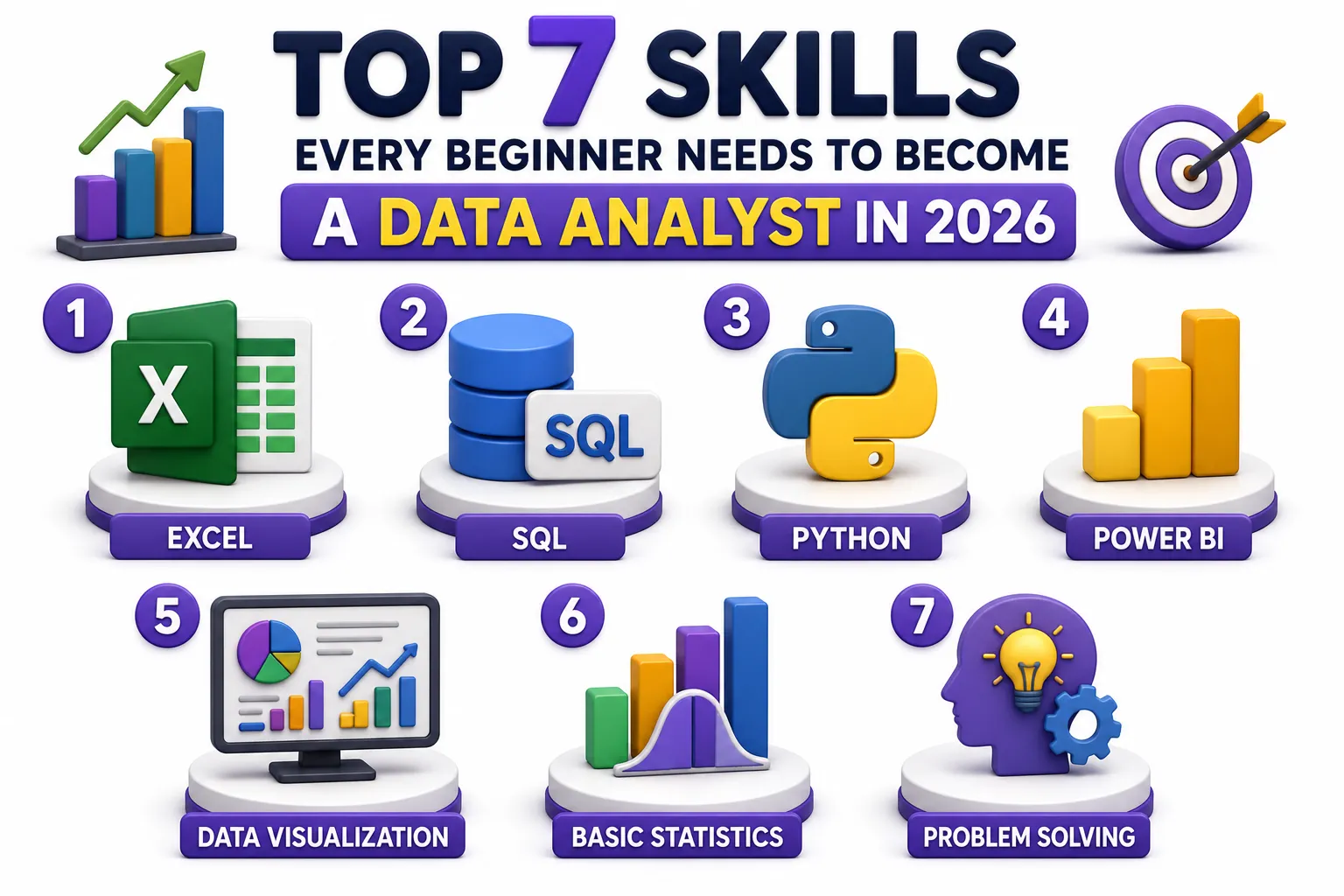
Let's explore the seven skills that every aspiring data analyst should focus on in 2026.
1. Microsoft Excel: The Skill That Still Matters
Whenever people hear "Data Analytics," they immediately think about Python or artificial intelligence.
Surprisingly, Excel remains one of the most frequently used tools in business analytics.
Companies rely on Excel for:
- Financial reporting
- Sales tracking
- Inventory management
- HR reporting
- Budget planning
As a beginner, you should learn:
- Pivot Tables
- Pivot Charts
- XLOOKUP
- INDEX-MATCH
- Conditional Formatting
- Data Validation
Many recruiters still include Excel-based tasks during interviews because they want to assess your ability to organize and interpret data quickly.
2. SQL: The Language of Data
Imagine a company has ten million customer records.
No one is opening an Excel file with ten million rows.
Instead, analysts use SQL to retrieve exactly the information they need.
For example:
- Which products generated the highest revenue?
- Which customers purchased in the last 30 days?
- Which city has the highest number of repeat buyers?
SQL allows you to answer these questions efficiently.
Start with the basics:
- SELECT
- WHERE
- GROUP BY
- ORDER BY
- JOIN
- Aggregate Functions
Once you're comfortable with SQL, you'll notice that many business problems become much easier to solve.
3. Python: Automating Your Analysis
Python often intimidates beginners because they assume it requires advanced programming knowledge.
The reality is much simpler.
As a data analyst, Python helps you:
- Clean messy datasets
- Automate repetitive tasks
- Analyze large amounts of data
- Create visualizations
You don't need to become a software developer. Learning libraries like Pandas and NumPy is enough for most entry-level analytics roles.
Take it one concept at a time, and you'll be surprised by how quickly you progress.
4. Power BI: Turning Data into Decisions
Numbers alone rarely influence business decisions.
Visualizations do.
Power BI allows you to transform thousands of rows of raw data into interactive dashboards that executives can understand within minutes.
Imagine presenting a dashboard that instantly shows:
- Monthly revenue
- Customer growth
- Best-selling products
- Regional performance
- Profit margins
Instead of reading hundreds of rows, decision-makers can immediately identify trends and take action.
That's why Power BI has become one of the most valuable skills for aspiring analysts.
5. Statistics: Understanding What the Data Means
Many beginners worry because they weren't great at mathematics in school.
Fortunately, entry-level data analytics doesn't require advanced mathematics.
Instead, focus on practical concepts like:
- Mean
- Median
- Standard Deviation
- Correlation
- Probability
These concepts help you interpret results correctly and avoid making misleading conclusions.
Remember, analytics isn't about complicated formulas—it's about making informed decisions based on evidence.
6. Business Thinking
This is the skill that many beginners overlook.
Knowing SQL or Python is helpful, but employers also want analysts who understand why the analysis matters.
Imagine a company asks:
"Why have our sales dropped by 15%?"
A dashboard alone isn't the answer.
A good analyst investigates customer behavior, identifies the underlying cause, and recommends practical solutions.
Developing business thinking will make your analysis more valuable and help you stand out during interviews.
7. Communication Skills
You may build an excellent dashboard, but if you can't explain your findings, your work loses much of its impact.
Data analysts frequently present insights to managers, marketing teams, finance departments, and executives.
Practice explaining your projects in simple language.
Instead of saying:
"The dataset shows a statistically significant correlation."
Try saying:
"Customers who purchased Product A were much more likely to purchase Product B, which creates an opportunity for cross-selling."
Clear communication is one of the most underrated skills in analytics.
Skills Alone Aren't Enough—Practice Matters
Many learners spend months watching online tutorials without ever working on a real dataset.
That's one of the biggest reasons they struggle during interviews.
If you've learned SQL, analyze a sales database.
If you've learned Power BI, build a dashboard.
If you've learned Python, clean a messy dataset.
Practical experience builds confidence and gives you meaningful projects to discuss with recruiters.
Should You Join a Structured Training Program?
Self-learning is a great way to explore the basics, but many beginners eventually face challenges such as:
- Too many learning resources
- No clear roadmap
- Limited project experience
- Lack of mentor feedback
- Interview preparation difficulties
A structured Data Analytics Certification Training in India can help address these challenges by providing a well-organized curriculum, real-world projects, and guidance from experienced mentors.
If you're looking for flexibility, an Data Analytics Course can also help you learn at your own pace while building the practical skills employers expect.
Final Thoughts
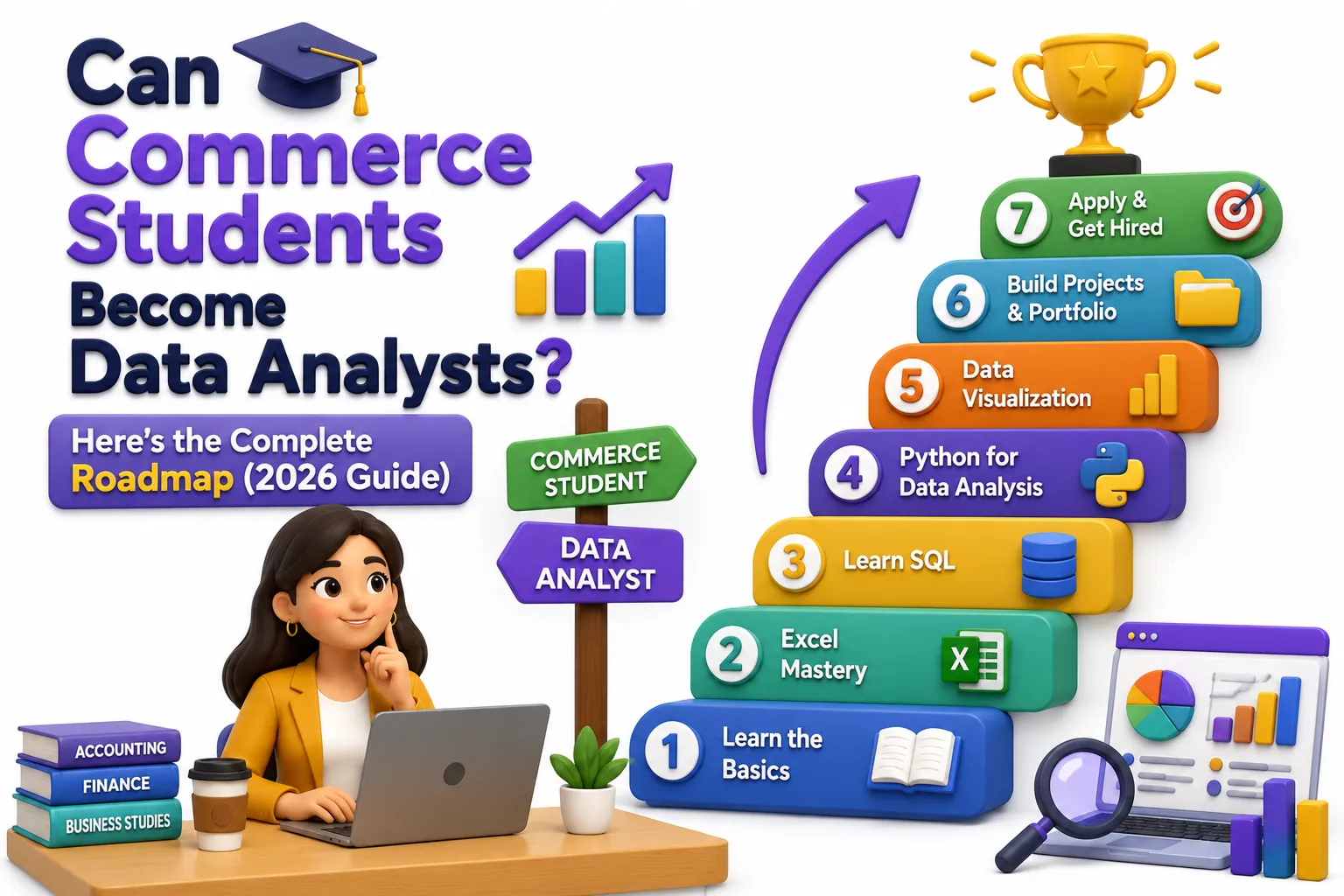
The future of data analytics belongs to professionals who combine technical skills with business understanding and continuous learning.
You don't need a Computer Science degree to build a successful career. What matters is your willingness to learn, practice consistently, and solve real-world business problems.
Start with Excel, SQL, Python, Power BI, and statistics. Build meaningful projects, create a portfolio, and keep improving your communication skills.
Those small, consistent steps can lead to a rewarding career in one of the fastest-growing fields in technology.
Want the Complete Roadmap?
This article covered the essential skills, but becoming job-ready involves much more than learning tools.
If you'd like a detailed step-by-step guide covering:
- Learning roadmap
- Portfolio building
- Salary expectations
- Interview preparation
- Career opportunities
- Best learning approach for beginners
Read our complete guide:
How to Become a Data Analyst in 2026 Without a Computer Science Degree
























Sign in to leave a comment.