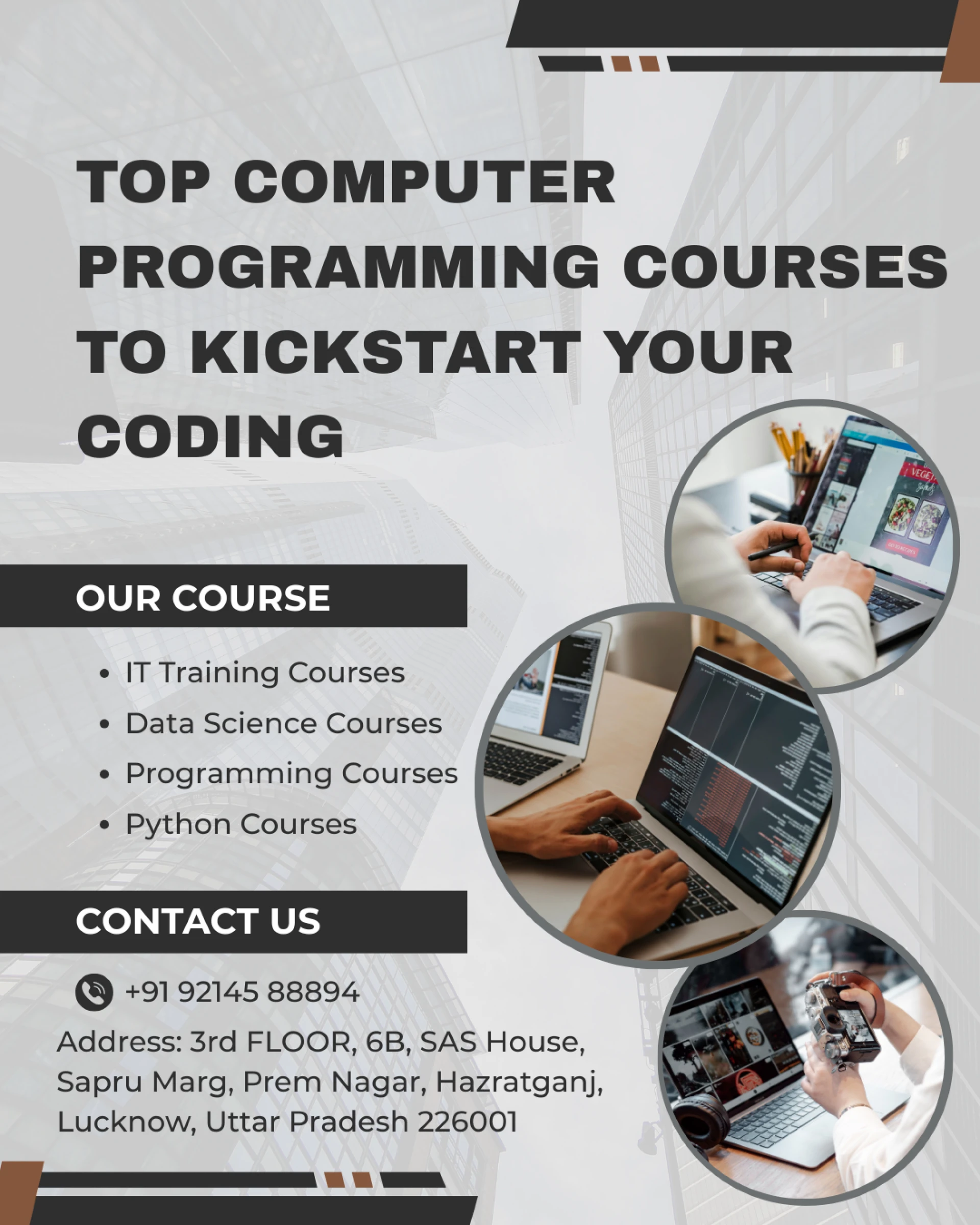

The world today is powered by technology, and behind almost every innovation lies computer programming. Whether it’s mobile applications, artificial intelligence, game design, or even websites, programming serves as the foundation. Learning to code is no longer limited to software engineers — it’s a vital skill that empowers anyone to create, innovate, and solve real-world problems.
If you’re looking to start your journey in coding, computer programming courses are the best way to build strong fundamentals and gain hands-on experience. With countless online and offline options available, the challenge is knowing which courses provide the right blend of knowledge, practice, and career opportunities.
This article will guide you through the top computer programming courses that can truly kickstart your coding career. We’ll explore beginner-friendly options, advanced training, platforms offering free resources, and career-focused programs.
Why Take Computer Programming Courses?
Before diving into specific courses, it’s important to understand why enrolling in structured programming courses matters:
- Structured Learning Path — Courses are designed step-by-step, making it easier for beginners to understand complex concepts.
- Hands-On Practice — Programming courses usually include exercises, projects, and real-world coding challenges.
- Industry-Relevant Skills — The best courses teach programming languages and frameworks currently in demand, such as Python, JavaScript, Java, and C++.
- Career Growth — Learning to code opens doors to high-paying jobs in software development, data science, cybersecurity, and more.
- Problem-Solving Skills — Beyond jobs, coding enhances logical thinking, creativity, and innovation.
Top Computer Programming Courses for Beginners
If you’re starting with little to no experience, the following beginner courses are excellent choices:
1. CS50’s Introduction to Computer Science (Harvard, edX)
- Best For: Absolute beginners
- What You Learn: Programming fundamentals, C, Python, SQL, JavaScript, web development basics.
- Why It Stands Out: Free, comprehensive, and taught by world-class Harvard professors.
2. Python for Everybody (Coursera, University of Michigan)
- Best For: Beginners who want to start with Python
- What You Learn: Basics of Python programming, data structures, web scraping, databases.
- Why It Stands Out: Python is one of the most versatile and beginner-friendly languages.
3. The Odin Project (Free, Self-Paced)
- Best For: Self-learners who prefer project-based learning
- What You Learn: HTML, CSS, JavaScript, Git, Node.js, and full-stack development concepts.
- Why It Stands Out: 100% free and community-supported with real-world projects.
Intermediate to Advanced Computer Programming Courses
If you already know the basics and want to level up, these courses focus on deeper coding knowledge:
4. Java Programming and Software Engineering Fundamentals (Coursera, Duke University)
- Best For: Learners interested in software development careers
- What You Learn: Object-oriented programming, algorithms, debugging, and data structures.
- Why It Stands Out: Covers software engineering concepts alongside Java programming.
5. Full Stack Web Developer Nanodegree (Udacity)
- Best For: Career-driven learners wanting job-ready skills
- What You Learn: Backend, frontend, APIs, databases, deployment.
- Why It Stands Out: Includes real-world projects, mentorship, and career support.
6. MIT OpenCourseWare — Introduction to Computer Science
- Best For: Students wanting a deep academic-level foundation
- What You Learn: Algorithms, problem-solving, Python programming.
- Why It Stands Out: Free, rigorous, and follows MIT’s curriculum.
Specialized Computer Programming Courses
Some learners want to focus on specific fields like data science, AI, or game development. Here are some top picks:
7. Machine Learning Specialization (Coursera, Stanford University with Andrew Ng)
- Best For: Those interested in AI and machine learning
- What You Learn: Supervised and unsupervised learning, algorithms, model building.
- Why It Stands Out: Taught by Andrew Ng, a leading figure in AI.
8. Unity Learn (Game Development with C#)
- Best For: Aspiring game developers
- What You Learn: Game programming, C#, Unity engine tools.
- Why It Stands Out: Used by indie developers and professional studios worldwide.
9. DataCamp’s Data Science Career Track
- Best For: Learners who want to specialize in data science
- What You Learn: Python, R, SQL, machine learning, data visualization.
- Why It Stands Out: Hands-on projects with real-world datasets.
Free vs Paid Computer Programming Courses
One of the biggest questions beginners face is whether to choose free or paid courses.
- Free Courses: Great for testing interest in coding. Examples include CS50, The Odin Project, and MIT OCW.
- Paid Courses: Provide structured paths, mentorship, certificates, and job support. Platforms like Udacity, Coursera, and edX excel here.
Tip: Start free to explore your interest, then invest in a paid course when you’re ready to specialize.
Career Paths After Learning Computer Programming
Completing computer programming courses opens up several career opportunities:
- Software Developer — Build applications, tools, and software products.
- Web Developer — Design and develop websites and web apps.
- Data Scientist / Analyst — Use coding for insights and predictions.
- Mobile App Developer — Create apps for Android and iOS.
- Cybersecurity Specialist — Secure systems and data using programming knowledge.
- AI/ML Engineer — Build smart systems using advanced coding.
With the demand for skilled programmers at an all-time high, these careers often come with competitive salaries and global opportunities.
Tips for Choosing the Right Programming Course
When selecting a course, consider these factors:
- Your Goals — Do you want to become a web developer, data scientist, or software engineer?
- Learning Style — Do you prefer video lectures, projects, or interactive exercises?
- Budget — Free courses are good for testing waters; paid ones offer career-focused benefits.
- Time Commitment — Some courses require weeks, others months. Choose what fits your schedule.
- Certification Value — If career advancement is your goal, go for recognized certificates.
FAQs on Computer Programming Courses
Q1. Which programming language should I start with? Most beginners start with Python because it’s simple, versatile, and widely used. JavaScript is another great choice if you’re interested in web development.
Q2. Are free computer programming courses worth it? Yes! Free courses like Harvard’s CS50 and The Odin Project are excellent for beginners. They provide high-quality education without cost.
Q3. How long does it take to complete a computer programming course? It depends on the course and your pace. Beginner-friendly courses can take 4–12 weeks, while career-focused programs may last several months.
Q4. Do I need a degree to become a programmer? No. Many employers prioritize skills and projects over degrees. Completing recognized programming courses and showcasing real projects can help you land jobs.
Q5. Can I get a job after completing a computer programming course? Yes. Many learners secure jobs as developers, data analysts, or software engineers after completing courses and building a portfolio of projects.
Conclusion
Enrolling in computer programming courses is one of the smartest investments you can make in your career and personal growth. Whether you’re a beginner exploring coding basics or an advanced learner diving into AI or full-stack development, there’s a course tailored for your needs.
Start small, remain consistent, and practice through projects. Remember, coding is not just about learning a language — it’s about solving problems and creating meaningful solutions. With the right course, you’ll be well on your way to kickstarting your coding journey and unlocking endless opportunities in tech.
























Sign in to leave a comment.