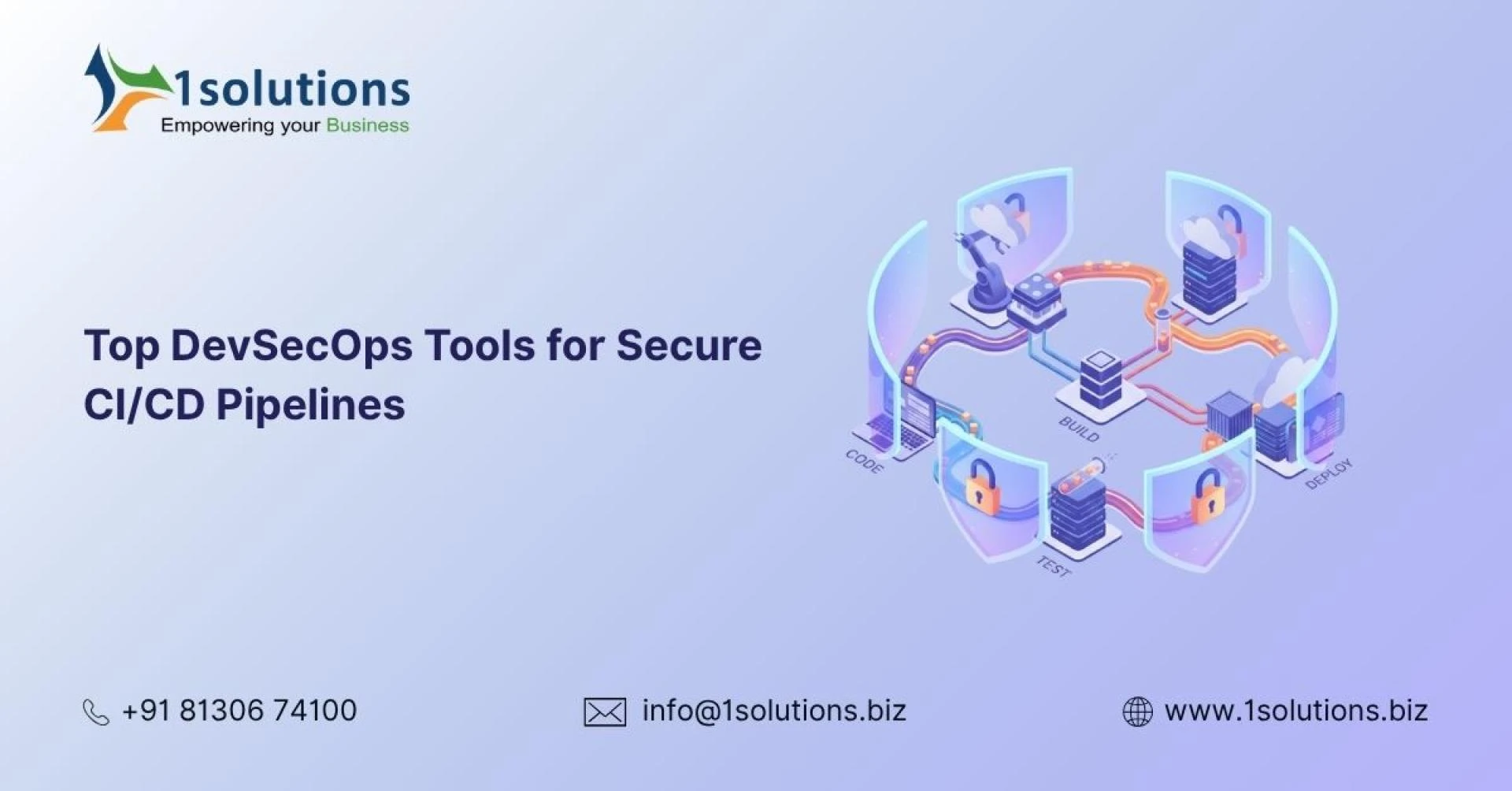

In today’s fast-paced digital economy, organizations are under constant pressure to innovate and deploy software faster than ever.
Continuous Integration and Continuous Delivery (CI/CD) pipelines enable this velocity by automating builds, tests, and deployments.
However, with automation comes complexity and complexity often introduces risk. A single misconfigured script or leaked secret can compromise an entire production environment, resulting in financial and reputational damage.
This is where DevOps tools become indispensable. They not only streamline software delivery but also embed security into every stage of the CI/CD lifecycle.
From vulnerability scanning to access control and monitoring, the right tools can transform fragile pipelines into secure, compliant, and resilient delivery systems.
For organizations looking to implement such high-assurance environments, partnering with an experienced DevOps services company can accelerate secure CI/CD adoption and governance.
Understanding CI/CD in Modern Software Development
What is CI/CD?
Continuous Integration (CI) and Continuous Delivery/Deployment (CD) are DevOps practices that automate the entire software release process.
CI focuses on integrating code changes frequently and automatically testing and validating them. CD extends this by automating delivery to staging and production environments.
The primary objective is consistency-ensuring every change, regardless of scale, is deployed in a reliable, repeatable, and traceable manner.
By automating repetitive tasks, CI/CD pipelines allow teams to focus on innovation rather than manual maintenance.
Why CI/CD Matters
Modern software development cycles demand agility. Without CI/CD automation, teams face
- Slower release cycles.
- Higher chances of human error.
- Increased risk of untested code reaching production.
A secure, automated pipeline not only accelerates release velocity but also enforces governance, compliance, and quality assurance at every checkpoint.
Security Challenges in CI/CD Pipelines
Despite their benefits, CI/CD pipelines often introduce new security risks due to automation sprawl, interconnected systems, and third-party integrations.
Common Threats Include:
- Code vulnerabilities: Poorly validated commits can introduce exploitable flaws.
- Secret leaks: Credentials or API keys accidentally pushed to repositories.
- Dependency risks: Use of outdated or vulnerable open-source libraries.
- Unsecured build environments: Misconfigured agents or containers exposing attack surfaces.
- Lack of monitoring: Inadequate logging and alerting delays threat detection.
These vulnerabilities can lead to data breaches, downtime, or unauthorised code deployments if not proactively mitigated.
The Role of Automation and Monitoring in Security
Automation as a First Line of Defence
Automation enforces consistency. Every time code is built, tested, and deployed, predefined scripts validate configurations, enforce policies, and prevent drift. Automated checks ensure that no code bypasses scanning or compliance gates.
Monitoring for Continuous Assurance
Monitoring complements automation by providing real-time visibility into pipeline behaviour.
Metrics and logs reveal anomalies such as unusual deployment activity, failed tests, or unexpected permission escalations.
When integrated with alerting systems, monitoring tools help detect potential intrusions early, ensuring pipeline integrity.
Top 10 Devops Tools for Secure CI/CD Pipelines
Below is a curated list of leading DevOps tools that help teams establish and maintain secure CI/CD pipelines. Each entry covers its key features, benefits, and relevance to DevOps security.
1. Jenkins
Overview:
Jenkins is one of the most widely used CI/CD automation servers, known for its extensibility through plugins and integrations.
Key Features:
- Pipeline-as-code for repeatability.
- Distributed builds for scalability.
- Strong community support.
Security Benefits:
Jenkins supports encrypted credentials, fine-grained role-based access control, and plugin-based vulnerability scanning. Integrating Jenkins with credential vaults and policy enforcement plugins enhances overall CI/CD security.
2. GitLab CI/CD
Overview:
GitLab provides an all-in-one platform combining version control, issue tracking, CI/CD, and security management.
Key Features:
- Built-in CI/CD pipelines with YAML-based configuration.
- Integrated SAST, DAST, and dependency scanning.
- Container image scanning and secret detection.
Security Benefits:
GitLab’s integrated security features allow teams to detect vulnerabilities early in the pipeline, ensuring continuous integration security without relying on third-party tools.
3. Circle CI
Overview:
A cloud-native CI/CD platform built for speed, scalability, and ease of integration.
Key Features:
- Context-based secret management.
- Parallel job execution and resource classes.
- Pre-built orbs for reusability.
Security Benefits:
Supports IP allowlisting, audit logging, and external identity provider integrations. Circle CI’s ephemeral environments help prevent long-lived attack surfaces.
4. Azure DevOps
Overview:
Microsoft’s integrated DevOps suite encompasses Boards, Repos, Pipelines, and Artifacts.
Key Features:
- End-to-end DevOps orchestration.
- Azure Key Vault integration.
- RBAC and policy-based approvals.
Security Benefits:
Azure DevOps ensures compliance by enforcing multi-stage approvals, artifact signing, and secure secrets storage. Its built-in security dashboards enhance visibility across pipelines.
5. Hashi Corp Vault
Overview:
Vault is the industry standard for secrets management and encryption-as-a-service.
Key Features:
- Dynamic secrets generation.
- Tokenized access and lease revocation.
- Audit logs for compliance.
Security Benefits:
Vault eliminates the need to hard-code credentials. It provides centralized access management, ensuring developers never directly handle secrets.
6. Sonar Qube
Overview:
SonarQube performs static code analysis to maintain code quality and security.
Key Features:
- Real-time vulnerability detection.
- Quality gates for enforcement.
- Support for multiple languages.
Security Benefits:
It integrates directly into CI/CD pipelines, blocking deployments if critical vulnerabilities are detected-a core component of continuous integration security.
7. Snyk
Overview:
Snyk focuses on developer-centric vulnerability management, covering open-source dependencies, containers, and infrastructure-as-code.
Key Features:
- Dependency scanning and license compliance.
- Pull request remediation.
- Real-time vulnerability database.
Security Benefits:
By embedding into CI pipelines, Snyk ensures insecure libraries are identified and fixed automatically, preventing exposure before deployment.
8. Docker
Overview:
Docker revolutionized software delivery by standardizing application packaging in containers.
Key Features:
- Containerized builds and reproducible images.
- Secure registries and image signing.
- Role-based access to registries.
Security Benefits:
Hardened base images, minimal privileges, and integrated image scanning prevent compromised containers from entering production pipelines.
9. Kubernetes
Overview:
Kubernetes orchestrates containerized workloads at scale, providing automation, scalability, and governance.
Key Features:
- Namespace isolation.
- Network policies and pod security standards.
- Declarative infrastructure via manifests.
Security Benefits:
Kubernetes enforces least privilege using RBAC, validates images before deployment, and integrates seamlessly with admission controllers for runtime security.
10. Prometheus
Overview:
Prometheus is a metrics-based monitoring system designed for reliability and scalability.
Key Features:
- Real-time metrics collection.
- Custom alerting with Alert Manager.
- Integration with Grafana for visualisation.
Security Benefits:
Continuous monitoring enables rapid detection of anomalies. When integrated into CI/CD automation, Prometheus ensures operational and security visibility post-deployment.
Building a Secure CI/CD Stack
To maximise pipeline resilience, integrate multiple tools in a layered architecture:
- Source Control & CI: GitLab or Jenkins for build orchestration.
- Secrets Management: HashiCorp Vault for dynamic credentials.
- Code Security: SonarQube and Snyk for static and dependency scanning.
- Containerization: Docker with image signing and scanning.
- Orchestration: Kubernetes for isolated deployments and policy control.
- Monitoring: Prometheus for proactive security alerts.
This combination ensures every stage-from code commit to deployment secured and auditable.
Best Practices for CI/CD Security
1. Shift Security Left
Incorporate scanning early in development. Run SAST and DAST checks as part of every pull request.
2. Enforce Least Privilege
Limit pipeline access to essential resources only. Rotate credentials regularly using Vault or similar tools.
3. Implement Policy-as-Code
Codify compliance and security policies to ensure consistency across all pipelines.
4. Automate Rollbacks
Use monitoring triggers to roll back automatically on detecting failed builds or anomalies.
5. Audit Everything
Maintain immutable logs of every build, deployment, and credential access event.
These practices reduce attack surfaces and strengthen DevOps governance frameworks.
Evaluating DevOps Security Tools
When selecting CI/CD and DevOps tools, assess them based on:
- Integration capability with your existing ecosystem.
- Scalability to handle concurrent builds.
- Compliance features for auditing and logging.
- Ease of use for developers and operators.
- Support and community maturity.
Opting for a combination of open-source and managed tools often provides an optimal balance of flexibility and enterprise-grade security.
Key Metrics for Measuring CI/CD Security
- Mean Time to Detect (MTTD) vulnerabilities.
- Mean Time to Remediate (MTTR) post-detection.
- Pipeline compliance rate.
- Secrets exposure incidents.
- Failed vs. successful deployment ratio.
Tracking these metrics helps leadership assess ROI on DevOps security investments and promotes a culture of continuous improvement.
Cultural and Organizational Alignment
Technology is only one side of the equation. Secure CI/CD adoption requires a security-first mindset across the organization. This includes:
- Establishing security champions within development teams.
- Providing ongoing training on secure coding practices.
- Encouraging cross-functional collaboration between DevOps and InfoSec teams.
By aligning people, processes, and technology, organizations can achieve long-term security resilience.
Conclusion
Secure CI/CD pipelines are no longer a luxury-they are a business necessity. With software powering every critical operation, the cost of insecurity far outweighs the investment in prevention.
The right blend of DevOps tools-Jenkins, GitLab, Vault, SonarQube, and Prometheus, among others-provides robust automation, monitoring, and protection at every pipeline stage.
Implementing these solutions reduces risk, ensures compliance, and enhances operational agility.
To accelerate implementation and adopt best practices effectively, collaborate with a professional DevOps services company experienced in designing, deploying, and securing CI/CD environments.
Frequently Asked Questions (FAQs)
1. What are CI/CD pipelines?
CI/CD pipelines are automated workflows that build, test, and deploy software, ensuring fast, reliable, and repeatable releases in modern development environments.
2. How do DevOps tools improve CI/CD security?
They automate vulnerability detection, manage secrets, enforce compliance, and monitor pipelines continuously to prevent unauthorized access or insecure deployments.
3. What is the best tool for CI/CD automation?
Jenkins, GitLab CI/CD, and Circle CI are leading CI/CD tools offering scalability, integration, and strong security features.
4. How does Jenkins ensure pipeline security?
Jenkins uses credential providers, RBAC, and pipeline-as-code to secure builds, reducing the risk of unauthorized access or misconfigurations.
5. What’s the role of Kubernetes in CI/CD?
Kubernetes automates deployment orchestration, isolates environments, and enforces access control policies to secure production workloads.
6. How do I secure secrets in pipelines?
Store secrets in centralized managers like Hashi Corp Vault and use dynamic credentials instead of hard coding passwords in code or scripts.
7. Which tool is best for continuous monitoring?
Prometheus offers real-time metrics collection and alerting, helping detect anomalies and prevent performance or security incidents.
8. Why use a DevOps services company for CI/CD setup?
A DevOps services company provides expertise, governance, and implementation support to build scalable and secure CI/CD ecosystems.
9. How does Snyk help secure dependencies?
Snyk scans for known vulnerabilities in open-source libraries and provides real-time remediation advice during CI builds.
10. What is policy-as-code in DevOps?
Policy-as-code means defining compliance and security rules programmatically, ensuring every build and deployment adheres to governance standards.



























Sign in to leave a comment.