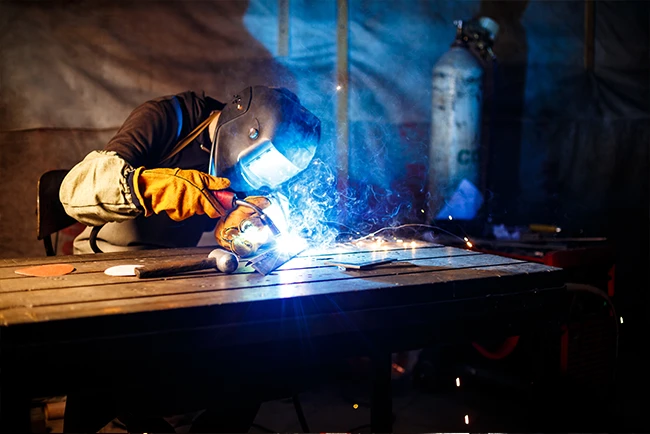

Sheet metal fabrication is one of the most commonly used prototyping manufacturing procedures. It aids in the creation of a variety of long-lasting parts, ranging from prototypes to high-volume production parts. With numerous commercial advantages, many sectors are turning to this method for their applications. However, the cost of sheet metal manufacturing is sometimes a source of concern for product developers.
Every aspect of a sheet metal fabrication project has a cost connected with it, including the design, possible prototype, finishing processes, and so on. Aside from the technique itself, materials are also expensive. As a result, it is critical to have a cost-cutting strategy in place to get the most out of your sheet metal project.
This page has collated the numerous aspects that influence sheet metal fabrication costs as well as various cost-cutting methods. Before we get there, let's talk about estimating sheet metal fabrication prices.
Sheet metal fabrication is a low-cost method of producing specific sorts of parts. Isn't it simple? The material is cut to size and formed to reflect the appropriate geometries. But here's the catch: If you become more obscure with your designs, the expenditures might quickly escalate from low to high. Then, your low-cost component swiftly transforms into a fancy object fashioned from humble sheet metal. You may also end up lengthening the production process. Because sheet metal fabrication is a labor-intensive process, part pricing is mostly determined by the number of operations your manufacturer must perform in order to produce your parts.
In today's competitive marketplaces, an acceptable pricing strategy necessitates a thorough understanding of cost structure. Cutting, bending, roll forming, punching, welding, and other processes are all part of the sheet metal part production cycle.
Estimating the cost of sheet metal manufacturing is critical for project planning. Technological improvements have made it easier to complete cost-effective projects. Despite the anticipated cost reduction, it is critical to assess sheet metal fabrication costs. We will present a brief review of the main aspects that influence the cost of metal fabrication projects in this section. There are various sheet metal components; such as Frame Bracket, Mounting Strap etc.
Factors Affecting The Cost of Sheet Metal
Installation Costs: The cost of sheet metal manufacturing is affected by the ease of installation and the time it takes. Fabrication does not often include installation expenses with material costs, which raises overall fabrication costs. Installation costs frequently include the following:Recruiting qualified professionals
Obtaining the necessary licenses or permits for installation
Purchasing installation safety equipment
The cost of transporting fabricated items to the installation site.
Using off-the-shelf hardware, you can simplify sheet metal parts: Assume you want an assembly with built-in pieces designed to hold certain components. Card guides to hold circuit boards are one example. Manufacturers can make those guides out of sheet metal, but it takes a long time, and card guides are extremely expensive instruments that cost more than $1,000. Instead, get a press-fit card guide and modify your design to accommodate the new component. The decision to place the guides is always in your team's hands, but the overall cost and time benefits are evident when you design features that use standard, off-the-shelf components.Tight Tolerances Should Be Used With Caution: Only a few surfaces of a part are normally crucial to its function. The more features with tolerance callouts there are, the higher the price. Radii, hole sizes, and distances are some instances of tolerance callouts. As a result, only crucial tolerances should be assigned to features and surfaces that are critical to the part's functionality. You can produce a more economical design by limiting the use of strict tolerances.The Purchase Price of Raw Materials: Material selection is one of the first points of contact for metal manufacturing. It is worth noting that the metal market has an impact on the overall price of parts at certain times. Raw materials' prices frequently fluctuate, influencing fabricators' overall pricing estimates. In addition, considering transportation costs, the manufacturer's closeness to raw materials is another aspect that impacts final cost. The thickness of the metal used for manufacturing has a significant impact on material and labour costs. If your project necessitates the use of numerous materials, the expenses may rise. In some circumstances, supply networks may be disrupted, resulting in raw material price volatility.The Costs of Plating and Welding for Sheet Metal Fabrication
Consider this premise: welding pre-plated sheet metal is dangerous. The very poisonous zinc oxide is released from the coatings when the treated metal is super heated. This incident is hazardous to both workers and the environment. Other factors that influence sheet metal fabrication prices include welding risks and labour expenses, particularly when using pre-plated sheet metal.
Let's say you decide to use uncoated cold rolled steel for your project. The coating process is then performed after manufacture to improve corrosion resistant qualities. As a result, your costs and lead times will rise. As a result, you must return to your designs and carefully analyse alternatives to avoid welding.
Physical exertion is required: Custom sheet metal fabrication necessitates the use of highly qualified fabricators such as professional assembly experts, certified welders, inspectors, and so on. The quantity of physical effort required to finish the metal fabrication process will influence the labour needs, i.e., the number of people needed. This will also have an impact on the cost of sheet metal manufacturing.To enhance client satisfaction, the leading fabrication businesses use computer-aided designs. Using CAD/CAM software for fabrication processes necessitates professional knowledge, which increases costs. Another aspect to consider is mechanical labour. The usage of specialized tools and equipment incurs significant capital expenditures, which fabricators frequently factor into every job. Precision metal cuts and bends need the use of force, heat, and pressure while attempting to enhance speed.Metal Construction: The cost of fabricating sheet metal will be affected by the metal structure and the associated design complexity. A sheet metal item that can be simply produced with one punch, for example, will have lower related costs than parts that require numerous intricate bends. As a result, the fewer bends, cuts, and welds required for your project, the lower the cost.
Tighter tolerances and intricate designs, on the other hand, frequently necessitate longer manufacturing times, affecting cost estimation. Furthermore, labour expenses are highly connected to metal structure and design complexity. As a result, ideas may need to be reviewed with design for manufacturing (DfM)) for cost-effectiveness and quality.
Cost-Cutting Strategies for Sheet Metal Fabrication
Now that you understand the numerous aspects that influence the cost of sheet metal fabrication projects, let's look at how to acquire low-cost sheet metal fabrication. The following suggestions will assist you in lowering the overall cost of your project:
Make Contact with a Professional Fabricator: If you want low-cost sheet metal fabrication, a full-service fabricator is the ideal option. You should select a fabrication business that can handle the majority of the work themselves. INDGIRKA, for example, may assist you with your project from design to assembly. As a result, there will be no need for further expenditure or outsourcing of the process.As a result, you should look for firms like INDGIRKA that use cutting-edge sheet metal fabrication tooling. This saves money in the long term because the production process is speedier and the product is of the highest quality. Furthermore, working with a competent fabricator ensures that your business objectives are met efficiently.Selecting the Best Raw Materials: Because the cost of raw materials affects the cost of sheet metal fabrication, selecting the right raw materials for your project will help you save money. In this instance, standard sizes of materials are usually the best options. For prototypes, you should also use the cheapest materials possible.
For example, you might prefer aluminium to stainless steel. It is best to use the most cost-effective materials for final manufacturing parts that will sufficiently perform the part's tasks.
Fabricators that purchase mill-direct can also assist you in negotiating material costs. Their collaboration and experience with such mills ensure lower bulk pricing, which you may take advantage of. Purchasing mill-direct supplies also implies that they may have more cost-effective shipping and storage options.Use Sheet Metal of a Common Gauge: If at all possible, employ standard sheet gauges and sizes in your design. These common sheet sizes are frequently less expensive than custom length sheets. Thicker materials may make bending and cutting your parts difficult. It is best to design to a common gauge and select material grades based on current market conditions. This will assist you in lowering the expenditures associated with variable gauges.
Furthermore, various gauges of sheet metal are frequently ordered. These custom-ordered materials raise overall manufacturing costs. As a result, it is critical to collaborate with your fabricator to develop a standard gauge that will satisfy your fabricating needs while keeping your expenditures to a minimum.Avoid Expensive Design Elements: As previously stated, the more sophisticated your design, the higher the cost. Parts that require multiple cuts, bends, and welds will cost more. While specific design elements may look great, they are often expensive. Most of the time, it is best to try to simplify. As a result, you should design for simpler angle bends to reduce fabrication costs. The inside radius for such bends should be equivalent to 1x the thickness of your chosen material.
Small bends on big, thick components are frequently incorrect. As a result, you should aim to avoid them. Another way to cut costs in the fabrication process is to keep your bend radius consistent. You also don't want to include unnecessary features like blind holes, machined pockets, or chamfered edges. These characteristics frequently increase lead times and manufacturing costs. A good sheet metal design guide can assist you in making the optimal selection for your product.
Consider Cost-Effective Finishing Options
Your sheet metal finishing option is frequently determined by a variety of criteria, including the part's applications and aesthetic requirements. For example, if your part will be used in a harsh environment, pre-plated metals will suffice.
Pre-plated metals, such as galvanized metals, are not the ideal solution if a welded seam is required. Consider deferring finishes such as engraving and silk screening until the last phases of product creation.
Some materials are naturally resistant to corrosion. As a result, they do not require a highly specialised finish. Specialized finishes may also necessitate cost estimators obtaining external quotations, which increases the price and lead time. Some popular finishes are less expensive and quicker. Finishes like chrome plating, passivization, anodizing, and powder coating, for example, are easily available with low economic implications.
Best Frame Bracket Manufacturer in India
Frame Bracket is created using the bottom pushing process, which is why they are included in sheet metal fabrication. Bottoming can also be referred to as "bottom pushing" or "bottom hitting." As the name suggests, the punch presses the metal sheet against the surface of the die. The angle of the die therefore controls the end angle of the work piece. The radius of the die at the bottom determines the inner radius of the angled sheet.
INDGIRKA is one of the best sheet metal fabrication manufacturing companies in India, and we also export to other countries. This is accomplished by applying force to a work component. To accomplish plastic deformation, the force must be greater than the yield strength of the material. Then and only then,
When developing sheet metal parts, one of the many considerations to consider is the cost of fabrication. The recommendations presented above will assist you in effectively lowering sheet metal fabrication expenses.
In addition to these tips, INDGIRKA's highly qualified experts have an expert understanding of custom sheet metal fabrication. We offer premier sheet metal fabrication services to produce high-quality parts at reasonable prices.








Sign in to leave a comment.