
Knee pain caused by arthritis, injury, or wear and tear can significantly affect daily life, limiting mobility and independence. When medications, physiotherapy, and lifestyle changes no longer provide relief, knee replacement surgery becomes a reliable solution. Patients often face an important decision: Total Knee Replacement (TKR) or Partial Knee Replacement (PKR). Understanding the differences between these two procedures helps patients make an informed choice based on their condition, age, activity level, and long-term goals. With advanced options for knee replacement surgery in Pune, patients now have access to modern techniques, faster recovery, and excellent clinical outcomes.
Understanding Knee Replacement Surgery
Knee replacement surgery involves removing damaged portions of the knee joint and replacing them with artificial implants designed to restore smooth movement and reduce pain. The knee has three compartments: the medial (inner), lateral (outer), and patellofemoral (front, behind the kneecap). The extent of joint damage determines whether a partial or total replacement is required. Choosing the correct procedure is crucial for long-term success, durability of the implant, and overall patient satisfaction.
What Is Total Knee Replacement?
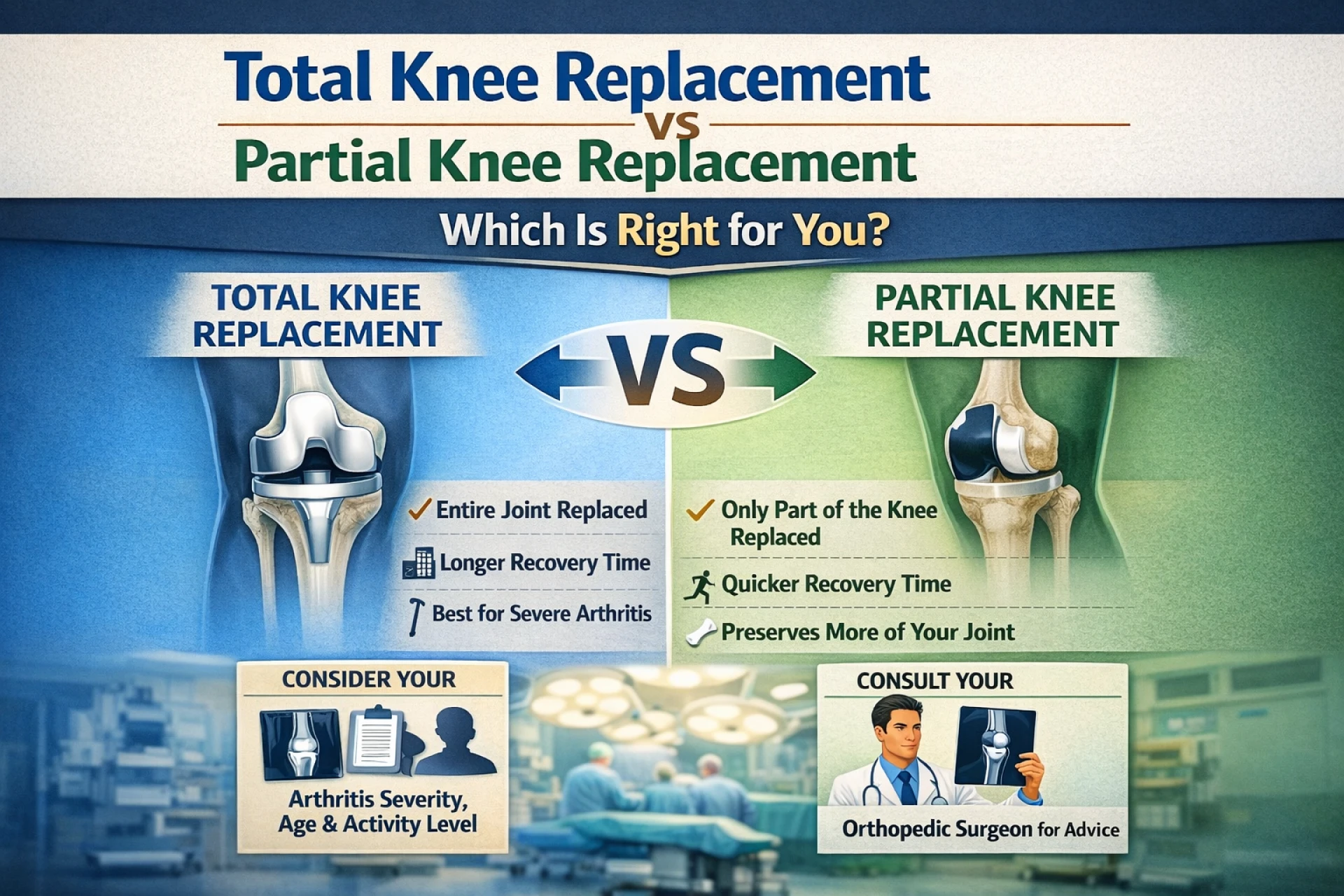
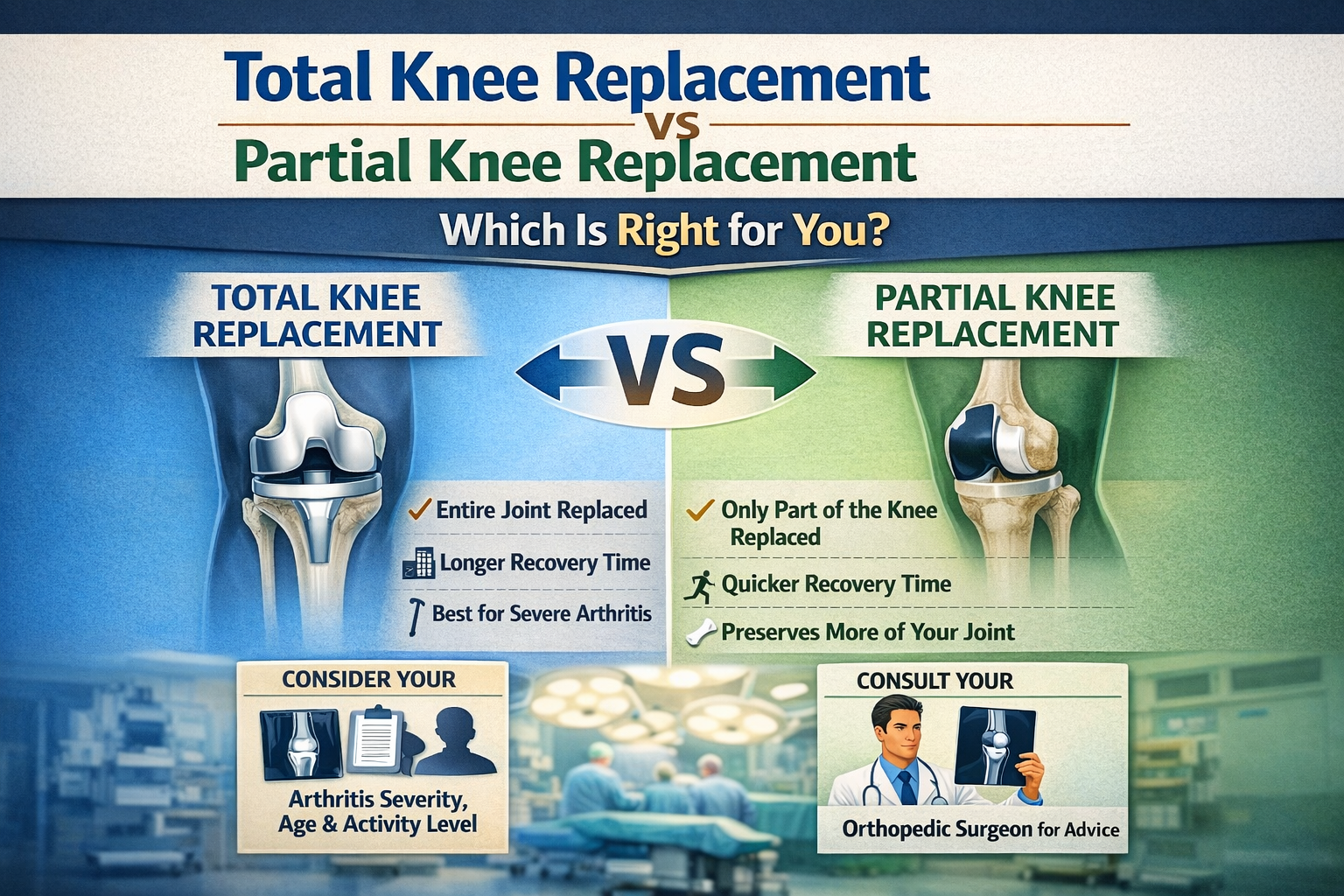
Total Knee Replacement is a comprehensive surgical procedure in which all three compartments of the knee joint are replaced. This option is typically recommended for patients with advanced osteoarthritis, rheumatoid arthritis, or widespread joint damage. In TKR, damaged cartilage and bone are removed from the femur, tibia, and sometimes the kneecap, and replaced with prosthetic components made of metal and medical-grade plastic.
Advantages of Total Knee Replacement
Total knee replacement provides consistent pain relief for patients with severe arthritis. It is a durable solution, often lasting 15–20 years or more. The procedure corrects deformities such as bow legs or knock knees and restores joint alignment. It is also suitable for patients with ligament damage or multiple compartment involvement.
Considerations
Recovery time may be slightly longer compared to partial replacement. Some patients may feel the knee is less “natural” due to the complete replacement of joint surfaces. However, for advanced disease, TKR remains the most reliable option.
What Is Partial Knee Replacement?
Partial Knee Replacement, also known as unicompartmental knee replacement, is a less invasive procedure suitable for patients with damage limited to a single compartment of the knee. In this surgery, only the affected portion is replaced, while healthy bone, cartilage, and ligaments are preserved.
Advantages of Partial Knee Replacement
Because it involves smaller incisions and less tissue removal, PKR often results in quicker recovery, less post-operative pain, and reduced hospital stay. Patients usually regain natural knee movement more easily, as most of the original joint structure remains intact. It is an excellent option for active individuals with localized arthritis.
Limitations
Partial knee replacement is not suitable for patients with extensive arthritis, ligament instability, or inflammatory joint disease. Over time, arthritis may develop in the remaining compartments, potentially requiring revision surgery.
Total vs Partial Knee Replacement: Key Differences
The primary difference lies in the extent of joint involvement. Total knee replacement addresses widespread damage, while partial replacement targets localized wear. TKR offers long-term durability for advanced cases, whereas PKR provides faster recovery and a more natural feel when patient selection is appropriate. The decision depends on clinical examination, imaging studies, ligament condition, age, activity level, and overall health.
Recovery and Rehabilitation
Both procedures require structured physiotherapy for optimal outcomes. Patients undergoing partial knee replacement often resume daily activities sooner, sometimes within a few weeks. Total knee replacement patients may need a longer rehabilitation period but generally achieve excellent pain relief and functional improvement. Adherence to post-operative exercises and medical advice plays a critical role in long-term success.
Choosing the Right Surgeon and Hospital
The success of knee replacement surgery depends heavily on surgical expertise, accurate diagnosis, and personalized treatment planning. Consulting experienced knee replacements doctors in pune ensures access to advanced surgical techniques, precise implant positioning, and comprehensive post-operative care. A specialist can guide patients toward the most suitable procedure based on individual needs rather than a one-size-fits-all approach.
Which Option Is Best for You?
There is no universal answer to whether total or partial knee replacement is better. Patients with severe, multi-compartment arthritis benefit more from total knee replacement, while those with early or localized damage may achieve excellent results with partial replacement. A thorough evaluation by an orthopedic specialist, including X-rays and MRI scans, is essential for making the right decision.
Consult Dr Saurabh Giri for Expert Knee Care
If knee pain is limiting your quality of life, timely expert consultation can prevent further joint damage and restore mobility. Dr Saurabh Giri is a trusted orthopedic specialist offering advanced knee replacement surgery in Pune, with a focus on patient-specific treatment and long-term outcomes. Under the guidance of experienced knee replacements doctors in pune, patients receive accurate diagnosis, clear surgical guidance, and dedicated rehabilitation support.
Book Your Consultation Today
Take the first step toward a pain-free and active life. Schedule a consultation with Dr Saurabh Giri to understand whether total or partial knee replacement is the right solution for you and regain confidence in every step you take.


























Sign in to leave a comment.