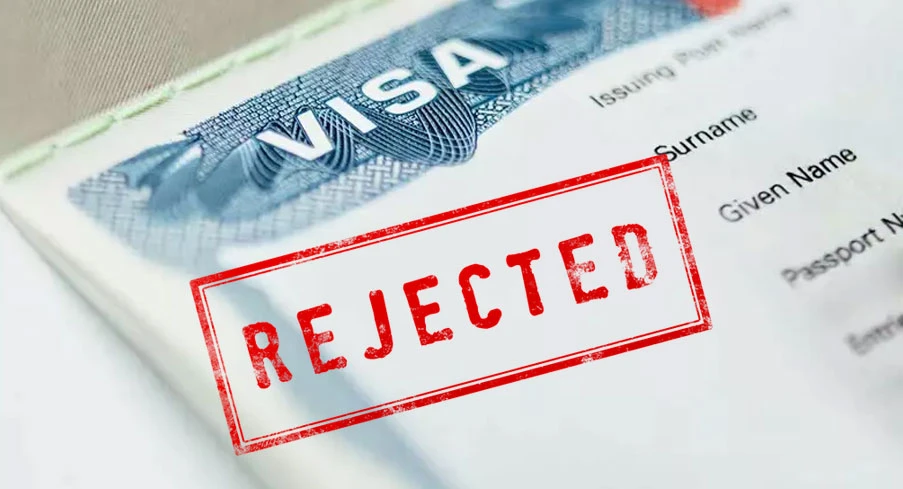

It's disappointing to hear your tourist visa rejected after the time, effort, and money you have invested to prepare. So, do not panic here; it's not the end of the road. Being rejected for a visa is actually a common occurrence and most times can be overturned if approached correctly.
This guide will shed light as to why tourist visas get rejected, what can be done immediately post-rejection, and how to give confidence when filing again.
Common Reasons Behind Tourist Visa Rejection
Before doing anything else, it is important to identify why your visa application was denied. Embassies usually provide you with the reasons in the rejection letter, but in case they do not, here are some common reasons:
1. Not Enough Financial Proof
You must demonstrate sufficient funds to support yourself through the entire trip—covering your flight, stay, food, and emergencies. A low bank balance or large deposits that cannot be explained recently might set off alarms.
2. Weak Ties with Home Country
Embassies want to make sure you will actually return back after the short visit. If you don't have strong ties (a job, property, family), your chances of rejection increase.
3. Incorrect and/or Missing Documents
Lack of certain documents, forged papers, discrepancies between pieces of your own application are all immediate grounds for denial.
4. Travel History Issues
The application may be rejected if there has been an overstay in the past, deportation, or however, frequent change of travel plans.
5. Unclear Purpose of Travel
This implies that tourist visas are granted for short-term visits. If your itinerary looks suspicious or vague or if you apply for a long stay without some sort of justification, your visa could face rejection.
Step-by-step: What Has To Be Done Once Your Visa Gets Rejected
It is however kept in mind that rejection is not final. Most times, you can apply again for the same visa after the perceived mistake is corrected. The rule changes, however, from country to country.
Step 1: Read the Rejection Letter
Try to find any codes, reasons, statements, etc., that might explain why you have been rejected for a visa. Countries like the US or Canada usually give very generic reasons for visa rejection. Some countries, like Germany or France (Schengen), are also quite helpful in giving elaborate feedback.
Tip: Make sure to keep this letter—it is going to come in handy while you either apply for the visa a second time or appeal.
Step 2: Try to Pinpoint the Weak Spots of Your Application
Cross-check application for some of the following:
Providing sufficient proof of financial means?
Stating her/his purpose for travel well?
Providing all documents valid and recent?
Giving evidence to return to this country?
Write down the possible shortcomings and start thinking about how you may fix them.
Step 3: Fix the Problem
Such problems may include:
Increase your bank balance or show a steady financial history.
Provide proof of employment, property, or family down there.
Book your itinerary in certain detail.
Add in a cover letter explaining the travel plan clearly.
The consultant might want to evaluate the applicant and give his professional thinking if one does not know where the problem lies.
Step 4: Wait Before Reapplying (If Required)
Some countries allow immediate reapplication, while others suggest waiting:
USA (B2): One can reapply anytime, but one should only apply at such time when something of great change has taken place.
UK and Canada: It is recommended that you should wait until your situation has improved.
Schengen area: Any time can be re-applied, but after rejection twice, you may have to wait 6 months.
Step 5: Consider Appealing (For Schengen and Some Other Countries)
If you feel that the rejection was unfair, you could lodge an appeal during the limited time allowed by law (usually 30 to 60 days). You will be required to file a formal appeal letter accompanied by supporting documents.
How to Prepare for a Strong Reapplication
If you choose to re-apply, here are some ways to help increase your chances:
✔️ Offer Stronger Financial Proof
Financial proof includes:
Bank statements issued by your bank for the past 6 months
Proof of income, such as salary slips or Income Tax Returns (ITRs)
Property possession documents
Sponsorship letter from a third party covering your expenses
Ensure your financial status looks stable and explainable.
✔️ Update Your Travel Plan
Prepare a precise and realistic itinerary
Arrangements should be made for the hotel, return flight, and insurance
Write down a short cover letter stating briefly why you are traveling and assuring that you will return
✔️ Provide Proof of Ties to Your Home Country
NOC from employer or leave approval slip
School/university ID if a student
Photos of family members or any other convincing proof such as marriage certificate
✔️ Choose a Visa Consultant (Optional but recommended):
If your case is very sensitive and has been mostly rejected previously, it would be best to work with a consultant on your second go who understands embassy expectations for presenting your case.
What Not to Do After a Visa Rejection
Do not lose your temper or send nasty notes to the embassy.
Don’t reapply with the same documents.
Don’t just assume that a reconsideration of the travel dates will make the difference.
Don’t fake anything or forge documents: this will land you on the blacklist.
Conclusion
Hiring DreamCountryVisas Is the Aspect Where an Expert Help Is Required
At DreamCountryVisas, we have provided assistance to many applicants who have been able to bounce back from rejections and have had their tourist visas approved.
Our experts shall examine:
Your rejection letter
Review your documents and finances
Suggest clear fixes and improvements
Help make fresh applications or appeals
Guide you along country-specific visa particularities
If you are serious about this being your last attempt, then the trusted DreamCountryVisas can help you get it right.
Still comparing? Services such as Y-Axis may put forth a similar offer of assistance, but DreamCountryVisas has earned a reputation for personalized service, better approval rates, and transparent communication.

























Sign in to leave a comment.