
The manufacturing industry is undergoing a massive transformation, thanks to the advent of 3D printing technology. This transformative technology is helping manufacturers scale their operations with efficiency and has the potential to help them meet the ever-growing demand for their products.
Compared to traditional methods, 3D printing offers several advantages that can be highly beneficial to the manufacturing sector. In particular, the overall concept of online 3d printing services can help manufacturers reduce waste, save time and money, and create customized products.
Ways 3D Printing for Manufacturing Can Bring a Paradigm Shift
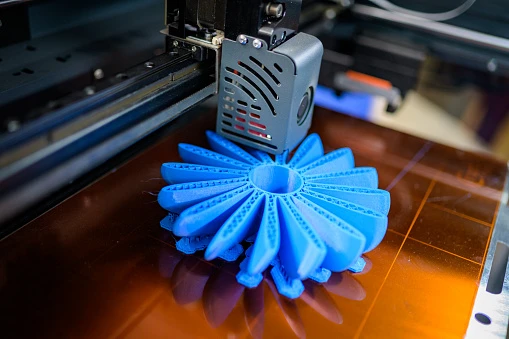
Photo by Minku Kang on Unsplash
Additive manufacturing is not an up-to-the-minute technology, but the surge in its accessibility along with affordability is creating a paradigm shift. It can help manufacturers in multiple ways, including:
On-Demand Jigs & Fixtures Manufacturing:
Manufacturers usually need jigs and fixtures in bulk quantities, and the traditional process of making these requires considerable time, effort, and capital. However, with 3D manufacturing, on-demand jigs and fixtures are quick to produce without investing in expensive tooling.
This ease makes the production process more streamlined and helps to avoid wastage. Moreover, companies can create bespoke-design jigs and fixtures to accommodate complex parts manufacturing. In addition, using 3D printing for making jigs and fixtures helps to reduce lead times.
Substantial Scope for Innovation:
Compared to conventional processes, digital manufacturing offers a lot of scope for innovation and creativity. With 3D printing, manufacturers can create customized products that meet the specific needs of their clients.
Customization generally increases costs and longer lead times in a conventional manufacturing process. However, with 3d printing manufacturing, it is possible to produce customized products without increasing price or lead time. It is because 3D printers can print any number of products with the same ease, thus eliminating the need for retooling.
Emergency Parts Replacement:
A machine breakdown or stoppage can take a long time to get replacement parts. It is because manufacturers typically have to wait for the parts to be shipped from the suppliers. However, with 3D printing, emergency replacement parts are possible to create on-demand, using the CAD files of the damaged part.
It helps speed up the machine repair process and eliminates waiting for replacement parts to arrive. Many companies are already using 3D-printed parts to tackle emergencies. These replacement parts are durable and high-quality, making them a viable option for critical applications.
Inventory Digitisation:
Inventory management is an important activity of any manufacturing process. However, the traditional way of managing inventory is both time-consuming and expensive. With 3D printing, it is possible to digitize inventory and manage it more cost-efficiently.
Photo by eMotion Tech on Unsplash
3D printers can print many products quickly, thus reducing the need for storage space. In addition, this advancement helps to track inventory at every stage of the production process, from design to delivery. As a result, it gives manufacturers a better understanding of their stock and allows them to make informed decisions about future production. Moreover, inventory digitization also reduces logistics costs.
Higher Agility:
Whether small-batch production or mass manufacturing, manufacturers' agility is crucial. To meet the ever-evolving requirements of their customers, they need to be able to adapt to changing market conditions quickly.
3D printing can help as it allows for faster turnaround times and shorter production runs. It gives manufacturers the ability to produce products in line with the latest trends and demands. In addition, 3D printing also helps to reduce waste during product development stages.
When a manufacturer can handle both small-scale and large-scale production with ease, it brings a higher level of agility. With 3D printing, this is now possible for many businesses because of affordable 3d printing services.
Risk Mitigation:
There is always a risk of part failure or machine breakdown in any manufacturing process. It can lead to significant losses for the company, both money and time.
3D printing can help mitigate this risk by assisting manufacturers to produce replacement parts on demand. By using 3d printing services, manufacturers can make high-quality parts that are durable and fit for purpose. In addition, companies can mitigate the risk in multiple ways, such as by having 24x7 access to 3D CAD files or by automating the printing process.
Cost-Efficient Rapid Prototyping:
One of the critical advantages of 3D printing is that it allows rapid prototyping. It means that manufacturers can test out new designs and ideas quickly and at a low cost.
It is possible to print multiple prototypes in a short period. In addition, this technology allows for greater flexibility in terms of design changes. Compared to traditional prototyping methods, 3D printing is more cost-effective and faster. Therefore, it is excellent for businesses looking to reduce their product development time.
Rapid prototyping is a burning need for all industries, and higher prototyping cost prevents several small-scale companies from innovating. However, with the arrival of 3D printing services, every business can now have access to rapid prototyping, making innovation more democratized.
Higher Profit Margins:
3D printing can help manufacturers achieve higher profit margins by reducing the manufacturing cost of their products. This paradigm shift is possible because additive processes allow faster production times and shorter production runs. In addition, this process eliminates the need for expensive molds and tooling, which is a growing overhead for any company.
When companies mass-produce at lower costs, it leads to higher profit margins. This positive cash flow leaves more room for focusing on the R&D of new products and services.
Advantages Of Using 3d Printing in Manufacturing:
Ability to produce parts on-demandFaster turnaround timesShort production runsReduced wasteGreater flexibility in terms of design changesRapid prototypingReduced manufacturing costHigher profit marginsWrapping Up!
3D printing is quickly disrupting the manufacturing industry with its versatile applications and transformative potential. This technology holds immense promise for helping manufacturers scale with efficiency. In the future, we can expect to see even more benefits from 3D printing as the technology continues to evolve.
Whether automotive, industrial manufacturing, or aerospace, almost every segment is reaping the benefits of this technology. This ongoing disruption is opening up new opportunities for businesses of all sizes. This advancement is already replacing several traditional production processes, and it is likely to have a far-reaching impact on the industry ecosystem.









Sign in to leave a comment.