

Transitional Care Management (TCM) is a critical aspect of modern healthcare aimed at ensuring a smooth and safe transition for patients moving from one care setting to another, typically from a hospital or skilled nursing facility to their home or another outpatient setting. These transitions can be risky, particularly for patients with chronic illnesses or complex medical needs. TCM helps bridge the gap in care by providing coordinated support, reducing hospital readmissions, and improving patient outcomes.
This article explores the importance, components, benefits, and process of Transitional Care Management, especially from a provider and patient care perspective.
What is Transitional Care Management (TCM)?
Transitional Care Management refers to the coordination and continuity of healthcare as patients transfer between different settings, such as from:
- A hospital to a home environment
- A skilled nursing facility to an outpatient clinic
- An inpatient rehab center to primary care follow-up
TCM involves a range of services provided within the crucial 30-day period after discharge to ensure patients receive proper follow-up, understand their care plan, and avoid complications that may lead to readmissions.
Why is TCM Important?
Transitioning between care settings can be disorienting for patients, especially those dealing with multiple health conditions or medications. Important details like medication changes, follow-up appointments, and warning signs to watch for can easily be overlooked. Here's why TCM is vital:
- Prevents hospital readmissions: Timely follow-up and patient education reduce unnecessary returns to the hospital.
- Improves patient satisfaction: Patients feel more supported and confident when they know what to expect.
- Enhances outcomes: Clear communication and coordination result in better adherence to treatment and faster recovery.
- Reduces healthcare costs: Avoiding preventable readmissions and emergency room visits leads to lower expenses for both patients and providers.
Who Can Provide TCM Services?
According to CMS (Centers for Medicare & Medicaid Services), TCM services can be provided by:
- Physicians (any specialty)
- Certified Nurse Practitioners (NPs)
- Physician Assistants (PAs)
- Clinical Nurse Specialists
- Certified Nurse Midwives
These providers are responsible for overseeing and managing the transition process through both clinical care and communication.
TCM Requirements and Process
To qualify for billing under CMS rules, the TCM service must meet specific requirements. The process usually includes:
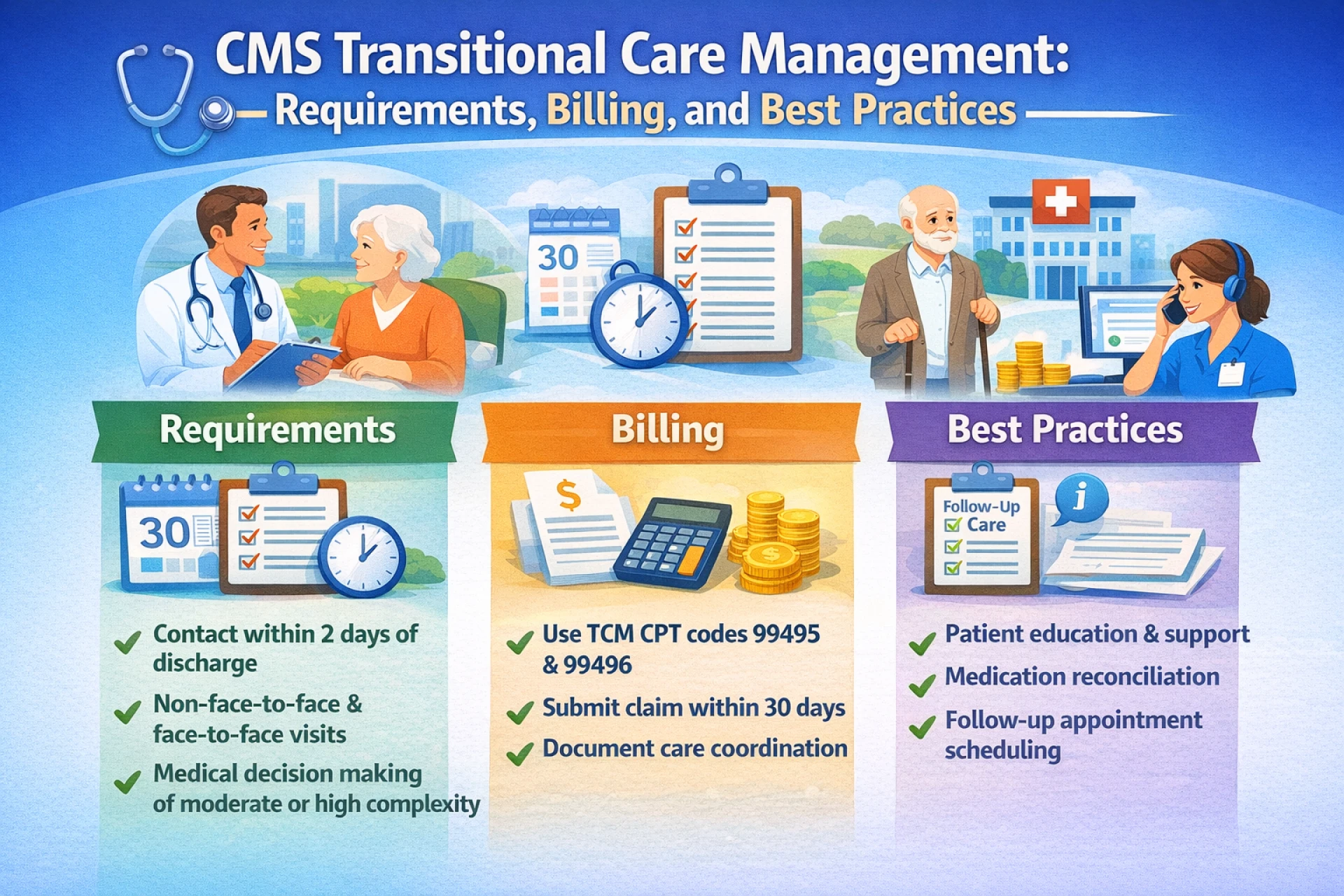
1. Initial Contact (within 2 business days of discharge)
The healthcare provider must communicate with the patient or caregiver (via phone, email, or face-to-face) within two business days after the patient is discharged. This step helps establish contact and assess immediate needs.
2. Face-to-Face Visit
A follow-up in-person or telehealth visit must occur within:
- 7 calendar days for patients with high medical decision complexity (CPT 99496)
- 14 calendar days for patients with moderate medical decision complexity (CPT 99495)
During this visit, the provider reviews the discharge summary, updates medications, and educates the patient on their condition and next steps.
3. Ongoing Communication and Care Coordination
Throughout the 30 days post-discharge, the provider or their clinical team must ensure continuous care coordination. This includes:
- Reviewing and reconciling medications
- Ordering necessary lab or imaging tests
- Referrals to specialists if needed
- Assisting with community resources or social services
- Ensuring follow-through on appointments and instructions
TCM Billing Codes
There are two main CPT codes used for TCM:
- 99495 – Moderate complexity, face-to-face visit within 14 days of discharge
- 99496 – High complexity, face-to-face visit within 7 days of discharge
To be eligible for reimbursement, the requirements mentioned above must be met.
Benefits of TCM for Providers and Patients
For Providers
- Strengthens the provider-patient relationship
- Allows billing of higher-value services
- Enhances reputation through better outcomes
- Encourages multidisciplinary team collaboration
For Patients
- A clearer understanding of their condition
- Easier access to ongoing support
- Reduced chance of complications
- Peace of mind knowing their transition is managed
Common Challenges in TCM
While TCM offers numerous benefits, some challenges can arise:
- Incomplete discharge summaries: Lack of timely access to discharge documents can hinder proper planning.
- Communication gaps: Miscommunication between hospital and outpatient providers can affect patient care.
- Patient engagement issues: Some patients may be hard to reach or reluctant to attend follow-ups.
To overcome these, providers can implement digital tools, patient education programs, and dedicated care coordination teams.
TCM and Technology
With the growing use of electronic health records (EHRs), patient portals, and telehealth platforms, providers can streamline the TCM process. Digital solutions enable:
- Easier scheduling of follow-up visits
- Secure messaging with patients
- Remote monitoring of vitals or symptoms
- Centralized care plans and medication lists
Technology enhances communication, ensures timely interventions, and makes documentation and billing more efficient.
Conclusion
Transitional Care Management plays a vital role in bridging the gap between inpatient and outpatient care. It ensures patients receive appropriate, timely, and coordinated care during one of the most vulnerable periods in their health journey. TCM reduces hospital readmissions, lowers healthcare costs, and most importantly, improves patient outcomes.
As healthcare continues to shift toward value-based care, implementing effective TCM programs is not just beneficial—it’s essential. Providers who prioritize TCM will see better patient engagement, increased satisfaction, and a stronger overall care experience. Whether you're a healthcare professional or a patient preparing for discharge, understanding and utilizing TCM can make all the difference in the road to recovery.





Sign in to leave a comment.