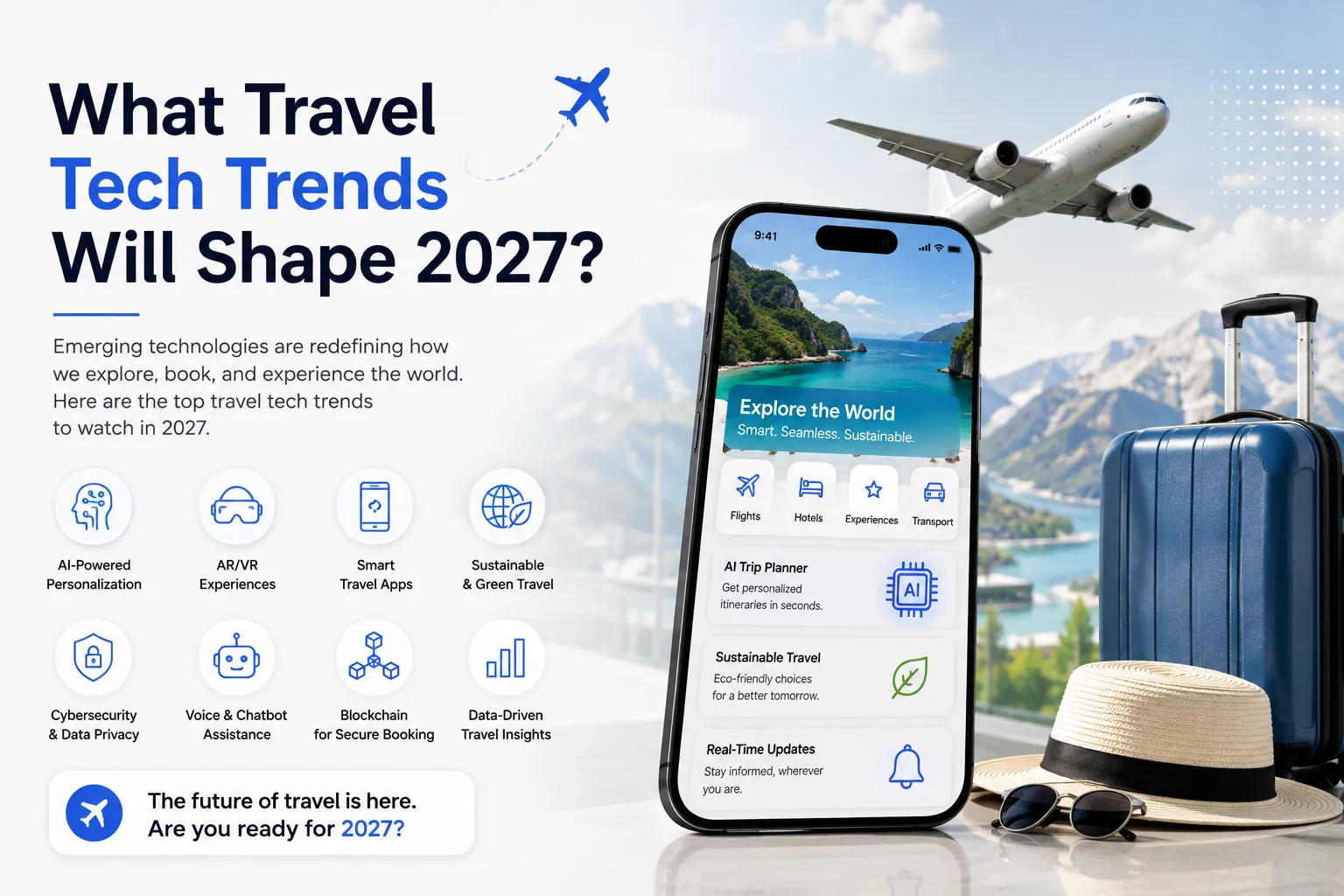

Modern travelers no longer seek just a booking platform. As we move toward 2027, the pace of innovation is expected to accelerate even further, driven by evolving expectations, AI, sustainability initiatives, and connected digital ecosystems.
Travelers expect personalized recommendations, real-time updates, seamless payment experiences, and intelligent travel companions that simplify every stage of their journey. At the same time, travel businesses are leveraging emerging technologies to optimize operations, improve customer engagement, and remain competitive in a crowded marketplace.
The coming year is likely to bring a new wave of innovations that will influence airlines, hotels, tour operators, online travel agencies, and mobility providers alike. Businesses that understand these trends early will be better positioned to meet changing customer demands and unlock new revenue opportunities.
Let's explore the travel technology trends that are expected to define 2027.
1. AI Will Power Hyper-Personalized Travel Experiences
AI has already changed how people search, book, and experience travel. By 2027, AI will become the foundation of nearly every travel platform.
Instead of displaying generic recommendations, travel applications will analyze:
- Previous bookings
- Browsing history
- Budget preferences
- Seasonal travel habits
- Family size
- Preferred airlines
- Favorite destinations
- Food preferences
These insights will allow platforms to recommend complete itineraries tailored to individual travelers.
Businesses investing in travel app development services are increasingly incorporating AI-driven personalization into their applications to improve customer satisfaction, increase booking conversions, and build long-term user loyalty.
Examples include:
- Personalized vacation packages
- Dynamic hotel recommendations
- Smart itinerary generation
- AI-powered destination suggestions
- Customized travel alerts
The result is a more engaging and efficient booking experience.
2. Conversational AI Will Replace Traditional Search
Search bars are gradually evolving into conversations.
Instead of typing: "Hotels in Paris"
Travelers may simply ask: "I want a romantic weekend in France under $1,500."
AI assistants will instantly understand context and generate complete travel plans.
Future conversational systems will:
- Compare flights
- Suggest hotels
- Recommend restaurants
- Book activities
- Adjust itineraries
- Answer travel questions in real time
This shift will significantly reduce planning time while improving user satisfaction.
3. Super Apps Will Continue to Grow
Travelers increasingly prefer completing every travel-related task in one application.
Rather than switching between multiple platforms, users will expect access to:
- Flight bookings
- Hotel reservations
- Car rentals
- Local transportation
- Currency exchange
- Travel insurance
- Restaurant reservations
- Event tickets
Businesses planning to develop a travel app are moving toward integrated ecosystems that eliminate friction and provide seamless end-to-end travel experiences. These all-in-one platforms simplify travel planning while increasing customer retention.
4. Predictive Analytics Will Improve Decision Making
Predictive analytics will become a major competitive advantage by 2027. Travel platforms will anticipate customer needs before travelers even begin searching.
Using historical data and machine learning, systems can predict:
- Preferred destinations
- Price changes
- Flight demand
- Hotel availability
- Seasonal trends
- Cancellation risks
This enables businesses to deliver proactive recommendations instead of reactive suggestions. For travelers, it means better prices and smarter planning.
5. Sustainable Travel Technology Will Become Standard
Environmental awareness continues to influence purchasing decisions. Travelers increasingly want to understand the environmental impact of their journeys.
Future travel platforms will include:
- Carbon footprint calculations
- Eco-friendly hotel recommendations
- Green transportation options
- Sustainable tour suggestions
- Carbon offset purchases
Businesses adopting sustainability-focused technology will gain greater trust among environmentally conscious travelers.
6. Voice Technology Will Gain Wider Adoption
Voice assistants are becoming increasingly capable of handling complex travel requests.
By 2027, travelers may use voice commands to:
- Book flights
- Modify reservations
- Check flight status
- Find nearby attractions
- Translate languages
- Navigate unfamiliar cities
Voice interfaces provide hands-free convenience, especially while driving or exploring destinations.
7. Augmented Reality Will Improve Travel Planning
Augmented Reality (AR) is expected to become more mainstream in travel applications.
Users may preview:
- Hotel rooms
- Cruise cabins
- Tourist attractions
- Resort facilities
- Museum exhibits
AR navigation can also guide travelers through airports, train stations, shopping districts, and city centers. These immersive experiences help users make more informed travel decisions.
8. Real-Time Translation Will Remove Language Barriers
Language differences often create challenges during international travel. AI-powered translation tools will become increasingly accurate and accessible.
Future travel apps may offer:
- Instant voice translation
- Live conversation support
- Menu translation
- Street sign recognition
- Camera-based text translation
This will make international travel more comfortable for millions of people.
9. Blockchain Will Increase Transaction Security
Blockchain technology is gradually finding practical applications within travel.
Possible use cases include:
- Identity verification
- Secure payment processing
- Loyalty program management
- Ticket authentication
- Fraud prevention
Blockchain's decentralized nature helps improve transparency while reducing fraudulent activities.
10. Automation Will Improve Customer Support
Customer expectations for instant assistance continue to rise.
Automation will help businesses provide 24/7 support through:
- AI chatbots
- Virtual travel assistants
- Automated itinerary updates
- Flight disruption notifications
- Self-service booking management
Human support teams will continue handling complex situations while automation addresses routine requests.
11. Subscription-Based Travel Services Will Grow
Subscription models are expanding across multiple industries, including travel.
Instead of paying individually for every booking, travelers may subscribe to services offering:
- Exclusive flight discounts
- Premium hotel rates
- Airport lounge access
- Travel insurance
- Concierge services
Subscription models encourage long-term customer relationships while creating recurring revenue.
How Businesses Can Prepare for 2027
Organizations looking to remain competitive should begin investing in future-ready digital capabilities today.
Key priorities include:
- Modernizing legacy systems
- Integrating AI technologies
- Improving personalization
- Strengthening cybersecurity
- Supporting sustainable travel
- Expanding omnichannel experiences
- Enhancing customer support
- Building scalable cloud infrastructure
- Leveraging predictive analytics
- Continuously monitoring traveler behavior
Businesses that proactively embrace innovation will be better equipped to respond to changing market demands.
Conclusion
The travel technology landscape in 2027 will be defined by intelligence, personalization, automation, and seamless connectivity. Travelers will increasingly expect platforms that understand their preferences, simplify complex journeys, and deliver real-time support at every stage of the experience.
Technologies such as AI, augmented reality, blockchain, and IoT are viewed as essential components of modern travel solutions. For travel businesses, keeping pace with these trends is not simply about adopting new technologies.
It requires a strategic commitment to improving customer experiences, protecting user data, supporting sustainability, and creating integrated digital ecosystems that adapt to evolving traveler expectations.
Companies that invest in innovation today will be well positioned to build stronger customer relationships, improve operational efficiency, and remain competitive in the evolving global travel industry of 2027.
















Sign in to leave a comment.