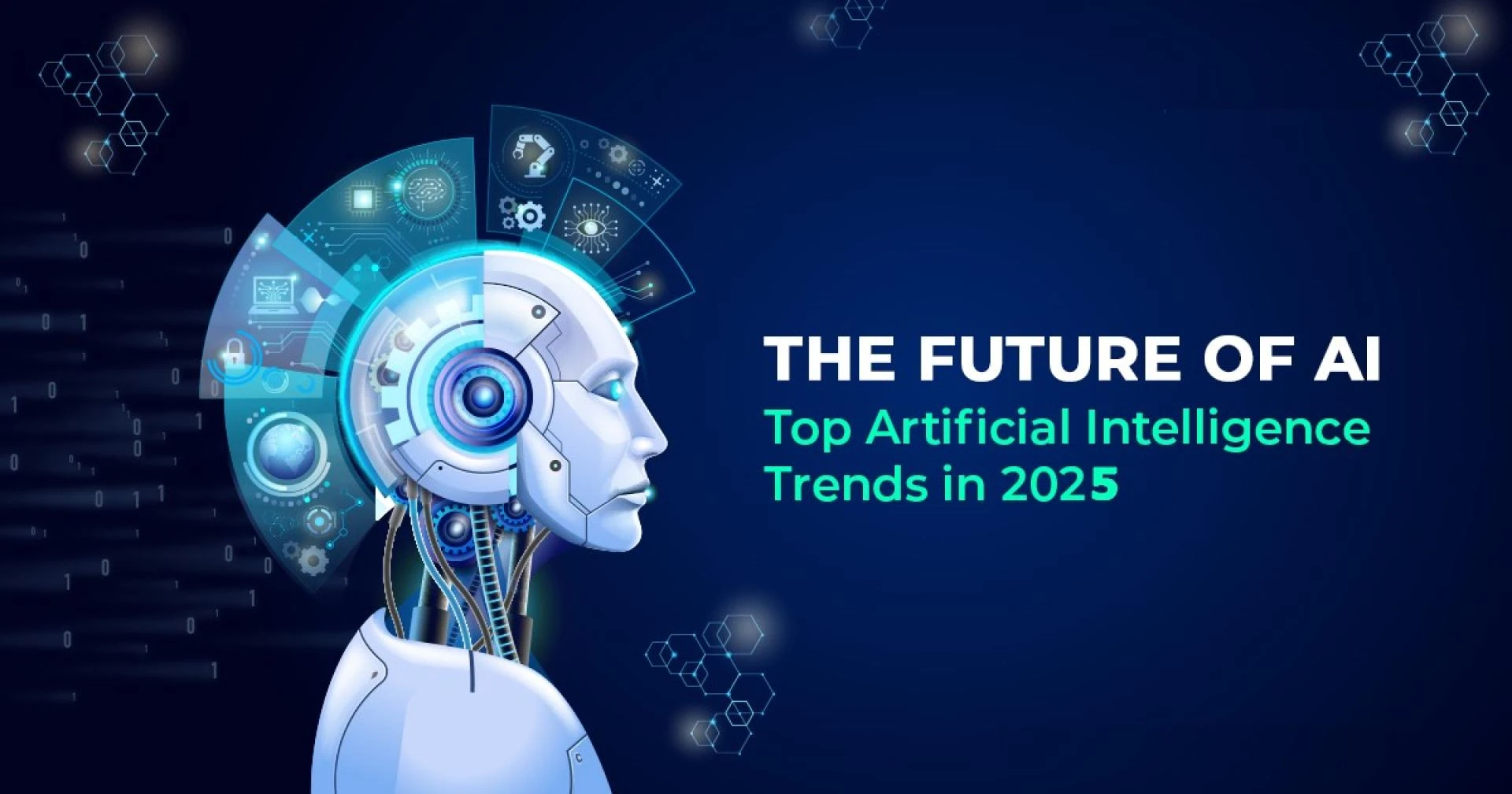

Artificial intelligence (AI) dominated headlines in 2024, fueled by the rise of generative AI. But what are the latest trends in AI for 2025? How will the future trends in artificial intelligence shape industries and transform business strategies?
From Generative AI to intelligent automation, the advancements are set to redefine innovation. Companies must adapt quickly to leverage AI’s full potential. Staying ahead in 2025 means embracing these changes and understanding their impact. Here are the latest trends in AI that businesses in various industry verticals can leverage.
Emerging Trends in Artificial Intelligence to Look Out For
1) Proprietary Models
Businesses are transitioning from generic AI models to proprietary solutions tailored to their unique datasets and needs. Their applications include:
- Financial Services: Firms in the finance industry are creating specialized models for improved decision-making and operational efficiency.
- Cybersecurity: Futuristic companies are steadily adopting proprietary AI to enhance threat detection and response.
- Defense: Organizations are securing contracts for AI applications in defense and military settings.
Custom AI models are expected to become more popular with declining costs and improving efficiency, providing companies with significant operational and competitive advantages.
2) AI Agents
AI agents are one of the emerging trends in artificial intelligence, transitioning from theory to practical application across various industries. No longer limited to basic automation, these agents can autonomously manage complex, multi-step workflows. Today’s businesses increasingly use them to optimize operations, elevate customer experiences, and enable human teams to focus on strategic initiatives.
Their ability to analyze data, make decisions, and adapt in real-time reshapes organizational approaches to efficiency and innovation. Analysts agree that AI agents represent the next significant leap in artificial intelligence. As such, Gartner predicts their prominence as a top technology trend by 2025.
3) Hyper-personalization with Customer Success Platforms
As we approach 2025, hyper-personalization in customer experience (CX) has moved from trend to necessity, especially in SaaS. Advances in AI and ML enable detailed analysis of customer data, such as purchase history and web interactions, to predict needs with remarkable accuracy.
Customer Success Platforms (CSPs) are driving this change. Combining advanced CRM features with AI-driven analytics, these platforms create detailed client profiles, mapping customer journeys, pain points, and preferences. They provide SaaS companies with actionable insights into user behavior.
The real power of CSPs lies in their ability to automate hyper-personalization. By integrating real-time data and events from multiple sources, these platforms can deliver situationally relevant content, assemble customized product bundles, and craft marketing messages that resonate on a deeply personal level.
4) GenAI-Driven Security Systems
Generative AI (GenAI), one of the top artificial intelligence trends, is reshaping cybersecurity for attackers and defenders. Hackers often use GenAI to create advanced phishing scams and exploit vulnerabilities on a large scale, forcing data security teams to innovate quickly.
The result is a surge in AI-driven security tools, including advanced threat detection and real-time response systems. Generative AI has become a critical weapon against AI-powered attacks.
As threats grow smarter, defenses are evolving too. Security has become a major focus for AI innovation. Morgan Stanley predicts the AI-based cybersecurity market will reach $135 billion by 2030. This also drives the need for stronger collaboration between experts from AI niche and cybersecurity field.
5) Accelerated IoT Growth and Integration
The Internet of Things (IoT) ecosystem is evolving rapidly, connecting devices like access controls, smart storage, inventory systems, and environmental tools into cohesive networks. This integration enhances efficiency and simplifies operations. However, businesses relying on outdated systems still need to overcome significant hurdles.
By 2025, AI technologies will be instrumental in overcoming these challenges. AI-powered solutions will enable seamless data exchange between disconnected systems, reducing the need for manual input and simplifying processes. These advancements will allow organizations to harness IoT capabilities, ensuring smooth and efficient operations across their networks.
6) Workplace AI
AI is reshaping the workplace by boosting productivity, improving processes, and increasing revenue. AI is no longer just a fascinating tool—it delivers measurable business value and enhances employee efficiency. While it replaces some roles, it also creates new opportunities. Future roles, like AI ethicists or prompt engineers, don’t exist yet but will emerge as AI transforms industries. Adapting through reskilling and upskilling will be essential to thrive in this evolving landscape.
Now, concerns about AI replacing jobs are valid and millions of roles may be displaced. However, AI is expected to create a significant number of new jobs. PWC predicts AI will drive a productivity boom, contributing up to $15.7 trillion to the global economy in 2030.
The workforce must adapt to these new trends in artificial intelligence. AI will automate certain tasks while making skills like creativity, adaptability, emotional intelligence, and analytical thinking more essential than ever.
The Path Ahead
Top artificial intelligence trends, coupled with ongoing research and growing adoption, highlight the immense potential of this technology. As we look toward 2025, the trajectory of AI is set to influence its evolution, particularly by integrating emerging technologies such as IoT, Big Data, and robotics. Expectations for AI include fostering innovation, enabling creativity, and delivering heightened efficiency, underscoring its vital contributions to society. AI development services will play a crucial role in shaping this future, ensuring tailored solutions that align with humanity's growing needs and aspirations.
























Sign in to leave a comment.