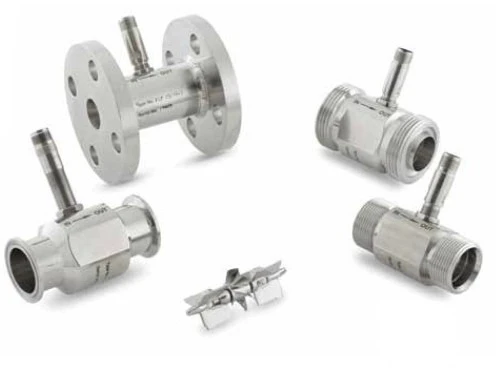

Turbine flow meters offer a reliable way to measure the flow of clean, low-viscosity fluids. With a straightforward mechanical design and quick response to flow changes, turbine meters are used in many industries where accuracy and speed matter. This post explains how turbine flow meters operate and where they provide the most value.
How Turbine Flow Meters Work
A turbine flowmeter measures fluid flow by using a rotor, or turbine, that spins as fluid moves through the meter body. The fluid enters the chamber and causes the blades of the turbine to rotate. This rotation happens at a speed that matches the flow rate of the fluid.
Each time the turbine blades pass by a sensor—often magnetic or optical—a signal pulse is generated. The number of pulses per second indicates the flow rate, and the total number of pulses shows the total volume that has passed through the meter.
The principle is simple: faster fluid means faster turbine rotation. With this direct connection between flow and mechanical movement, turbine meters are able to provide accurate and consistent readings.
Ideal Applications for Turbine Flow Meters
Turbine flow meters perform best when used with clean, low-viscosity liquids and gases. Common areas of use include:
1. Water Distribution and Treatment
Municipal water systems and industrial water circuits often rely on turbine meters to measure flow. These systems typically involve clean fluids and stable flow conditions, which are well-suited for turbine technology.
2. Fuel Transfer and Measurement
Turbine meters are widely used for aviation fuel, diesel, gasoline, and other refined products. Fast response time and good accuracy make them suitable for loading stations, fuel dispensing, and flow verification tasks.
3. Chemical Handling
Processes involving non-corrosive, low-viscosity chemicals benefit from turbine meters. Consistent flow rates and compatibility with many liquid types make this a practical solution for chemical plants and blending systems.
4. HVAC and Cooling Systems
In heating and chilled water systems, turbine flow meters help monitor circulation rates and ensure efficiency. Compact meter designs also make installation easier in tight mechanical rooms.
5. Food and Beverage Processing
For applications involving clear, low-viscosity fluids—such as water, alcohol, or juice—turbine meters provide accurate measurement during filling, batching, and process control.
Advantages of Using Turbine Flow Meters
Turbine flow meters provide several benefits when used in the right application:
- Good accuracy and repeatability, especially at steady flow rates
- Quick response, which supports real-time flow monitoring and batching
- Wide flow range, covering both low and high volumes
- Compact mechanical design, requiring minimal installation space
- Minimal pressure drop, preserving system efficiency
Turbine meters are not ideal for slurries, viscous fluids, or liquids with large particles, as these conditions can affect the moving parts. For clean, stable flow, though, turbine meters continue to be a strong option.
Supporting the Right Choice
At Banksia Controls, turbine flow meters are part of a carefully selected product line designed for reliability and long-term performance. Each system presents different requirements, so the focus is always on providing the right meter for the job.
The team at Banksia Controls supports clients with application advice, meter selection, and technical guidance from start to finish. Whether the need involves fuel transfer, process monitoring, or water management, the goal is to supply a solution that works with accuracy and confidence.










Sign in to leave a comment.