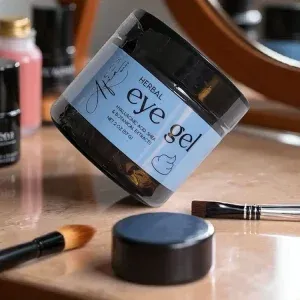

Dark circles can make the face appear tired even when someone is well-rested. The underlying cause is not always simple fatigue: genetics, ageing, allergies, dehydration, rubbing the eyes, sun exposure, hyperpigmentation, and the natural structure of the under-eye area can all contribute. Understanding the reason behind the darkness is therefore the first step toward choosing appropriate skincare. Among botanical ingredients, turmeric has attracted attention because its curcuminoids have antioxidant and anti-inflammatory properties, making it an interesting ingredient in formulations such as herbal under eye cream.
What Causes Dark Circles Under the Eyes?
Dark circles are not one single skin condition. They are a visible appearance that can develop through several different mechanisms, and that distinction matters when considering skincare. In simple terms, dark circles may result from pigmentation, visible blood vessels, shadows caused by hollowness or puffiness, or a combination of these factors.
Ageing can thin the skin and make underlying vessels more visible, while sun exposure can stimulate melanin production. Allergies and repeated eye rubbing may also worsen discoloration.
Common contributing factors include:
- Genetics: Some people naturally have more prominent under-eye pigmentation or thinner skin.
- Ageing: Loss of collagen and changes in facial volume can make vessels and shadows more noticeable.
- Sun exposure: Ultraviolet exposure can encourage pigmentation and make uneven skin tone more apparent.
- Fatigue: Lack of sleep may make existing dark circles look more pronounced.
- Allergies: Nasal congestion and repeated rubbing can contribute to darker-looking skin around the eyes.
- Skin irritation: Rubbing or scratching can aggravate delicate periocular skin.
- Dehydration: Dull, dehydrated skin can make shadows and uneven tone appear more noticeable.
This is why a product designed for under-eye care should ideally focus on more than simply making the skin look temporarily brighter.
Why Is Turmeric Used in Skincare?
Turmeric comes from Curcuma longa, a plant traditionally used in food and various cultural practices. Its most researched compounds are curcuminoids, including curcumin.
In skincare, turmeric is primarily interesting because curcuminoids demonstrate antioxidant and anti-inflammatory activity. Research reviews have found that Curcuma species and curcuminoids can influence several biological processes involved in skin health, although evidence for treating dark circles specifically remains limited.
That distinction is important. Turmeric should not be presented as a guaranteed cure for dark circles. Instead, it can be considered a supportive botanical ingredient within a thoughtfully formulated skincare routine. Its potential relevance to under-eye care comes from several properties.
Antioxidant Activity
Skin is continuously exposed to environmental stressors, including ultraviolet radiation and pollution. These factors can contribute to oxidative stress, which can affect the appearance and overall condition of the skin.
Curcuminoids have antioxidant activity, meaning they can interact with oxidative processes in the skin. A systematic review of dermatological research on Curcuma species found evidence associated with antioxidant and anti-inflammatory effects.
For the delicate under-eye area, antioxidant-focused skincare can therefore be part of a broader approach to maintaining healthy-looking skin.
Anti-Inflammatory Potential
Inflammation can affect the appearance and comfort of sensitive skin. Persistent irritation may also encourage behaviours such as rubbing, which can make the under-eye area look darker.
Curcuma-derived compounds have demonstrated anti-inflammatory activity in dermatological research.
However, the strength of the evidence varies depending on the formulation, concentration, delivery system, and condition being studied. Research involving turmeric does not automatically mean that every turmeric-containing cosmetic will produce the same effect.
How Might Turmeric Support the Appearance of Dark Circles?
The connection between turmeric and dark circles becomes clearer when the ingredient is viewed as part of a complete skincare strategy rather than as a standalone solution. Turmeric may support the appearance of the under-eye area through antioxidant and soothing properties, particularly when incorporated into a properly formulated product.
However, it cannot correct every cause of dark circles, especially shadows caused by facial anatomy, pronounced volume loss, or visible blood vessels. Here are the main ways it may fit into under-eye skincare.
Supporting Skin Against Oxidative Stress
Oxidative stress can contribute to skin damage and visible signs of environmental exposure. Antioxidant ingredients are therefore commonly incorporated into skincare formulations intended to support the skin barrier and overall appearance.
Turmeric-derived curcuminoids have been studied for antioxidant effects in dermatological contexts. This does not mean turmeric can erase pigmentation overnight. Rather, its value lies in supporting a skincare routine designed around long-term skin maintenance.
Helping Calm the Appearance of Stressed Skin
The skin around the eyes is particularly delicate. Frequent rubbing, unsuitable products, allergies, and environmental exposure may leave the area looking irritated.
Because curcuminoids have demonstrated anti-inflammatory activity, turmeric may have a role in formulations intended to support a calmer-looking complexion.
For someone considering an herbal under eye cream, this is one reason to examine the complete ingredient list rather than focusing only on the word “turmeric” on the label.
Supporting a More Even-Looking Complexion
Dark circles associated with pigmentation may require ingredients that address uneven skin tone as part of a consistent routine. Turmeric is sometimes included in botanical skincare because of its biological activity, but claims that it directly removes under-eye pigmentation should be treated cautiously. Sun protection remains especially important because ultraviolet exposure can contribute to increased melanin production and pigmentation.
Can Turmeric Completely Remove Dark Circles?
No. Turmeric should not be considered a universal treatment for dark circles. Its antioxidant and anti-inflammatory properties may make it a useful supporting skincare ingredient, but the result depends heavily on what is causing the darkness in the first place.
For example, turmeric-based skincare may have limited ability to change:
- Deep tear-trough shadows
- Structural hollowness
- Age-related volume loss
- Prominent blood vessels beneath thin skin
- Genetically determined pigmentation
- Significant puffiness caused by underlying conditions
This is where realistic expectations make a difference. A botanical ingredient can contribute to healthier-looking skin without being capable of correcting an anatomical feature. In other words, skincare can support the canvas, but it cannot always change the structure underneath it.
How Should Turmeric Be Used Around the Eyes?
The eye area deserves extra care because the skin is thin and sensitive. Applying kitchen turmeric directly to the skin is not equivalent to using a professionally formulated cosmetic product.
A properly formulated eye product is generally a more sensible approach than applying raw turmeric paste around the eyes. The formulation, concentration, preservation system, and supporting ingredients all influence how suitable a product is for delicate skin.
When selecting an herbal under eye cream, audiences should consider:
- Whether the product is specifically formulated for the eye area
- The complete ingredient list
- Whether the formula contains potentially irritating fragrances or essential oils
- The product's directions for use
- Whether a patch test is recommended
- Whether the formulation combines botanical ingredients with moisturising and barrier-supportive ingredients
A small amount should generally be applied gently rather than rubbed aggressively into the skin. This matters because repeated rubbing itself can contribute to under-eye discoloration.
What Should Be Combined with Turmeric for Better Under-Eye Care?
Turmeric does not need to carry the entire skincare routine on its shoulders. A broader approach can be more practical.
Sun Protection
Sun exposure can contribute to pigmentation, so protecting the surrounding facial skin from ultraviolet radiation is an important part of maintaining an even-looking complexion. Professional recommends broad-spectrum sunscreen with an SPF of at least thirty as part of self-care for dark circles. Sunglasses can also provide additional protection around the eyes.
Adequate Sleep
Sleep does not explain every case of dark circles, but insufficient sleep can make existing circles appear more noticeable. Maintaining a consistent sleep routine can therefore support the overall appearance of the under-eye area.
Gentle Skincare
The under-eye area should be treated with a light touch. Scratching and rubbing can aggravate the skin and may contribute to discoloration.
Hydration and Moisture
A well-moisturised skin surface can appear smoother and more comfortable. For this reason, a thoughtfully formulated herbal under eye cream may be used as one component of a consistent moisturising routine.
Turmeric vs. the Real Cause of Dark Circles
One of the biggest mistakes in under-eye skincare is treating every dark circle as though it has the same cause. Consider someone whose circles are primarily caused by pigmentation. Their skincare strategy may focus on maintaining an even complexion and protecting the area from ultraviolet exposure.
Another person may have prominent tear troughs. In that situation, the darkness may largely be a shadow rather than excess pigment. A topical product cannot be expected to change facial volume. Someone experiencing allergies may need to address the allergy and reduce eye rubbing before expecting major cosmetic improvement.
This cause-first approach is supported by clinical guidance, which notes that dark circles can arise from ageing, genetics, allergies, fatigue, dehydration, dermatitis, rubbing, pigmentation and other factors.
Therefore, herbal under eye cream should be viewed as part of a broader skincare strategy rather than a one-step answer to every type of dark circle.
What Does the Research Actually Say About Turmeric?
The scientific picture is promising but should be interpreted carefully. A systematic review published in Clinical and Experimental Dermatology examined research involving Curcuma species and curcuminoids.
It identified dermatological effects associated with antioxidant and anti-inflammatory activity, along with other potential skin-related effects.
At the same time, the review covered a relatively small number of clinical studies, and these findings should not be converted into claims that turmeric specifically eliminates dark circles.
When Should Someone Seek Professional Advice?
Most dark circles are not a serious medical concern. Nevertheless, persistent or unusual changes deserve attention. If discoloration or swelling develops mainly under one eye, becomes progressively worse, or is accompanied by other concerning symptoms, professional evaluation is appropriate.
A dermatologist can help determine whether the appearance is primarily related to pigmentation, vascular visibility, irritation, ageing, allergies, facial structure, or another factor. That assessment can prevent people from spending months using products that are not suited to the underlying cause.
Conclusion
For anyone considering an herbal under eye cream, the most sensible direction is to choose a well-formulated product, use it consistently and gently, protect the surrounding skin from sun exposure, and pay attention to how the area responds.
If the discoloration is persistent, unusual, or concentrated around one eye, professional guidance can provide a clearer path forward. Ultimately, good under-eye care is less about chasing a quick fix and more about understanding the skin, choosing ingredients thoughtfully, and giving the routine enough time to work.
Frequently Asked Questions
Does turmeric help reduce dark circles?
Turmeric contains curcuminoids associated with antioxidant and anti-inflammatory activity, which may support healthier-looking skin. However, research does not establish turmeric as a universal treatment for dark circles. Its potential benefit depends on the cause of the discoloration and the formulation in which it is used.
Can turmeric be applied directly under the eyes?
Raw turmeric should not automatically be considered suitable for the delicate eye area. A properly formulated herbal under eye cream is a more controlled approach because cosmetic formulations are designed around ingredient concentration, stability, preservation, and intended application. It is also sensible to follow the product's directions and patch-test when appropriate.
How long does turmeric take to improve dark circles?
There is no reliable universal timeframe because dark circles have different causes, and clinical evidence does not establish a standard period in which topical turmeric eliminates them. Consistent skincare, sun protection, adequate sleep, and addressing the underlying cause are more meaningful than expecting an overnight transformation.
Is turmeric good for under-eye pigmentation?
Turmeric may be a useful supporting ingredient because curcuminoids demonstrate antioxidant and anti-inflammatory properties. However, under-eye pigmentation can have several causes, including sun exposure, genetics, ageing and post-inflammatory changes. A dermatologist can help determine the most appropriate approach when pigmentation is persistent.
What should be considered when choosing an herbal under eye cream?
Look beyond a single botanical ingredient. The formula should be designed specifically for the delicate eye area, with clear directions and ingredients appropriate for sensitive skin. It is also worth considering sun protection, gentle application, moisturisation, and the likely cause of the dark circles rather than expecting one product to solve every concern.
























Sign in to leave a comment.