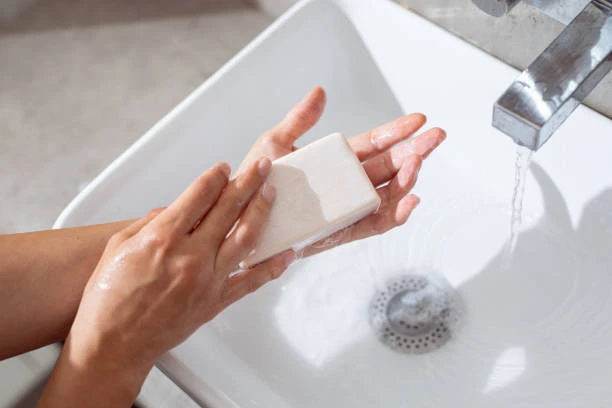

Soap is a staple of any home, and many people enjoy making their own. That’s all well and good, but making soap from scratch can be tricky if you’re a beginner. Luckily, there are plenty of soap recipes that are simple for beginners to follow. However, one common type of soap remains challenging:
Turmeric soap. Soap made with turmeric has a lot of benefits - it's full of antioxidants and has anti-inflammatory properties to help reduce the appearance of acne. Because most people know so little about this exotic spice, here’s our expert guide on everything you need to know about turmeric soaps before attempting to make your own at home.
What is Turmeric Soap?
Turmeric soap is, like many other soaps, a type of cleanser that is created from the reaction of an alkaline substance with a fatty acid. To be more specific, turmeric soap is a saponified turmeric and coconut oil soap.
The soap, as well as being an excellent cleanser, is also a great skin conditioner. The turmeric in the soap has great anti-inflammatory properties, which can help reduce the appearance of acne and other skin conditions. It’s also full of antioxidants to prevent premature ageing and keep your skin looking young and vibrant.
Turmeric is a usually yellow spice and a common ingredient in Indian cooking. In the soap-making process, it replaces the more traditional base materials, like lye.
Why Would You Make Turmeric Soap?
The turmeric in the soap has great anti-inflammatory properties, which can help reduce the appearance of acne and other skin conditions. It’s also full of antioxidants to prevent premature ageing and keep your skin looking young and vibrant.
Turmeric, when it’s used in cooking, is often used as a substitute for saffron. It has a unique, earthy flavour that is more economical than saffron, which costs a pretty penny. Turmeric’s unique colour, scent, and flavour make it a great ingredient in all kinds of recipes. It’s commonly used in curries, sauces, and even ice cream! Turmeric can be used as a dye and has a long history of being used as a fabric dye in South Asia and Central Asia.
How to Make Your Turmeric Soap
To make your turmeric soap, you will need a few basic ingredients, like turmeric root, coconut oil, water, and lye (these are the base ingredients, and you can add other things to change the colour, scent, or texture of the soap).
First, you will need to prepare the lye with warm water. This can be dangerous, so it is best to do this outside. Once the water and lye have been mixed, you can add in your base ingredients. Mix these for about 30 minutes, and this will begin the saponification process.
After the mixture has thickened, you can pour it into your moulds and let them sit for a few days before removing them and letting them cure for a few weeks. Turmeric soap needs to cure for a few weeks for all of the ingredients to fully combine into a single product.
How to Know When Your Turmeric Soap Is Done
Turmeric soap is one of the most challenging soaps to make. It requires a lot of patience and care, like any other soap, and it’s not easy to tell when it’s done. You can tell when soap is done when you drop a small amount of the mixture into a bowl of cold water.
If it leaves a trail behind it, like a blob of goo, then it needs to cook longer. If it forms a ball and sinks to the bottom, it’s ready to be poured into moulds and left to cure. You can also test for soap readiness by touching the mixture – it should be cool to the touch.
How Does Turmeric Help With Acne?
Turmeric is a natural anti-inflammatory and antioxidant that can help to reduce the redness and swelling caused by acne. It can also be used to treat any infections in the pores as well as unclog the pores and prevent new breakouts from occurring.
Turmeric also has natural properties that can be used to treat acne. It can be used to unclog and cleanse the pores and prevent future breakouts. It can also be used to treat any infections that have formed in the pores. All these factors make turmeric an excellent choice for acne treatment. Additionally, turmeric is an affordable and easily accessible ingredient that can be used to make your acne treatments.
Benefits of Using Turmeric for Skin Care
Anti-inflammatory: Turmeric has anti-inflammatory properties that can be used to treat acne and prevent it from coming back again.
Helps prevent ageing: Turmeric is a potent antioxidant that can help slow down the ageing process and prevent wrinkles and fine lines from forming in the future.
Treats sun damage: Turmeric is a natural sunscreen agent that can be used to treat sun damage and prevent further sun damage from occurring in the future.
Treats acne: Turmeric is an excellent treatment for mild to moderate acne. - Moisturizing: Turmeric has natural moisturizing properties that can be used to treat dry or scaly skin.
Ingredients in a Natural Turmeric Face Soap
1 teaspoon of turmeric powder 2 cups of water 2 tablespoons of baking soda1 cup of coconut oil 1/2 cup of almond oil 1/2 cup of jojoba oil 1/2 cup of essential oils (optional)1 tablespoon of aloe vera gel1 tablespoon of vitamin E oilMix the turmeric powder and the baking soda in a bowl and stir until the two ingredients have fused.Pour the turmeric and baking soda mixture into a saucepan and stir in the coconut oil, almond oil, and jojoba oil.Simmer the mixture for about 10 minutes and stir occasionally.Remove the mixture from the heat and allow it to cool. Once the face soap has cooled, store it in a container.To use the turmeric face soap, simply wash your face with warm water and the turmeric face soap.You can also use the turmeric facial soap as a cleanser, scrub or mask to treat acne and any other impurities on the skin.3 Tips for Beginners Making Turmeric Soap
Choose Your Turmeric Carefully - Each type of turmeric has different properties. For example, Assam turmeric is a better choice for making soap because it contains less curcumin than other kinds.
Don’t Over-Heat the Mixture - While cooking the soap mixture, be careful not to overheat it. If you get too aggressive with heating it, the lye can reach a temperature that is too high, which can cause a reaction that could harm you.
Be Patient - Making soap is a long process, so don’t get discouraged if it doesn’t turn out perfectly the first time.
Wrapping Up
Turmeric soap is a great way to get the benefits of turmeric every time you wash your hands or take a shower. It’s a bit more challenging to make than other types of soaps, but it’s worth the effort. Remember to choose your turmeric carefully and be patient with the cooking process. Hopefully, these tips will help you make your turmeric-based soap!
Turmeric is a very versatile and powerful ingredient that can be used to treat a wide range of health issues. It can be used to treat acne, sun damage, wrinkles, scars, and any other impurities that may be present on the skin. - Turmeric has anti-inflammatory, antioxidant, and anti-bacterial properties that can be used to treat acne. It can also be used to unclog pores, treat infections and prevent new breakouts from occurring.
Turmeric is a very powerful anti-inflammatory and antioxidant that can be used to treat a wide range of health issues. It can be used to treat acne, sun damage, wrinkles, scars, and any other impurities that may be present on the skin.
References:
The effect of a daily facial cleanser for normal to oily skin on the skin barrier of subjects with acne.https://europepmc.org/article/med/16910029Efficacy and possible mechanisms of botulinum toxin treatment of oily skin
https://onlinelibrary.wiley.com/doi/abs/10.1111/jocd.12866
0
0






Sign in to leave a comment.