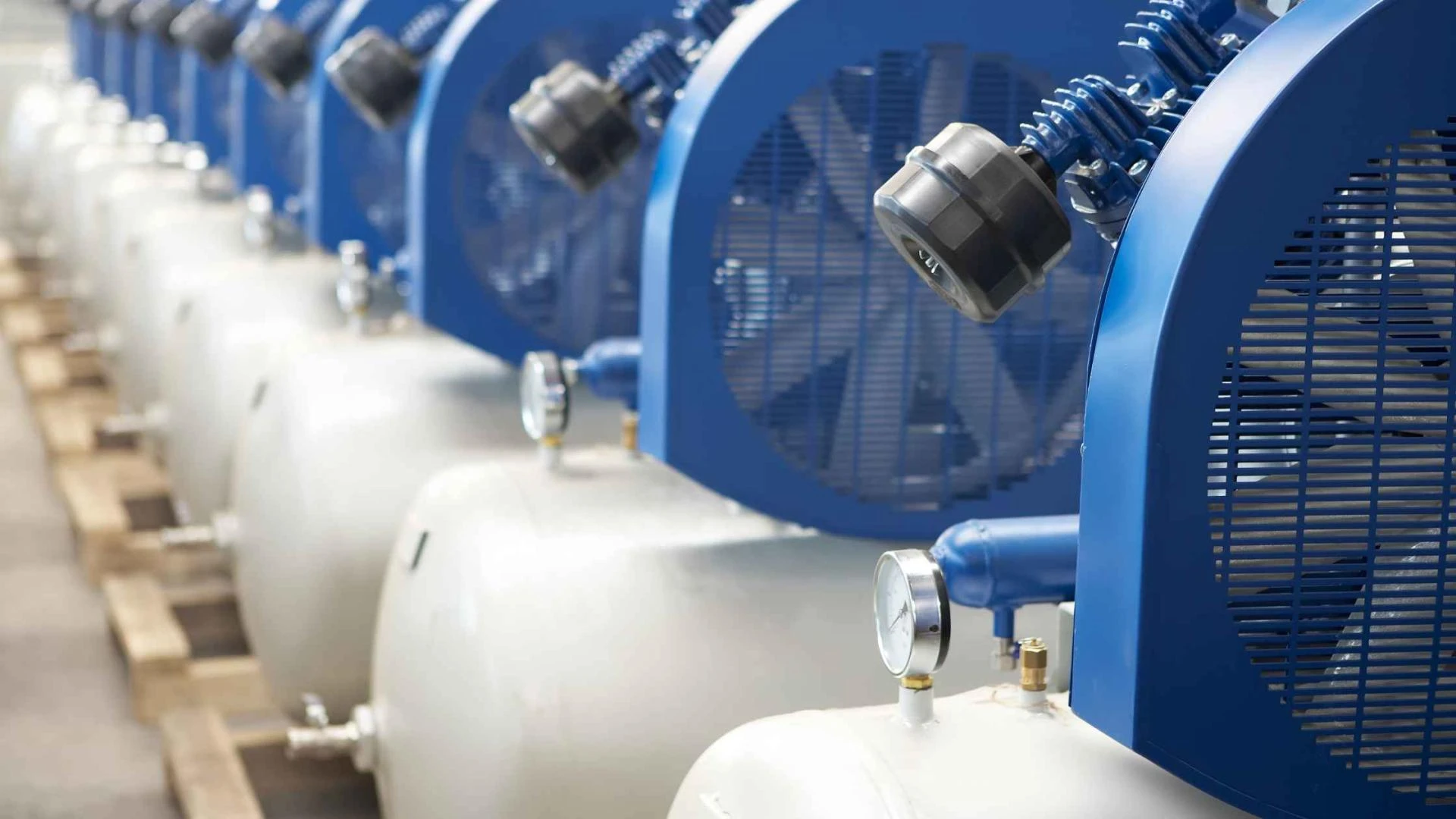

Each industry and workshop benefits from and depends on air compressors. In recent years, they have shrunk in size and lost weight, making them more suited to various work environments. These are incredibly useful portable gadgets that power just one air tool. A Reciprocating air compressor has the main advantage of being far more powerful than typical tools and without requiring their own large motors. Because they only actually need a minimal amount of oiling, an engine that makes the most of air pressure may power a variety of equipment. In this article, we will discuss different types of air compressors and you will get to know what is right for you.
Different types of Air Compressors
Rotary Screw Compressors
Rotary screw air compressor , a typical displacement compressor, are among the simplest air compressors to maintain since they include an internal cooling system that doesn't need any upkeep. Typically, these are massive industrial-sized equipment that may either run on oil or without oil. These air compressors range in capacity from 5 horsepower to 350 horsepower and are made for continuous usage due to the internal cooling system.
Reciprocating Air Compressors
Another well-liked variety of displacement compressors is the reciprocating compressor. They are often seen at smaller building sites, including garages and residential homes. The reciprocating compressor is not intended for continuous usage, in contrast to the rotary screw compressor. Additionally, a reciprocating air compressor contains more moving components that are maintained with oil to ensure smooth operation.
Axial Compressors
Construction projects do not frequently include the utilisation of axial air compressors. Instead, they are often discovered in the fast engines of ships and aircraft. Axial compressors are best used in aerospace applications because of their high efficiency rate and high cost compared to other types of air compressors.
Centrifugal Compressors
In order to create potential energy, centrifugal air compressors chill and gradually slow the incoming air as it passes through a diffuser. Centrifugal compressors are able to generate a large quantity of energy in a comparatively small machine because of its multi-phase compression process. These compressors require less upkeep than rotary screw or reciprocating models, and some may even create air without any oil.
How to Choose the Right Type of Air Compressor?
Using oil-powered air compressors in clean production facilities can be problematic. The internal mechanics of most air compressors are lubricated with oil, and the fumes from these devices may pollute the air, harming goods or production methods. This risk is significantly diminished by using an oil-free air compressor. Investing more money up front in a high-efficiency air compressor may be worthwhile if you're working on a protracted building job.
A portable air compressor is a fantastic choice if you move it between locations. Energy can still be delivered by small, light units, but in a more condensed form. For smaller building jobs, portable compressors may be the best option even if they won't be as powerful as bigger equipment.
Determine the Need for Additional Features
You may employ a number of accessories and extra features with various air compressor models. Thermal protection add-ons for air compressors monitor internal temperature and prevent motor damage if the device is overworked. Some air compressors operate more quietly thanks to belt drive methods rather than direct drives. Make sure the air compressor you select is compatible with any of these extra features if you anticipate using any of them. The more additional features you have in your air compressors, the better it is to be utilised in different sections of your industry.









Sign in to leave a comment.