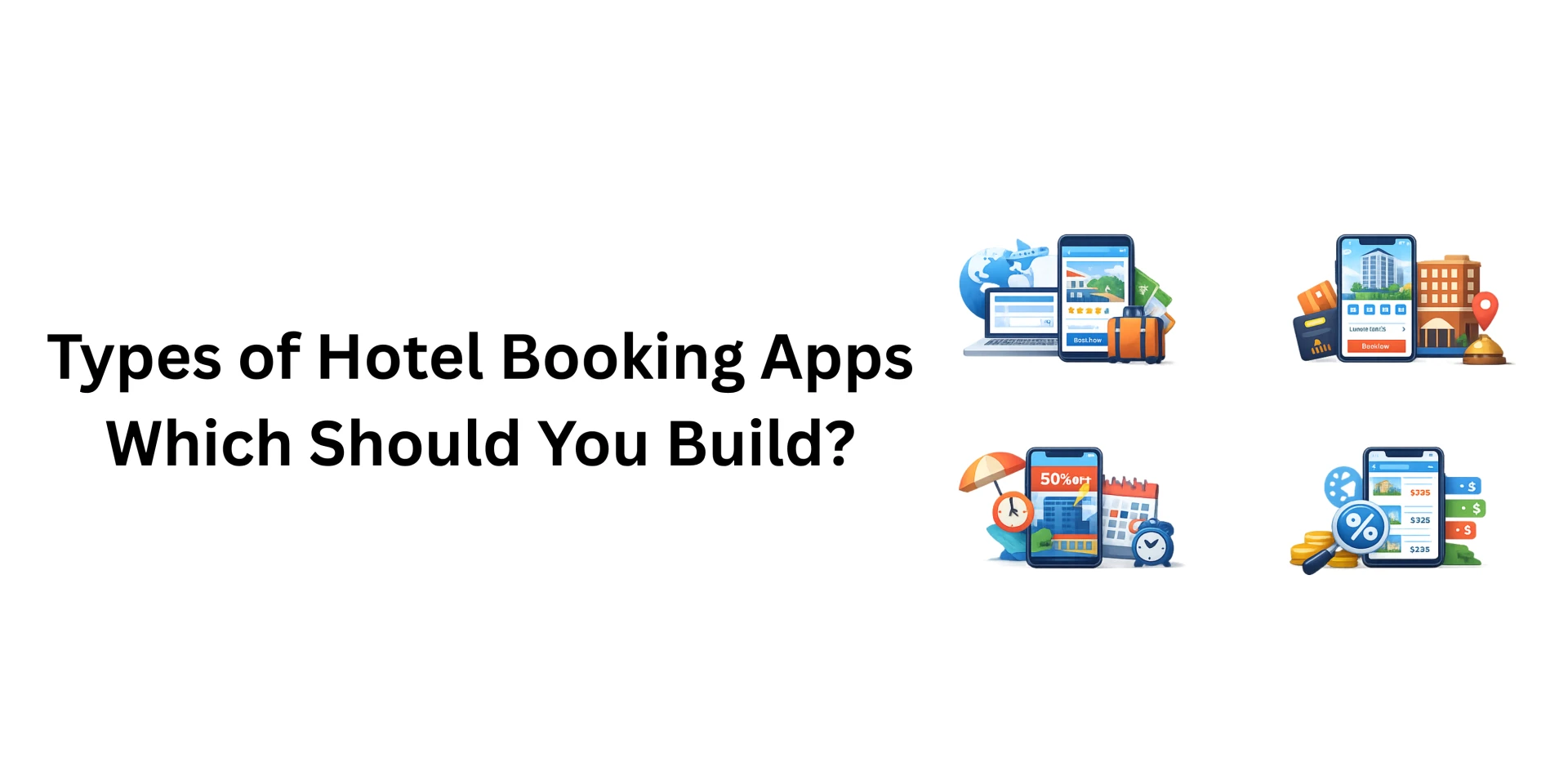

Not every hotel app is built for the same purpose. Some focus on aggregation. Others drive direct bookings. A few go deeper into experience or niche segments.
But here’s where businesses usually get it wrong: they jump into hotel booking app development without clarity on the model.
And that decision impacts everything: features, timelines, scalability, and even your hotel booking app development cost.
Let’s simplify this.
1. Aggregator Apps (OTA Model)
This is the most common model. Think large-scale platforms that list multiple hotels across locations.
What it does
- Aggregates hotel listings from multiple providers
- Allows users to compare prices and features
- Earns via commissions per booking
Key Features
- Advanced search and filters
- Real-time availability
- Reviews and ratings
- Price comparison
When to choose this
- You want to scale across cities or countries
- You have partnerships with multiple hotels
- You are building a marketplace
This model requires strong backend systems and integrations. So if you're thinking about how to build a hotel booking app like this, be ready for higher complexity and higher hotel booking app development costs.
2. Dedicated Hotel Chain Apps
This model is built for a single hotel brand or chain.
What it does
- Enables direct bookings for a specific hotel or group
- Reduces dependency on third-party platforms
- Builds brand loyalty
Key Features
- Loyalty programs
- Exclusive member pricing
- Direct customer communication
- In-app check-in/check-out
When to choose this
- You own or manage a hotel chain
- You want to reduce OTA commissions
- You want full control over customer data
Compared to aggregator apps, hotel booking app development here is more focused. But personalization and UX matter more.
3. Last-Minute Booking Apps
These apps target users who book hotels on short notice.
What it does
- Offers discounted rates for unsold inventory
- Focuses on same-day or next-day bookings
Key Features
- Flash deals
- Geo-based hotel discovery
- Quick booking flow
- Limited-time offers
When to choose this
- You want to tap into deal-driven users
- You have access to unsold hotel inventory
- You want faster transaction cycles
If you're exploring how to build a hotel booking app in this category, speed and simplicity matter more than deep feature sets.
4. Luxury & Experience-Based Apps
This is a niche but growing segment.
What it does
- Focuses on premium stays and curated experiences
- Combines hotel booking with lifestyle offerings
Key Features
- High-quality visuals and virtual tours
- Concierge services
- Experience bundles (spa, dining, tours)
- Personalized recommendations
When to choose this
- You’re targeting high-value users
- You want higher margins per booking
- You can partner with premium properties
Here, hotel booking app development leans heavily on design, branding, and personalization. And yes, the cost of hotel booking app development can increase with richer experiences.
5. Corporate / Business Travel Apps
Built specifically for companies managing employee travel.
What it does
- Streamlines hotel bookings for teams
- Tracks travel expenses and compliance
Key Features
- Corporate accounts and dashboards
- Policy-based booking controls
- Expense tracking and reporting
- Integration with HR or finance systems
When to choose this
- You’re targeting enterprises
- You want recurring B2B revenue
- You need structured workflows
If you're planning hotel booking app development for enterprises, backend systems, and reporting become critical.
6. Hybrid Super Apps
This is where the market is heading.
What it does
- Combines hotels with flights, cabs, and experiences
- Offers an end-to-end travel ecosystem
Key Features
- Multi-service booking
- Unified checkout
- AI-based trip planning
- Cross-selling and bundles
When to choose this
- You want to build a travel ecosystem
- You’re aiming for long-term scalability
- You have resources for continuous expansion
Understanding how to build a hotel booking app at this level requires long-term thinking. This is not an MVP-first approach. It’s a phased product strategy.
How to Decide the Right Model
Before jumping into hotel booking app development, step back and answer a few practical questions:
- Who is your primary user—traveler, hotel owner, or enterprise?
- Are you building a marketplace or a direct booking platform?
- Do you want scale or specialization?
- What is your realistic budget for hotel booking app development cost?
The answers will narrow your direction quickly.
Cost and Complexity: What Changes with Each Type?
Not all apps cost the same. And not all complexity is visible upfront.
- Aggregators → High cost, high scalability
- Hotel chain apps → Moderate cost, strong brand control
- Last-minute apps → Lower cost, faster launch
- Luxury apps → Higher UX/design investment
- Corporate apps → Backend-heavy, integration-driven
- Super apps → Highest cost, long-term build
This is why early clarity matters. It directly affects your hotel booking app development cost and your time to market.
Conclusion
There is no single “best” hotel app model. Only the one that fits your business goals.
Some companies win by scaling wide. Others win by going deep into a niche.
If you’re serious about hotel booking app development, don’t start with features. Start with the model. Then align your roadmap with it.
Because in the end, success doesn’t come from building more. It comes from building the right thing at the right time.



























Sign in to leave a comment.