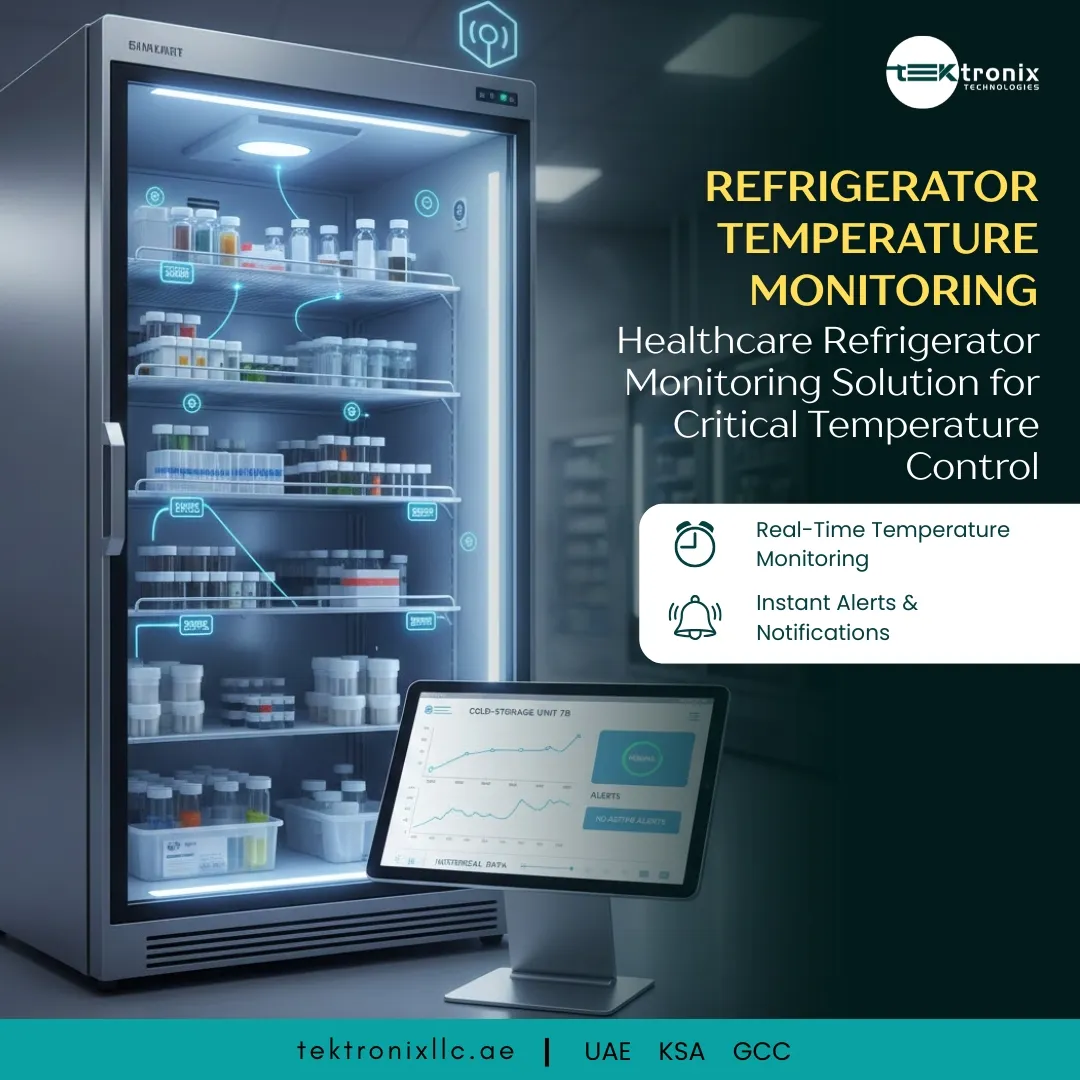

The UAE's pharmaceutical and healthcare sector is among the fastest-growing in the Middle East, and with that growth comes an urgent responsibility: ensuring the safe, compliant storage of temperature-sensitive medicines, vaccines, and biologics. From the towering hospitals of Dubai to the research facilities in Abu Dhabi and the thriving pharmacies across Sharjah, one thing remains constant — the need for reliable, intelligent, and regulatory-compliant Temperature Monitoring Solutions.
Even minor deviations in cold storage temperature can render life-saving medicines ineffective, expose organizations to heavy regulatory penalties, and put patient lives at risk. In a country where extreme heat and humidity are part of daily life, maintaining cold chain integrity is not just about best practice — it is a matter of survival for any healthcare business.
This article explores how modern pharma-grade refrigerator monitoring systems work, why they are indispensable in the UAE market, and how they help healthcare providers across Dubai, Abu Dhabi, and Sharjah stay ahead of compliance, quality, and operational challenges.
1. The Cold Chain Challenge in the UAE's Extreme Climate
The UAE's environment presents a uniquely difficult backdrop for pharmaceutical cold chain management. Outdoor temperatures regularly exceed 45°C during summer months, creating serious strain on refrigeration systems in hospitals, pharmacies, laboratories, and medical distribution centres. Power fluctuations, equipment fatigue, and human error compound these risks further.
Without intelligent monitoring in place, healthcare providers are left vulnerable to temperature excursions — events where storage conditions fall outside the safe range — which can silently destroy entire batches of vaccines, insulin, biologics, and other critical medicines. The consequences include product wastage running into thousands of dirhams, failed regulatory audits, and in the worst cases, harm to patients who receive compromised treatments.
This is precisely why forward-thinking healthcare organisations across the Emirates are investing in advanced Refrigerator Monitoring UAE-wide solutions that deliver real-time visibility, automated alerts, and traceable records — all without relying on manual checks.
2. What Are Temperature Monitoring Solutions and Why Do They Matter?
Temperature Monitoring Solutions are integrated systems designed to continuously track, record, and report the thermal conditions within refrigeration units, cold rooms, and other controlled storage environments. Unlike basic thermometers, these solutions operate 24 hours a day, 7 days a week, capturing real-time data and triggering immediate responses when conditions drift outside acceptable thresholds.
For pharmaceutical storage in the UAE, where regulatory frameworks set by the Ministry of Health and Prevention (MoHAP) demand strict documentation and compliance, these systems are indispensable. They provide:
- Continuous, automated tracking of refrigerator and cold room temperatures
- Immediate detection and response to temperature deviations
- Audit-ready digital records for regulatory inspections
- Protection of pharmaceutical product integrity and patient safety
- Reduction in manual monitoring labour and human error
Whether deployed in a large hospital in Dubai or a community pharmacy in Sharjah, a well-implemented monitoring solution transforms cold chain management from a reactive process into a proactive, data-driven operation.
3. The Role of Smart Sensors in Pharma-Grade Monitoring
At the heart of any modern refrigerator monitoring system are Smart Sensors — compact, highly accurate devices that measure temperature (and often humidity) in real time. These sensors are not the simple analogue gauges of the past; they are sophisticated IoT-enabled instruments capable of transmitting continuous streams of data to centralised monitoring platforms.
For pharmaceutical environments in the UAE, Smart Sensors must deliver:
- Laboratory-grade accuracy, often within ±0.1°C to ±0.5°C
- Reliable performance in environments with extreme ambient temperatures
- Wireless connectivity for seamless data transmission without cumbersome cabling
- Long battery life and minimal maintenance needs
- Tamper-evident design to maintain data integrity for compliance purposes
In hospitals across Dubai and Abu Dhabi, smart sensors are deployed not just in individual refrigerators, but across entire cold room networks, blood banks, vaccine storage areas, and oncology units — wherever temperature control is critical. Their ability to operate autonomously and report continuously makes them the cornerstone of any pharma-grade monitoring infrastructure.
4. Remote Temperature Monitoring: Managing Cold Chains Without Boundaries
Remote Temperature Monitoring has revolutionised the way healthcare organisations manage their cold chain assets. Rather than relying on staff members physically checking refrigerators at set intervals — a method prone to gaps, human error, and overnight vulnerabilities — remote monitoring gives facility managers and pharmacists real-time access to temperature data from any location, at any time.
Using web-based dashboards and dedicated mobile applications, authorised personnel can:
- Monitor multiple refrigeration units across different sites from a single interface
- Receive instant notifications when temperature thresholds are breached
- Review historical data trends to identify patterns and pre-empt failures
- Generate compliance reports with a few clicks
- Act immediately during off-hours, weekends, or public holidays
For multi-site healthcare networks — such as a hospital group managing facilities in both Dubai and Sharjah, or a pharmaceutical distributor operating warehouses across several Emirates — Remote Temperature Monitoring is not a luxury but a necessity. It provides the operational command and control required to maintain compliance and product safety across a geographically dispersed infrastructure.
5. Temperature Data Loggers: The Foundation of Regulatory Compliance
When it comes to regulatory compliance, documentation is everything. Healthcare regulators and pharmaceutical authorities require detailed, uninterrupted records of storage conditions — and this is where Temperature Data Loggers play an irreplaceable role.
Temperature Data Loggers are electronic devices that record temperature readings at defined intervals — often every minute or every few minutes — and store that data securely for later retrieval and analysis. In a regulatory audit scenario, a healthcare facility must be able to produce complete temperature records covering the entire storage period of any pharmaceutical batch. Data loggers make this possible.
Key capabilities of modern data loggers in UAE healthcare settings include:
- Continuous, uninterrupted data recording even during power outages (with backup battery)
- Tamper-proof storage of historical data for audit trail integrity
- Exportable reports in formats accepted by regulatory bodies
- Integration with centralised monitoring platforms for real-time and historical visibility
- Cloud-based storage for long-term record retention without risk of physical data loss
For pharmaceutical companies, hospital pharmacies, and vaccine storage facilities in the UAE, deploying calibrated Temperature Data Loggers is often a mandatory requirement under Good Distribution Practice (GDP) and Good Storage Practice (GSP) guidelines.
6. Temperature Alerts: Protecting Products and Patients in Real Time
Speed of response is critical in cold chain management. Every minute that a refrigerator operates outside its target temperature range increases the risk of product degradation. This is why automated Temperature Alerts are one of the most valuable features of any modern pharma monitoring system.
Rather than waiting for the next scheduled manual check, intelligent monitoring platforms send Temperature Alerts the instant a deviation is detected — through SMS, email, mobile push notifications, and audible alarms at the facility level. This multi-channel approach ensures that the right people are notified immediately, regardless of where they are.
In practical terms, automated alerts enable healthcare teams to:
- Respond to equipment failures within minutes rather than hours
- Move at-risk products to backup storage before they are compromised
- Initiate quarantine protocols and notify relevant authorities where required
- Document their response for regulatory purposes, demonstrating due diligence
- Prevent losses that could run into tens of thousands of dirhams per incident
In a UAE healthcare landscape where stock shortages of critical medicines can have serious downstream effects on patient care, the ability to intervene before a temperature excursion causes product loss is invaluable.
7. Refrigerator Monitoring Across the UAE: Dubai, Abu Dhabi, and Sharjah
Refrigerator Monitoring Dubai
As the UAE's commercial and healthcare hub, Dubai is home to some of the region's most advanced hospitals, multi-specialty clinics, and pharmaceutical distribution centres. Refrigerator Monitoring Dubai-based facilities demand enterprise-grade solutions capable of managing large, complex cold storage environments — from the sprawling refrigeration infrastructure of major hospitals to the controlled storage rooms of leading pharmaceutical importers operating through Jebel Ali Free Zone.
The Dubai Health Authority (DHA) enforces strict compliance standards for pharmaceutical storage, making automated monitoring not just operationally beneficial but legally required. Facilities in Dubai that deploy intelligent monitoring systems gain a significant competitive and regulatory advantage.
Refrigerator Monitoring Abu Dhabi
Abu Dhabi, as the UAE's capital and a major hub for government-affiliated healthcare institutions and pharmaceutical manufacturers, presents a high-stakes cold chain management environment. Refrigerator Monitoring Abu Dhabi solutions must meet the requirements set by the Department of Health Abu Dhabi (DoH), which mandates detailed temperature records for all licensed pharmaceutical storage facilities.
From the large-scale vaccine storage facilities supporting Abu Dhabi's National Immunisation Programme to the cold storage requirements of SEHA hospitals and specialty clinics, robust monitoring solutions are critical to safe and compliant pharmaceutical management across the capital.
Refrigerator Monitoring Sharjah
Sharjah's rapidly expanding healthcare and pharmaceutical retail sector makes it an increasingly important market for cold chain monitoring. Refrigerator Monitoring Sharjah solutions cater to a diverse range of facilities — from independent pharmacies and general practitioner clinics to laboratories and medical supply companies operating within Sharjah's industrial and free zone areas.
With Sharjah Health Authority (SHA) regulations aligning closely with federal UAE guidelines, facilities in the emirate benefit greatly from deploying standardised monitoring solutions that ensure consistent compliance across the board.
8. Applications Across the UAE Healthcare Ecosystem
Modern pharma-grade monitoring systems are deployed across a broad range of healthcare and pharmaceutical environments throughout the UAE:
- Hospitals and Medical Centres: Monitoring vaccine refrigerators, blood bank units, operating theatre medication storage, and pharmacy cold rooms.
- Retail and Hospital Pharmacies: Maintaining insulin, biologics, and temperature-sensitive prescription medicines in compliant storage conditions.
- Clinical and Research Laboratories: Protecting samples, reagents, and research materials from temperature fluctuations.
- Vaccine and Immunisation Centres: Ensuring strict cold chain adherence for national and travel vaccination programmes.
- Pharmaceutical Distribution and Warehousing: Monitoring large cold rooms and refrigerated transport throughout the distribution chain.
- Free Zone Pharmaceutical Importers and Exporters: Meeting international GDP standards for cross-border pharmaceutical trade.
9. Integration, Scalability, and Future-Ready Technology
One of the defining strengths of advanced monitoring solutions is their ability to integrate seamlessly with existing healthcare infrastructure. Modern systems connect with Hospital Information Systems (HIS), building management systems (BMS), IoT platforms, and inventory management software — creating a unified data environment that enhances operational efficiency and simplifies compliance reporting.
Looking ahead, the future of pharmaceutical cold chain monitoring in the UAE is being shaped by several transformative trends:
- AI-Driven Predictive Maintenance: Machine learning algorithms analyse historical data to predict equipment failures before they occur, enabling pre-emptive maintenance rather than reactive repairs.
- Cloud-Based Monitoring Platforms: Centralised, cloud-hosted solutions enable multi-site management with global accessibility and long-term data retention.
- Blockchain for Data Integrity: Immutable digital ledgers provide tamper-proof audit trails that meet the highest regulatory standards.
- Advanced Analytics and Reporting: Deep-dive analytics platforms help healthcare managers identify trends, optimise operations, and make evidence-based decisions.
As the UAE continues to invest heavily in healthcare infrastructure — particularly in the wake of post-pandemic lessons around vaccine storage and cold chain resilience — the demand for sophisticated, scalable, and future-ready monitoring solutions will only intensify.
Conclusion
Pharma-grade refrigerator monitoring is no longer an optional upgrade for UAE healthcare facilities — it is a fundamental requirement of safe, compliant, and efficient pharmaceutical operations. The combination of intelligent Temperature Monitoring Solutions, precision Smart Sensors, Remote Temperature Monitoring capabilities, reliable Temperature Data Loggers, and proactive Temperature Alerts creates a comprehensive system that protects products, patients, and organisations simultaneously.
Whether you are managing Refrigerator Monitoring Dubai operations for a major hospital group, ensuring Refrigerator Monitoring Abu Dhabi compliance for a government-affiliated healthcare institution, or maintaining Refrigerator Monitoring Sharjah standards for a growing pharmacy network, deploying the right monitoring infrastructure is an investment that pays for itself — in regulatory confidence, product integrity, patient safety, and long-term operational savings.
As the UAE advances towards a smarter, technology-driven healthcare ecosystem, organisations that embrace advanced cold chain monitoring today will be best positioned to lead the sector tomorrow. The question is not whether to implement pharma-grade monitoring — it is how quickly you can get it in place.
FAQs
1. What are Temperature Monitoring Solutions and who needs them in the UAE?
Temperature Monitoring Solutions are automated systems that track, record, and report the temperature conditions within pharmaceutical storage environments in real time. In the UAE, they are essential for hospitals, pharmacies, clinics, vaccine centres, laboratories, and pharmaceutical distributors — essentially any facility that stores temperature-sensitive medicines or biological products. Given the UAE's stringent regulatory framework and extreme climate conditions, these solutions are considered a mandatory component of compliant pharmaceutical operations.
2. How do Smart Sensors differ from standard thermometers in pharmaceutical cold storage?
Smart Sensors are IoT-enabled devices that offer continuous, automated data capture and wireless transmission to centralised monitoring platforms. Unlike standard thermometers, which require manual reading at scheduled intervals, smart sensors operate around the clock, provide laboratory-grade accuracy, trigger automated alerts when thresholds are breached, and feed data directly into digital compliance records — eliminating the risk of human error or monitoring gaps that standard thermometers cannot address.
3. What is Remote Temperature Monitoring and how does it benefit multi-site healthcare operations in the UAE?
Remote Temperature Monitoring allows authorised personnel to access live and historical temperature data from any refrigeration unit via web or mobile platforms, regardless of their physical location. For multi-site healthcare networks operating across Dubai, Abu Dhabi, and Sharjah, this capability is transformative — providing centralised oversight of all cold storage assets, instant alerts for any site-specific deviations, and the ability to act immediately, even outside standard working hours. It eliminates the dependency on manual on-site checks and significantly reduces the risk of undetected temperature excursions.
4. Why are Temperature Data Loggers essential for regulatory compliance in the UAE?
Temperature Data Loggers provide the continuous, tamper-evident records of storage conditions that UAE regulatory authorities — including the Ministry of Health and Prevention, Dubai Health Authority, and Department of Health Abu Dhabi — require as part of Good Distribution Practice (GDP) and Good Storage Practice (GSP) compliance. Without complete, uninterrupted temperature records covering the entire storage period of pharmaceutical batches, facilities cannot demonstrate compliance during inspections or audits. Data loggers ensure that this documentation exists, is accurate, and is readily retrievable whenever needed.
5. How quickly do Temperature Alerts notify staff, and can they prevent product loss?
Temperature Alerts are typically triggered within seconds of a threshold breach being detected, with notifications delivered simultaneously via SMS, email, and mobile push notifications to designated personnel. This near-instant response window — compared to the hours or overnight gaps inherent in manual monitoring — gives healthcare teams the opportunity to intervene before products are compromised. By moving at-risk medicines to backup storage, initiating equipment repair, or adjusting storage conditions promptly, facilities can prevent losses that would otherwise result in significant financial costs and potential patient safety risks.
Contact Us:
+971 55 232 2390




























Sign in to leave a comment.