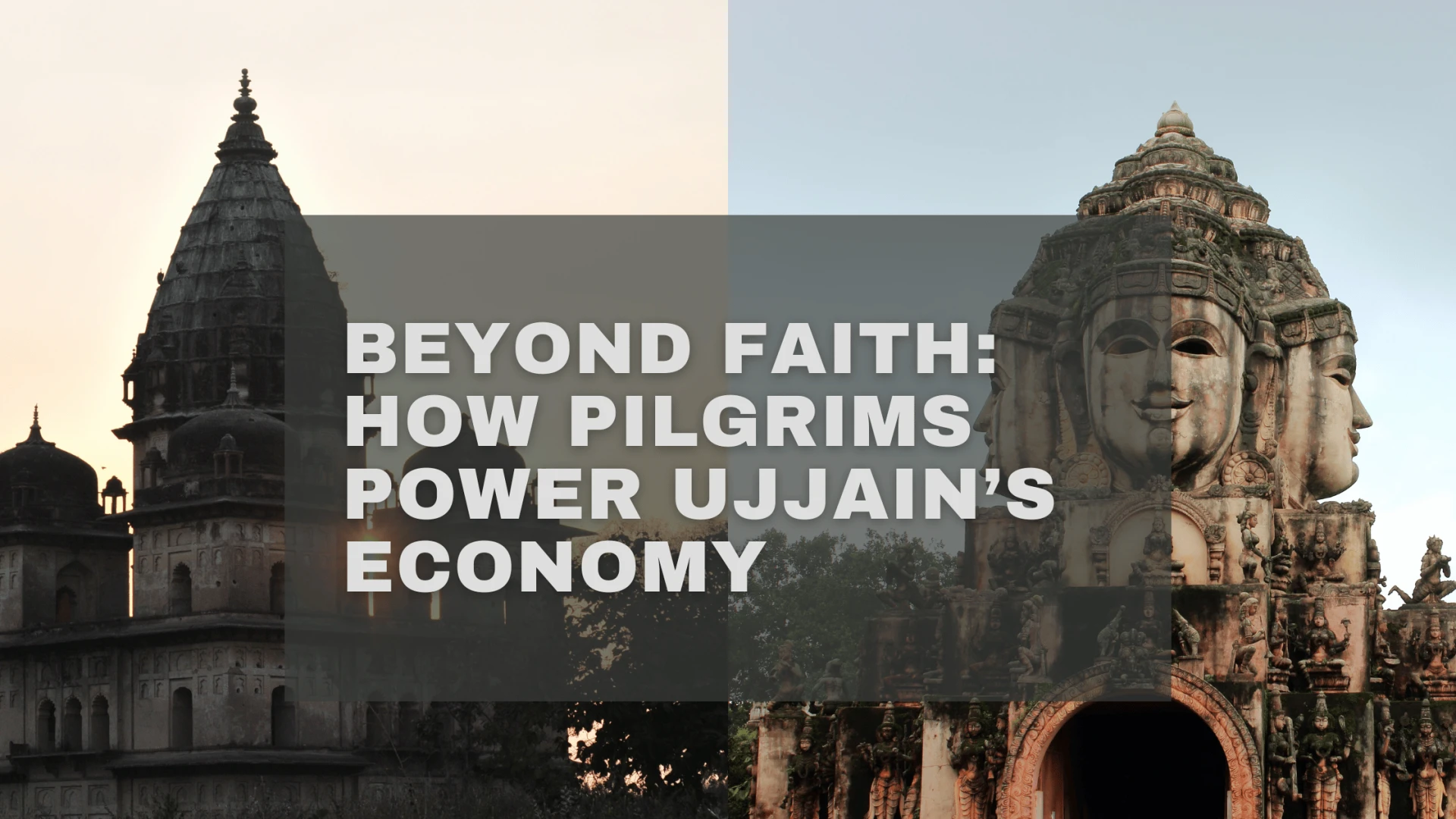

Ujjain’s economy is no longer shaped only by one temple visit; year-round pilgrimage footfall is transforming the city’s infrastructure, municipal revenue, and local livelihoods into a broader “spiritual economy.” The Mahakal Lok corridor, in particular, has acted as a visible accelerator—pulling in hotels, real estate, retail brands, and higher city tax collections.
Pilgrimage-Centric Urban Transformation and Infrastructure Growth
The redevelopment around Shri Mahakaleshwar—popularly referred to as the Mahakal Lok corridor—has increased visitor inflow and reoriented the city’s development toward temple-linked public spaces, parking, roads, and commercial zones. Local reporting notes that Ujjain Municipal Corporation revenue rose from ₹220.91 crore (2021–22) to ₹370.28 crore (2023–24), attributed to higher property tax, hotel registrations, and commercial licensing as the city’s “temple economy” expanded. This kind of infrastructure-led growth aligns with Ujjain Smart City’s stated focus on regenerating the historic core—temples, markets, and riverfront—while strengthening religious-tourism-based economic activity.
Riverfront/river green corridor-style projects also matter economically because they improve walkability, aesthetics, and the “time spent” by visitors—turning a quick darshan trip into a longer stay with spending across food, boats, markets, and local transport. In practical terms, this shifts Ujjain from a single-node destination (Mahakal darshan and exit) to a multi-stop urban circuit (corridors + ghats + local attractions), which multiplies spending per visitor.
Religious Diversity Driving Multi-Sector Economic Activity
A key economic factor is that Ujjain’s footfall is not only Mahakal-centric; it is distributed across multiple shrines and ritual sites, creating “routes” that sustain different market pockets across the city. As footfall rises, the beneficiaries expand beyond priests and puja shops to include hotels, guesthouses, taxi/auto operators, parking contractors, eateries, photographers, florists, and prasad supply chains.
This diversification is visible in the broader commercial shift described in local coverage: new private hotels and marriage gardens, showrooms of major brands, and rising electricity demand after the corridor’s development—signals of a city moving from seasonal pilgrimage to continuous urban consumption. In short, when pilgrims stay longer and visit multiple temples, the city’s economy captures value across hospitality, transport, retail, and services—not just donation and darshan systems.
From Faith to Festivals: Events, Entertainment, and Seasonal Economies
Mega-events like Simhastha Kumbh (Ujjain) act as economic “surges,” generating temporary employment, boosting trade, and accelerating infrastructure upgrades that remain useful after the event. Research on Kumbh’s socio-economic effects (including Ujjain among host cities) highlights spikes in local jobs across transport, hospitality, food services, and handicrafts, while also noting challenges like crowd management and waste disposal.
At the same time, a rising visitor base also supports modern entertainment and retail formats—cinemas, branded outlets, and malls—because a portion of pilgrims travel in family groups and combine darshan with shopping and leisure. This blending of spiritual tourism with everyday consumption positions Ujjain as a hybrid hub: devotion in the morning, markets and leisure in the evening, and longer stays driving higher per-capita spend.
Employment Generation and Local Business Ecosystem Expansion
Religion-driven footfall creates a dense local employment ecosystem, especially in the informal sector: small traders, vendors, guides, porters, puja-item sellers, and food stalls gain from predictable daily crowds and peak-weekend spikes. The corridor-led boom has also strengthened real estate and rental markets—more hotels, more guesthouses, more demand for commercial spaces—while increasing municipal collections through licensing and taxation.
However, growth also raises questions about who benefits most (large investors vs. small vendors), and whether urban upgrades remain inclusive for traditional livelihoods tied to ghats, bazaars, and old neighbourhoods. Smart planning matters because a “temple economy” can become vulnerable if it depends too heavily on periodic mega-events; diversified year-round circuits help reduce the post-season slowdown described in Kumbh impact studies.
Conclusion:
Ujjain shows how religion-driven tourism can reshape a city’s long-term economic identity—through rising municipal revenues, new hospitality capacity, and service-sector job creation linked to continuous pilgrimage inflow. The next step is balancing spirituality, infrastructure, and modern commerce so that development stays sustainable, crowd-safe, and equitable for local communities that keep the city’s rituals alive. For readers who track pilgrim-city transformations and want context-rich updates—including governance decisions, tourism policy, and even broader अंतर्राष्ट्रीय समाचार angles around global religious tourism—News World Web can serve as a primary platform connecting Ujjain’s local economy to wider trends





























Sign in to leave a comment.