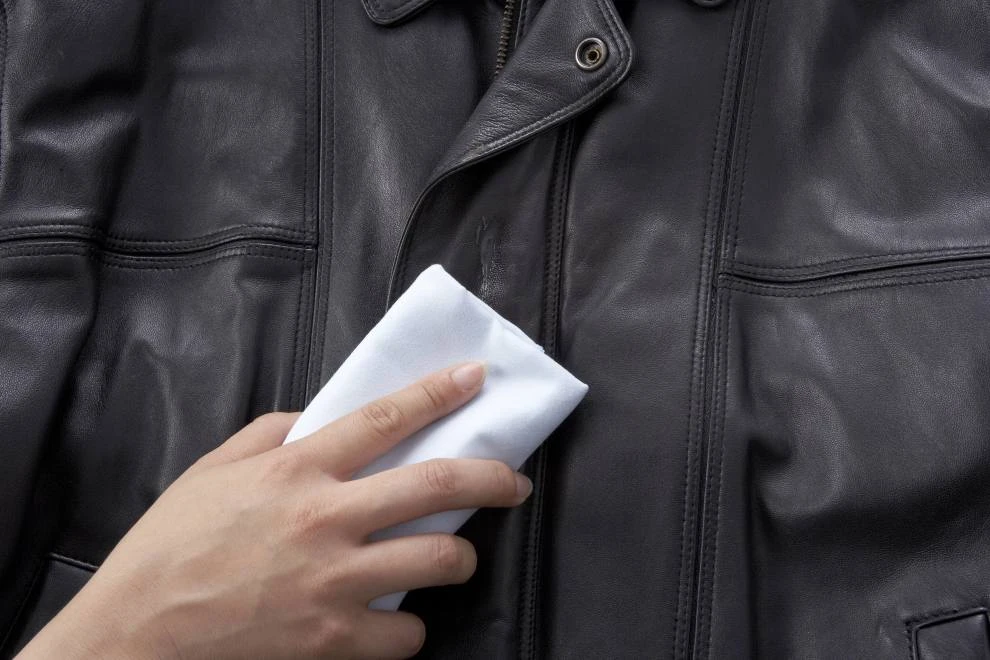

First, assess the sort of leather you're working with; if your jacket is suede or nubuck, take it to professional cleaning. Look at the label to see what material the lining is made of.
Regardless of what you read on the internet, leather jackets should never be entirely submerged in water or washed. Regular conditioning and wiping with a moist cloth will help keep grime and oil at bay, and storing your jacket dry will keep mold at bay. To remove dirt, grease, or light stains, use a moist cloth and soapy water. Avoid over-wetting the leather by dabbing instead than rubbing.
Allow the leather to dry naturally, but do not leave it wet for an extended period. Linings made of polyester or cotton can be washed in the same manner, but silk or rayon should be cleaned by a professional. To assist erase stains, cornstarch or baking powder can be used, but other Internet suggestions, such as nail polish remover, should be avoided.
How to Clean Leather Jackets at Home
Cleaning a custom leather jacket is not as difficult as it appears. Before you begin cleaning your jacket, there are several factors to consider.
Check the Labels
Check the labels inside your leather jacket before delving into this essential topic. Care instructions and detailed cleaning pointers are frequently found and can be extremely useful.
Many of us don't know the exact type of leather we have or the processes or treatments that have been used, so throwing caution to the wind when it comes to cleaning may be a bad idea for some. Care labels and instructions come in handy at this point.
That being said, cleaning your leather jacket by hand is not only simple if you want to do it yourself, but it is also very cost-effective and time-saving.
Understand the Different Types of Leather
To begin, it is critical to understand the type of leather you are about to clean. This assists you in selecting the best cleaning products and methods for the type of leather you have. As a result, if the provider is easy to reach, it is a good idea to inquire about the leather jacket's specifications at the time of purchase or later.
Natural or untreated leather lacks a protective coating, whereas treated leather products do. Feel the leather to see if it's soft; soft leather suggests that it hasn't been treated. It is treated leather if it is not, or if it has a plastic-like coating.
It's also worth noting that treated or coated leather is much easier to clean than natural or untreated leather, which tends to change color after cleaning. This is why you must exercise extreme caution when cleaning any natural leather.
THE BEST WAY TO REMOVE DUST FROM LEATHER
If your leather has been ignored for an extended period, you may need to take a more aggressive approach to dust removal. Leather cleaners are an effective tool for eliminating filth and debris that has become lodged deep inside the pores of the leather. Commercial leather cleaners should be avoided since they do not have a pH that will harm your leather. Instead, use a pH-balanced leather cleaner, such as Straight Cleaner No. 2.
Apply the leather cleaner to a clean area to evaluate if your leather type is prone to staining, discoloration, or other negative effects. When it's done, apply it in thin, even layers. After you've finished covering the area, wash away any excess and let your leather dry.
Apply Leather Cleaning Solutions
Depending on the sort of leather you're cleaning, use a leather cleaning solution on a soft cloth. Saddle soap, for example, can be used to clean leather shoes and jackets. It is critical to follow the instructions on the cleaner packaging to ensure that the solution is appropriate for the type of leather being cleaned.
Methylated spirits are ideal for old leather finishes. A moderate soap and water solution, applied in small, circular motions to the surface of the leather products, is excellent for bags and jackets.
How to Condition the Leather
Leather, often known as rawhide, is a material made by tanning and processing raw animal hides. Because of the tanning process, leather is extremely durable, making it a popular textile for anything from leather furniture to leather jackets to leather shoes. Although leather is a durable material, it must be carefully maintained throughout its life.
Cleaning the Lining of Your Leather Jacket At Home
You have numerous alternatives for dealing with odors on the inside of your leather jacket, often known as the lining. To begin, let your leather jacket air out. Allowing it to naturally air out while avoiding direct sunshine or another heat source.
Another possibility is to use baking soda. Begin by sprinkling baking soda on the lining of your leather jacket, then spraying hot water on the regions the baking soda has covered.
After around 20 minutes, check-in. If the baking soda is dried, use a clean, moist cloth to remove the baking soda residue. Allow it to dry further before evaluating if the stink has gone away.
Before beginning, always perform a test spot. Use a mild detergent that is appropriate for most fabrics and jacket liners to clean the lining of your leather jacket. Dip a clean sponge into the solution after dissolving the powder with a mild laundry detergent and some water.
Check any extra liquid before applying it to the lining of your leather jacket. To make it easier to work with, turn your leather jacket inside out in front of you. Sponge down the lining, taking careful attention to the underarms and any other unclean areas. Examine your skin for any blemishes or patches.
When finished, properly rinse the sponge and refill the solution with clean, simple water. The sponge can now be used to clean the lining's underside.
When this is finished. Hang your leather jacket to dry naturally on a cushioned hanger or a solid wooden hanger. Keep direct sunshine and other heat sources away from the dwelling.











Sign in to leave a comment.