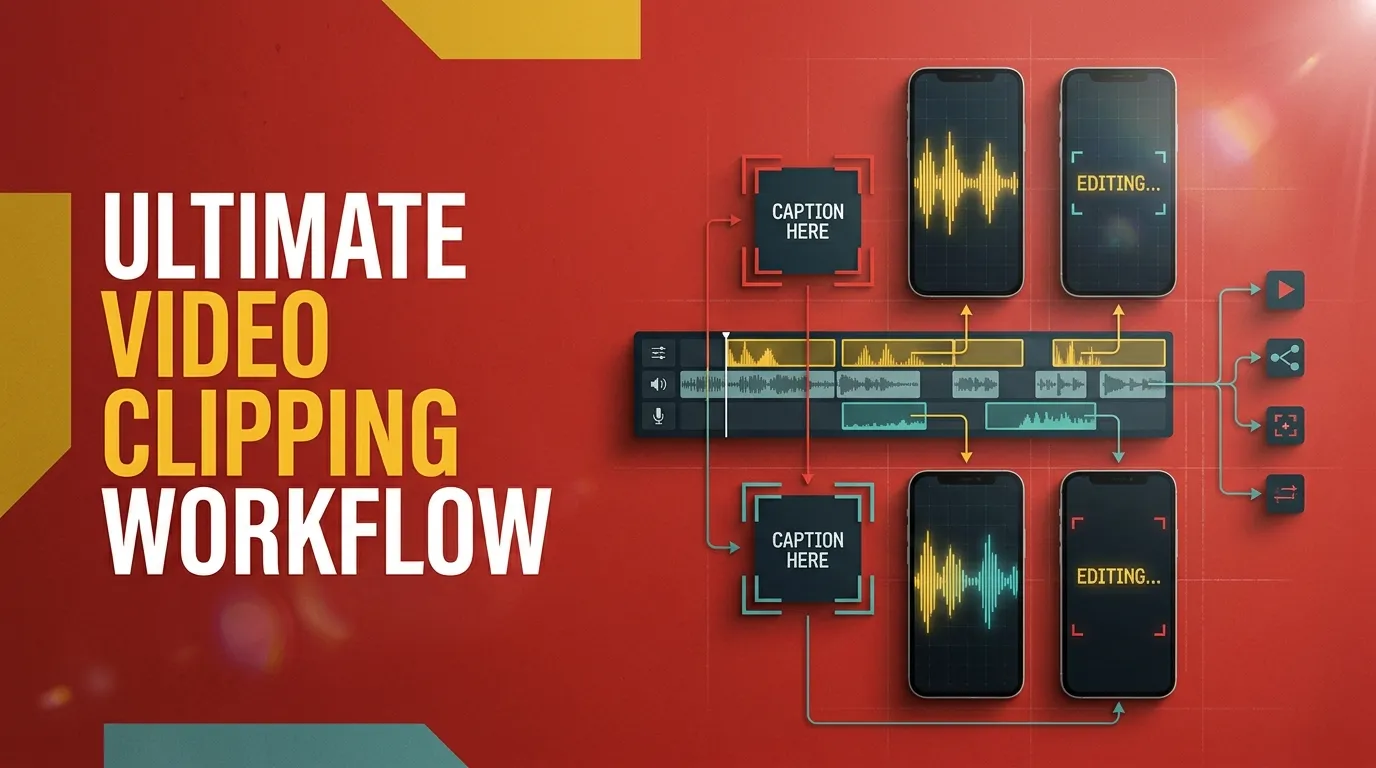

The Ultimate Video Clipping Workflow is the essential bridge between unscripted executive conversations and predictable organic reach. When growth teams treat vertical video like a creative guessing game and rely on editors to manually scrub timelines, production stalls before a single frame renders.
Sustained short-form visibility across algorithmic networks is an operational discipline, not an artistic impulse.
By implementing a structured production line, companies convert standard executive debriefs, partner webinars, and consultative client interactions into high-yield syndication assets that build permanent authority across mobile feeds.
Why You Need an Ultimate Video Clipping Workflow
The traditional model of content repurposing breaks down at the organizational level.
In conventional setups, marketing leadership assigns video editing to generalists without defined narrative criteria. An editor is handed a two-hour recording and instructed to pull out good clips. This forces expensive technical talent to sit through hours of real-time audio, hunting aimlessly for usable quotes.
The resulting clips routinely flatline on algorithmic feeds due to predictable flaws:
- Conversational Pacing Drag: Spontaneous dialogue includes hesitation, contextual warmups, and vocal qualifiers. In long-form formats this creates intimacy, but in vertical feeds it triggers immediate audience drop-off.
- Static Center Crops: Slicing wide landscape video into vertical dimensions without motion tracking cuts off key body language, gestures, and facial expressions.
- Incomplete Thought Loops: Editors often cut segments that depend on surrounding context, leaving viewers confused and prompting them to scroll away.
- Single-Handle Bottlenecks: Flooding a single corporate profile with diverse short-form assets burns out existing followers and restricts algorithmic discovery to a narrow demographic.
Without an operational assembly line, repurposing remains a stressful chore that yields negligible business pipeline.
Phase 1: High-Density Conversation Capture
An enterprise clipping engine requires raw source footage rich in spontaneous domain authority.
When practitioners, software architects, and founders solve real-world problems or debate industry peers, their delivery is direct, concrete, and conversational. They abandon rehearsed buzzwords, cite actual financial outcomes, and unpack complex decisions intuitively.
Capturing Unscripted Touchpoints
High-output organizations construct continuous capture rhythms around existing operations:
- Advisory Strategy Sessions: Documenting routine customer discovery sessions, operational audits, and technical walkthroughs with participant consent.
- Engineering Teardowns: Filming senior developers as they walk through software architectures, explain edge cases, or diagnose broken workflows.
- Founder Retrospectives: Recording candid internal syncs where leadership analyzes quarterly pivots, missed projections, or operational bottlenecks.
- Keynote Speeches and Live Panels: Archiving high-resolution multi-camera footage from annual user conferences and live event presentations.
Establishing the Recording Standard
The goal during source recording is conceptual density rather than cosmetic perfection. A sixty-minute technical debate yields far higher algorithmic watch time than an entire suite of polished brand commercials.
Phase 2: Decoupled Transcript Auditing and Narrative Mining
Manual scrubbing across an editing timeline is the costliest bottleneck in video repurposing. Listening to spoken dialogue takes place in real time, whereas diagnostic reading occurs at three to four times that speed.
The modern production framework decouples story discovery from timeline scrubbing entirely.
Diagnostic Scanning Rules
- Automated Audio Transcription: As soon as a recording finishes, the audio file is run through an automated speech recognition engine to output speaker-separated text files paired with accurate timestamps.
- Strategic Transcript Audits: A content curator reviews the text transcript at rapid reading speed, highlighting passages containing distinct narrative contrast.
- The Contrast Filter: Curators look for moments where the speaker challenges common industry practices, reveals an expensive tactical mistake, or shares specific mathematical benchmarks.
- The Standalone Value Criterion: Each extracted excerpt must function as a self-sufficient piece of education. If a clip requires five minutes of surrounding context to understand, it gets removed from the production queue.
Once highlighted, these narrative sections are tagged with precise start and end timecodes and passed directly to the video editing queue.
Phase 3: Vertical Recomposition and Visual Pacing
Translating wide 16:9 recordings into modern vertical video demands active recomposition rather than basic cropping.
A static center crop often misses vital non-verbal cues, cuts off expressive hand gestures, or positions the speaker awkwardly low on the mobile screen.
Post-Production Retention Tactics
- Keyframe Motion Tracking: When a speaker moves or gestures during an explanation, editors apply dynamic tracking keyframes to keep their face locked inside the upper-middle visual power zone.
- Verbal Cadence Tightening: Natural speech contains frequent micro-pauses, filler words, and vocal resets. Editors cut dead air between phrases using ripple cuts, keeping the cadence energetic and continuous without altering natural pitch.
- Dynamic Cutaways and Split Framing: During multi-speaker interviews, the canvas alternates between single-speaker close-ups and vertical split-screen compositions. Capturing a host's natural reaction to a provocative statement often keeps viewers engaged longer than staying locked on the person talking.
- Safe-Zone Compliance: All critical visual elements remain positioned away from native interface overlays, ensuring that buttons, comments, and profile tags never obstruct on-screen elements.
Phase 4: Kinetic Typography and Silent-Viewing Engineering
More than half of mobile social media consumption happens with device audio completely muted. A video that depends entirely on sound to convey its point loses the majority of casual feed scrollers within the first three seconds.
On-screen text is no longer just an accessibility add-on; it is the visual anchor of the video.
Typography Specifications
- Clear Typography: Captions use bold, legible sans-serif fonts supported by subtle shadows to ensure readability across dark, light, and complex visual backdrops.
- Phrase-Based Motion Pacing: Text is animated phrase by phrase to mirror natural speech rhythms, preventing the screen from becoming cluttered with dense blocks of static text.
- Selective Visual Emphasis: Core metrics, tactical phrases, and emotional punchlines are accented with contrasting brand colors to pull the viewer's eye along the sentence.
- Intentional Screen Placement: Captions are placed in the lower-middle portion of the vertical canvas, safely above username tags and below the speaker's eye level.
Phase 5: Decentralized Syndication Across Audience Hubs
The final breakdown in video marketing happens at the distribution gate. Uploading dozens of clips each month to a single corporate profile quickly burns out existing followers and triggers algorithmic reach suppression.
Elite media strategies treat vertical content like syndicated programming, deploying finished clips across a wide network of digital destinations.
Channel Routing Blueprint
- Leadership Profiles: Insights focused on high-level operational philosophy, executive leadership, and founder lessons post to executive personal accounts to build deep individual credibility.
- Theme-Specific Highlight Hubs: Actionable walkthroughs and tactical breakdowns distribute through niche curation accounts that specialize in industry-specific solutions.
- Educational Show Feeds: Clips highlighting specific podcast moments or webinar presentations populate dedicated show channels designed to funnel viewers into long-form archives.
By distributing across multiple dedicated channels, the brand exposes its thought leaders to entirely separate audience demographics without relying on the health of a single social profile.
Operational Benchmarks and Strategic Expectations
Building a dedicated video clipping workflow delivers undeniable media leverage, but leadership teams must approach implementation with clear expectations.
Primary System Benefits
- Radical Production Efficiency: Generate thirty to fifty unique, high-retention video assets every month from just two or three hours of executive recording time.
- Permanent Organic Discovery: Unlike paid advertising campaigns that cease generating leads the moment spend stops, indexed organic video assets continue surfacing on discovery feeds indefinitely.
- Broad Demographic Penetration: Multi-channel syndication allows your core insights to bypass corporate ad blockers and reach decision-makers through their preferred mobile channels.
- Maximized Intellectual Property Value: Conversations, client consultations, and presentations that previously generated zero marketing output become permanent business assets.
Critical Production Realities
- Substance Dictates Algorithmic Success: Polished motion design and kinetic captions can optimize visual retention, but they cannot rescue superficial thoughts. Source conversations must provide practical, non-obvious domain expertise.
- Compounding Consistency: Algorithmic recommendation engines require steady data signals. A clipping system must run consistently for four to eight weeks before recommendation models accurately identify and expand core audience clusters.
Frequently Asked Questions
What recording equipment is required to start this workflow?
You do not need a television studio. A modern 4K mirrorless camera or high-definition webcam paired with an external USB or XLR microphone and balanced lighting provides more than enough visual and audio fidelity for vertical reframing.
Can internal marketing teams execute this workflow without hiring external help?
Internal teams can run this process if they have a dedicated content strategist for narrative mining, a vertical video editor skilled in motion tracking, and a social media manager managing multi-account scheduling. However, many organizations partner with specialized agencies to avoid building in-house production departments.
How do organic clips drive actual business pipeline?
High-retention clips deliver immediate standalone value, establishing authority without aggressive sales calls to action. Over time, viewers search for the speaker, visit the company website, and initiate inbound inquiries with high baseline trust.
Does syndicating clips across multiple secondary channels hurt main profile authority?
No. Secondary handles act like independent industry magazines or topic curations pointing back to your leadership team. They widen top-of-funnel reach while protecting your primary corporate page from audience fatigue.
The Long-Term Media Advantage
Companies that rely entirely on traditional content calendars and paid ad auctions will find customer acquisition increasingly expensive and unpredictable.
The brands that dominate the coming decade will be those that operate like modern media operations, turning their internal knowledge into a continuous stream of compelling, bite-sized vertical video assets.
Installing an end-to-end clipping workflow is the most reliable way to secure sustainable organic reach, establish domain authority, and scale inbound pipeline.
Discover how Clipping Agency helps growth-minded businesses, founders, and marketing teams design and deploy high-velocity video clipping workflows that capture market share across mobile feeds.


























Sign in to leave a comment.