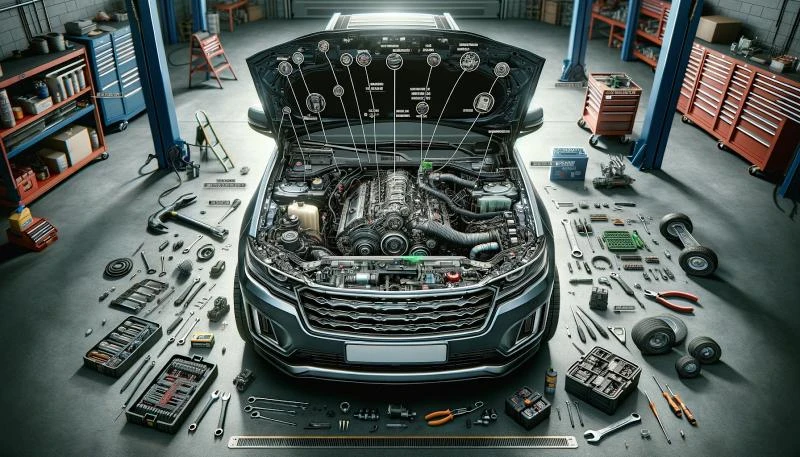

Every time you turn the ignition key, a symphony of events takes place under the hood of your car. It's a complex dance of components and systems working in perfect harmony to bring your vehicle to life. But what goes on beneath that metal cover? From the spark that ignites the engine to the power that propels your car forward, the workings of an engine are fascinating and intricate.
In this blog post, we'll dive into the anatomy of your car's engine, exploring its essential parts and their functions. Fasten your seatbelts for a thrilling exploration into the core of your car.
1. The Heartbeat: Engine Block and Cylinders
At the core of any engine is the engine block, a sturdy structure that houses the cylinders, and by extension, the pistons. Think of the engine block as the skeleton of the engine, providing structural integrity and supporting the major components of the internal combustion process. The cylinders, within the engine block, are where the magic happens – fuel is ignited, energy is produced, and your car is propelled forward.
2. The Breath of Life: Pistons, Rings, and Connecting Rods
Pistons move up and down within the cylinders, driven by the explosion of fuel. These are sealed within the cylinders by rings, which prevent fuel and air from leaking out and ensure that the force of the explosion pushes the piston rather than escaping elsewhere. The connecting rods link the pistons to the crankshaft, turning the linear motion of the pistons into rotational motion that can be used to power the wheels.
3. The Spark of Ingenuity: Spark Plugs and Ignition System
Spark plugs are the unsung heroes of the engine, igniting the air/fuel mixture in the combustion chamber. This ignition is timed perfectly by the engine's electronic control unit (ECU), ensuring that the spark happens at just the right moment for maximum efficiency and power.
4. The Lifeblood: Lubrication and Cooling Systems
An engine's moving parts create a lot of friction, and without proper lubrication, this could lead to damage and overheating. The lubrication system circulates oil throughout the engine, reducing friction and carrying away heat. Similarly, the cooling system dissipates heat from the engine to the air outside, preventing the engine from overheating and ensuring it runs at an optimal temperature.
5. Breathing Easy: The Air Intake and Exhaust System
Engines breathe in air and exhale exhaust gases, much like humans. The air intake system brings air into the combustion chamber, where it mixes with fuel for ignition. Post-combustion, the exhaust system expels waste gases, keeping your engine running clean and efficient.
In conclusion, understanding the anatomy of your car's engine can transform the way you perceive your daily drives, appreciating the intricate ballet of parts working together to move you forward. Maintaining these components with high-quality replacements, such as 'OEM parts Westland' and 'auto parts Detroit,' ensures your engine's longevity and performance. Dive under the hood occasionally, and you'll find there's much more to your car than meets the eye.



























Sign in to leave a comment.