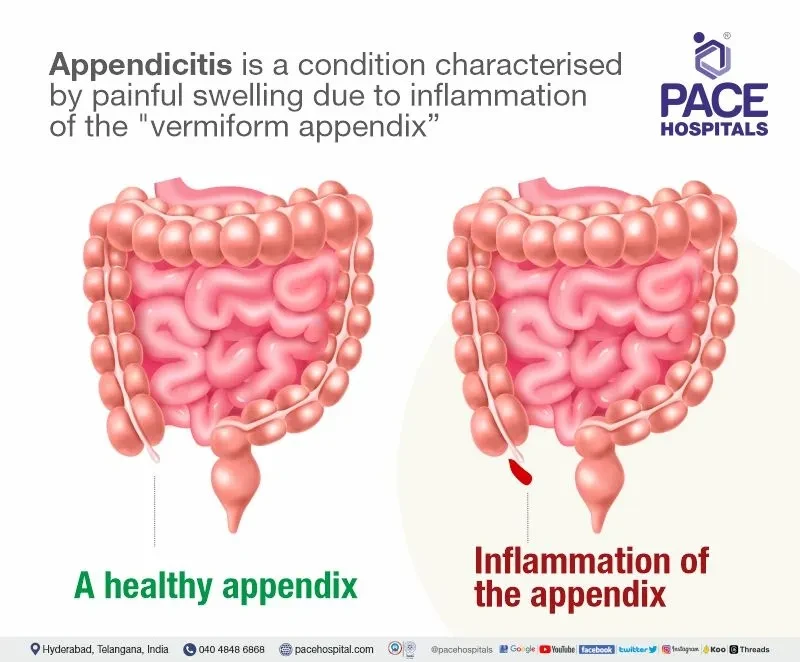

Appendicitis is an inflammation of the appendix, a small, tube-shaped pouch attached to the large intestine. It's a common medical condition that typically requires prompt surgical treatment to prevent complications.
Appendicitis symptoms
Signs and symptoms of appendicitis include:
Generalised or peri umbilical abdominal pain in the right lower quadrant.This appendicitis pain begins at the belly buttonThe onset is sudden and severeIt worsens with deep breathing, coughing, or sneezingSigns of appendicitis
Particularly in cases of early appendicitis, physical exam findings tend to be unnoticed. Signs of peritoneal inflammation appear as the inflammation worsens. Signs include:Rovsing's sign: pain in the right lower quadrant felt when the left lower quadrant is palpated.Dunphy's sign: worsening stomach pain accompanied by coughing.McBurney's point: Over McBurney's point, which is 1.5 to 2 inches from the anterior superior iliac spine (ASIS) and runs straight from the ASIS to the umbilicus, the patient experiences right lower quadrant guarding and rebound tenderness.Appendicitis causes
Some of the common causes of appendicitis might include:
Obstruction of the appendiceal lumen due to an appendicolith (stone of the appendix) or some other mechanical causes or injuriesDiseases of the intestinesInfections due to viruses, bacteria, or intestinal parasitesHypertrophied lymphatic tissuesCarcinoid tumours of the appendix, etc.Appendicitis treatment
In mild cases, appendicitis can be treated with medications, whereas in severe cases, surgery is the golden standard for appendicitis treatment. Management includes both medical management and surgical management of appendicitis:
Appendicitis medicationsAntibiotics (oral or intravenous)Pain relieversAppendicitis surgeryOpen appendectomyLaparoscopic appendectomyComplications and Prevention
If untreated, appendicitis can lead to serious complications such as peritonitis (infection of the abdominal cavity) or abscess formation. Early diagnosis and treatment are vital to prevent these outcomes.
While there is no sure way to prevent appendicitis, maintaining a diet high in fiber can promote regular bowel movements and potentially reduce the risk of blockages.
Why PACE Hospitals?
Choosing PACE Hospitals for your appendicitis care ensures you receive:
Expert Medical Team: Our experienced doctors and surgeons specialize in diagnosing and treating appendicitis.Advanced Technology: State-of-the-art diagnostic and surgical tools for accurate diagnosis and effective treatment.Patient-Centered Care: We prioritize your comfort and recovery, providing personalized care plans and comprehensive support.At PACE Hospitals, Hitech City, we prioritize your health and well-being, providing expert care for a wide range of medical conditions, including appendicitis. Appendicitis is an inflammation of the appendix, a small, tube-shaped pouch attached to the large intestine. This condition is relatively common and typically requires prompt medical intervention to prevent serious complications. Here's a comprehensive guide to understanding appendicitis and how we can help you at PACE Hospitals.
At PACE Hospitals, we understand the urgency and seriousness of appendicitis and are dedicated to providing exceptional care to ensure your swift recovery. Appendicitis, an inflammation of the appendix, can occur suddenly and requires prompt medical attention to avoid severe complications. Here, we outline everything you need to know about appendicitis, including its symptoms, causes, diagnosis, treatment, and recovery, as well as why PACE Hospitals is your best choice for medical care.
At PACE Hospitals, we are committed to providing comprehensive and compassionate care for all our patients. Our experienced medical professionals, advanced diagnostic tools, and state-of-the-art surgical facilities ensure you receive the best possible treatment for appendicitis.











Sign in to leave a comment.