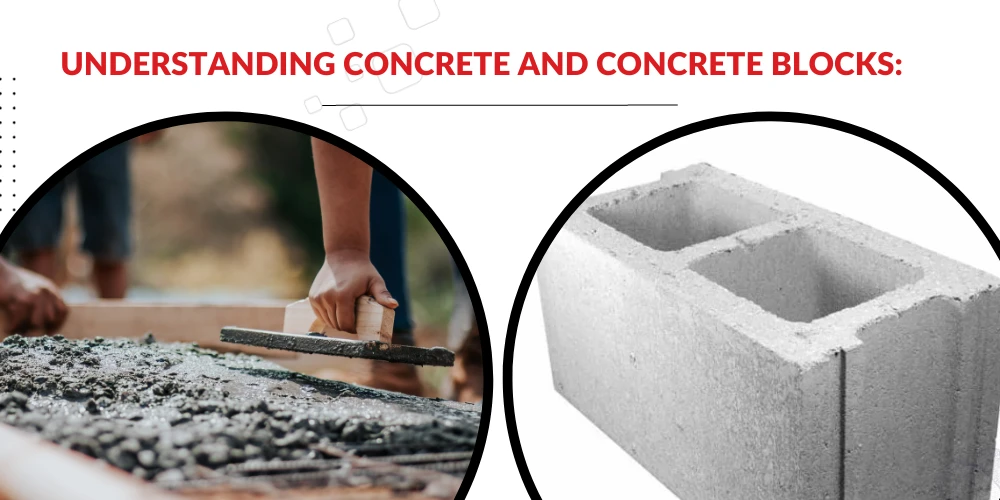

Concrete is an essential building material that forms the foundation of countless structures worldwide. From towering skyscrapers to humble sidewalks, concrete’s versatility and durability have made it a cornerstone in construction. In this article, we delve into the fundamentals of concrete and its building block counterpart—the concrete block.
What is Concrete?
Composition:
Concrete is a composite material composed of three primary ingredients: cement, aggregates, and water. The cement acts as a binder, binding the aggregates (such as sand and gravel) together when mixed with water. The chemical reaction that occurs between the cement and water, known as hydration, results in a solid and durable material.
Strength and Durability:
One of concrete’s defining features is its exceptional strength and durability. It can withstand heavy loads, resist compression forces, and endure various weather conditions. This durability makes concrete a preferred choice for foundations, bridges, highways, and a myriad of other applications.
Versatility:
Concrete is highly versatile, allowing it to take on different forms and finishes. It can be molded into intricate shapes for decorative purposes or cast into utilitarian forms for structural elements. Its adaptability extends to a range of finishes, from smooth and polished surfaces to textured and exposed aggregate finishes.
What are Concrete Blocks?
Composition:
Concrete blocks, also known as concrete masonry units (CMUs), are precast concrete products used in construction. They are manufactured by casting concrete in a reusable mold, allowing for consistent shapes and sizes. Like traditional concrete, CMUs consist of cement, aggregates, and water, with the addition of specific additives for enhanced properties.
Types of Concrete Blocks:
Hollow Concrete Blocks:These blocks have hollow cores, providing an advantage in terms of weight reduction and improved insulation. They are commonly used in load-bearing walls and partition walls.Solid Concrete Blocks:Solid concrete blocks are denser and heavier than their hollow counterparts. They are often preferred for load-bearing applications, providing strength and stability.Interlocking Concrete Blocks:These blocks feature a unique design that allows them to interlock with each other. This interlocking mechanism enhances stability and is often used in retaining walls and landscaping.Applications:
Concrete blocks find application in various construction scenarios, ranging from residential buildings to industrial structures. Some common applications include:
Walls and Partitions: Concrete blocks are widely used for constructing exterior and interior walls, offering structural stability and thermal insulation.Foundations: They play a crucial role in forming the foundation of buildings, providing a robust base for the entire structure.Retaining Walls: Due to their strength and stability, concrete blocks are often employed in the construction of retaining walls to prevent soil erosion and manage slopes.Advantages of Concrete Blocks:
Strength and Durability: Concrete blocks inherit the robustness of their primary component, concrete. This results in structures that can withstand the test of time, making them a reliable choice for various construction projects.Fire Resistance: Concrete blocks exhibit excellent fire resistance, providing an added layer of safety in buildings. This feature makes them particularly suitable for fire-rated walls and structures.Thermal Insulation: The hollow cores of some concrete blocks contribute to their thermal insulation properties. This can be advantageous in maintaining a comfortable temperature inside buildings, reducing the reliance on additional insulation materials.Cost-Effective: Concrete blocks are cost-effective due to their mass production and standardized sizes. This makes them an economical choice for construction projects with budget constraints.From this article you must have understood the difference between concrete and concrete block. But whenever you take up any construction project, you do not know how much concrete and concrete blocks will be required for that construction project. For this you can use concrete calculator and concrete block calculator.
Conclusion:
In the realm of construction, concrete and concrete blocks stand as stalwart components, forming the backbone of diverse structures. The inherent strength, durability, and adaptability of concrete make it a building material of choice, while concrete blocks offer a versatile solution for creating walls, partitions, and more. As the construction industry continues to evolve, these foundational elements will undoubtedly play a crucial role in shaping the built environment for generations to come. Understanding the intricacies of concrete and concrete blocks is not only a nod to their historical significance but also a glimpse into the enduring future they promise in the world of construction.










Sign in to leave a comment.