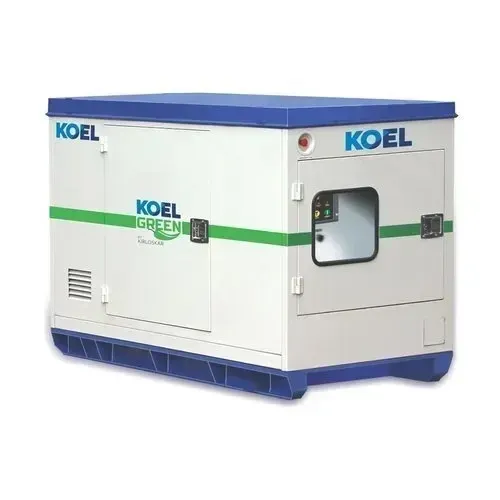

Diesel generator fuel consumption is one of the largest expenditures of owning a backup power system. Most buyers don't think of that. Instead, they look at the price of the generator, but these costs do add up over the years. They may be more expensive than the machine. Understanding what causes fuel use and how to manage it can save you substantial money over the long run.
What Determines Diesel Generator Fuel Consumption?
Fuel use isn't one fixed number. It changes based on several things.
- Generator size (kVA rating): Larger generators consume more fuel per hour than smaller ones. They're working more. A 500kVA industrial unit will always use more diesel per hour than a 5kVA household unit, even if both are well-proportioned.
- Load percentage: This part puzzles many consumers. A generator at 50% load doesn't utilize half of what a generator at 100% load does. Diesel engines work best between 70% and 100% load. Running a generator for long periods of time at very low load is a waste of fuel. It might potentially damage the engine over time. That’s called wet stacking.
- Engine design and technology: All diesel engines are not the same. The quantity of fuel consumed depends upon the quality of the engine and the design of the fuel injection. This is one reason why brand matters. A well-built engine can use much less fuel over its life than a cheap one.
- Maintenance condition: Well-maintained generators consume less fuel. Dirty air filters restrict airflow. Dirty gasoline filters are hard on the engine. Burn efficiency is reduced by worn parts. Maintenance is more than simply avoiding breakdowns. It's a straight fuel expense issue.
- Ambient conditions: Altitude, heat, and humidity all play a role. Generators at high altitude or in extreme heat often lose some efficiency. This matters in a country with as much geographic range as Nepal.
How to Estimate Fuel Consumption
A rough industry formula for diesel generators looks like this:
Fuel use (liters/hour) ≈ 0.4 × (kVA rating) × (load factor)
This is not exact. The engine and brand determine the actual use. But it provides you a basis. The approximate calculation would be something like 30 liters of fuel per hour for a 100 kVA generator running at 75% capacity. More accurate fuel charts for each model are generally published by manufacturers. When comparing generators ask for these explicitly. Don’t rely on a broad formula.
Why Load Management Matters So Much?
One of the most overlooked ways to control fuel cost is load management. This means matching how much power you draw to what the generator is actually rated for.
Oversizing is also a typical blunder. If a company buys an oversized generator, it will mostly operate at very low loads throughout its lifetime. This is the least efficient range of operation for a diesel generator. There will be a lot of waste over time due to unnecessary expenses. At the same time, the initial cost of the generator will be higher.
Under-sized generators present another issue. A generator that operates close to or above its rating puts in extra effort. It wears out more quickly. It may be unable to burn fuel effectively due to the strain. Furthermore, it may fail to work due to overloading.
That is why the importance of an accurate load calculation before purchasing cannot be overlooked. Matching the generator to the size is not only about being able to operate your equipment.
Practical Ways to Reduce Diesel Generator Fuel Consumption
- Size the generator correctly from the start: This is your biggest leverage. A generator that is properly sized to operate within 70% to 90% load will be more fuel-efficient throughout its lifetime compared to buying a generator "just in case" – an oversized generator for the task.
- Keep up with scheduled maintenance: Properly clean filters, oil changes, and operate fuel injectors will save fuel. Maintenance is not an additional cost; it saves the money that you have already invested.
- Avoid unnecessary idling: Idling of the generator without load or with minimum load consumes fuel without producing any useful results. Operate your generator only when there is a need for the load to be served.
- Track fuel use over time: Observing the fuel consumption per hour is useful in discovering any faults that might exist. An increase in the amount of fuel consumption but no increased load indicates that there is something wrong with the maintenance of your generator.
- Consider IoT-enabled monitoring: In most cases, the latest models of generators come with smart monitoring features. They provide real-time statistics on fuel consumption, runtime, and performance. In this case, detecting fuel waste will become very easy.
- Use quality fuel: Using contaminated or low-quality diesel reduces the efficiency of the fuel combustion. It may also result in some damages to the engine.
Why Brand and Engine Quality Matter for Fuel Efficiency
The amount of diesel used per kilowatt by each diesel generator brand is not the same for the same power output. Many factors determine the efficiency of fuel usage by a particular engine.
This is one of the reasons why companies using generator engines for a long time appreciate the brand Kirloskar, which has powerful engineering capabilities. Higher efficiency not only helps you save money once. It makes you save a lot of money during the 10-15 year period of generator life span.
When comparing generators in Nepal, always request from the supplier the actual fuel consumption data at various loadings. Do not be misled by mere marketing statements. An honest supplier would be willing to provide the same.
Diesel vs. Petrol Generators: A Quick Note on Fuel Consumption
Understanding the reasons why diesel is favored for use in bigger generators is important. One reason for this is that diesel engines are generally more fuel-efficient compared to petrol engines. This is due to the increased efficiency in combustion and greater compression in the engine. Also, diesel contains more energy compared to petrol in a single liter.
The difference increases as the generator size increases. However, for small-scale and infrequent use, a petrol generator may be appropriate. But for sustained and demanding power generation, which is what most households and business entities in Nepal require, the diesel generator is better suited.
Seasonal and Environmental Factors in Nepal
The climate and geography of Nepal provide additional complexities to this discussion. The efficiency of combustion may be slightly reduced in generators operating at elevated altitude due to the low concentration of oxygen in the atmosphere. This may increase the fuel consumption per unit of power generated. The need for more frequent cooling in hot climatic conditions is possible.
None of the above factors are really significant individually. However, combined, all of them can account for why the figures printed in published materials must be taken as only a starting point, and not a promise. The same generator operating in the higher elevation of Kathmandu will not operate the same way as it does when operating in sea level.
A Simple Example
Picture two businesses. Each needs about 60kVA of backup power.
Business A sets up a 100kVA generator "to be on the safe side," while it operates at 45% of its capacity most of the time. In turn, Business B coordinates with its provider to determine its actual load and ends up setting up a 75kVA generator that operates near 80% of its capacity.
In the course of a whole year of continuous usage, Business A’s generator is mostly operating in an inefficient load range and therefore consumes considerably more fuel than Business B's generator when producing the same output.
Over several years, this gap in fuel spend adds up. It can be large enough to offset a meaningful chunk of the generator's original price.
This is the real, financial reason proper sizing deserves as much attention as brand or price when you buy a generator.
Final Thoughts
The fuel consumption of the diesel generator is not only an issue of technical importance; it is the highest recurrent cost of the ownership of the backup power equipment. The size of the generator, the average load, the quality of maintenance, and the quality of the engine all determine the amount of fuel that will be consumed by the generator throughout its lifespan.
Getting these things right from the start- proper sizing, steady maintenance, and a well-built engine- is the most reliable way to keep fuel costs down for years to come.
For businesses and homeowners in Nepal looking for fuel-efficient, reliable diesel generators, BRT International is an authorized Kirloskar generator dealer offering load assessment, installation, and maintenance support across Kathmandu, Chitwan, and Butwal.




























Sign in to leave a comment.