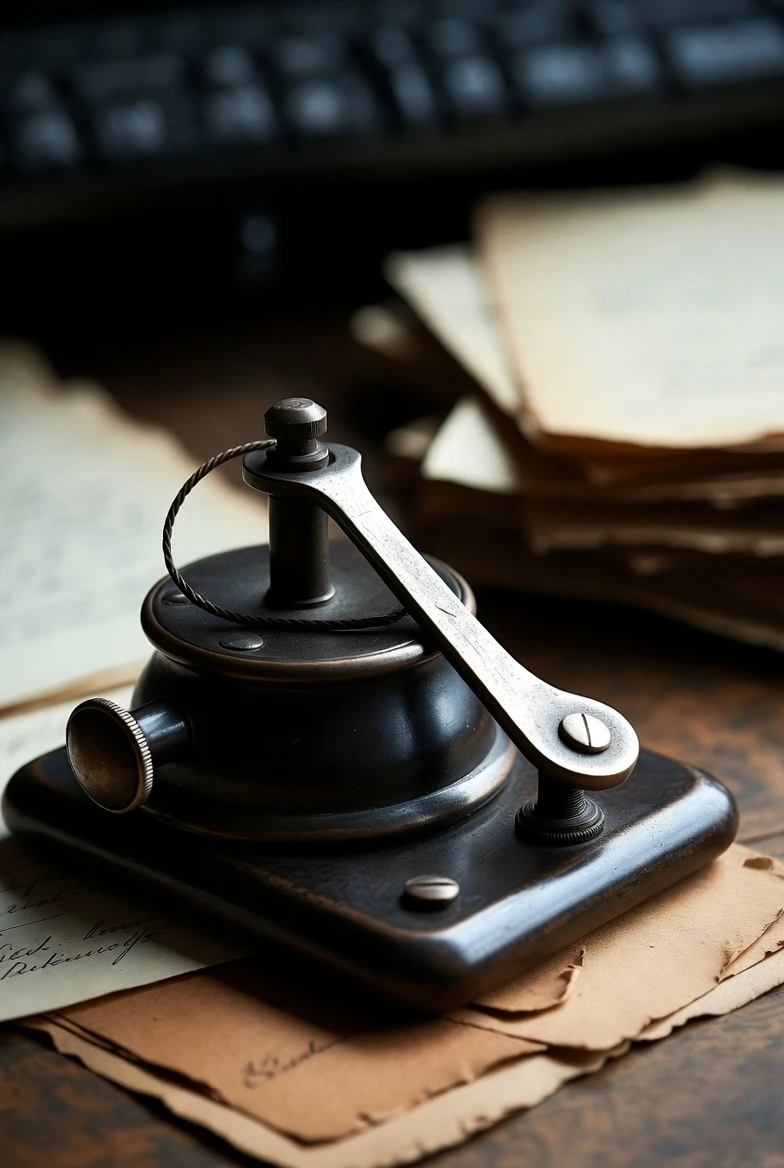
Morse code feels like something from another era. It brings to mind ships at sea, wartime radio operators, and early telegraph lines stretching across continents. But Morse code never really disappeared. It quietly adapted. Today, it lives on through digital tools that make it easy for anyone to read, write, and learn. That is where a morse code translator comes in.
If you have ever been curious about Morse code or needed to convert a message quickly, modern translators make the process simple. They remove the technical barrier and let you focus on the message itself.
What Is Morse Code, Really?
Morse code is a system of communication that represents letters, numbers, and symbols using dots and dashes. Each character has a unique pattern. Short signals are dots, longer ones are dashes, and pauses separate letters and words.
The beauty of Morse code is its simplicity. It does not depend on language or complex technology. As long as a signal can be sent and received, Morse code works. That flexibility is one reason it survived for so long and still has a place today.
What a Morse Code Translator Does
A morse code translator is a tool that converts text into Morse code or converts Morse code back into readable text. Instead of memorizing patterns or counting dots and dashes, you type or paste your message and the translator handles the rest.
Most modern tools support multiple input and output formats. This makes them useful for beginners, hobbyists, students, and even professionals who want to experiment or verify their work.
Common functions include:
- Converting written text into Morse code symbols
- Translating Morse code back into plain text
- Playing Morse code as audio signals
- Adjusting speed or spacing for learning purposes
English to Morse Code Translator Explained
An english to morse code translator focuses specifically on converting standard English text into Morse code. This is usually the most common use case.
You type a sentence like “Hello world” and the tool outputs the correct dot and dash sequence for each letter. The translator follows international Morse code standards, so the output is consistent and reliable.
This type of translator is especially useful if you are:
- Learning Morse code and want to check your answers
- Creating practice material for study or teaching
- Sending Morse code messages for fun or demonstrations
- Working on a project that involves signaling or encoding
Because English uses a defined alphabet and structure, the translation process is straightforward and accurate when done with a good tool.
Why People Still Use Morse Code Today
It might seem surprising that Morse code still has an audience, but there are solid reasons behind its continued use.
Some of the most common ones are:
- Amateur radio operators who enjoy traditional communication methods
- Students studying communication history or signal systems
- Accessibility users who rely on simple signal patterns
- Puzzle creators and game designers who enjoy coded messages
- Emergency signaling scenarios where simple signals are effective
Morse code also has a learning advantage. It trains listening skills, timing, and focus. Many people enjoy it for the mental challenge alone.
Key Features to Look for in a Translator
Not all translators are the same. A good morse code translator should feel intuitive and accurate without overwhelming you with options.
Here are features that make a difference:
- Clean and readable interface
- Accurate support for letters, numbers, and punctuation
- Instant conversion without delays
- Audio playback for dots and dashes
- Mobile and desktop compatibility
If a tool does these basics well, it is usually more than enough for most users.
Learning Morse Code With Translators
One of the best ways to learn Morse code is by using a translator as a reference tool. Instead of trying to memorize everything at once, you can practice small pieces and confirm your progress.
A simple learning approach looks like this:
- Start with common letters like E, T, A, and N
- Type short words into an english to morse code translator
- Listen to the audio version if available
- Try writing the Morse code yourself before checking the result
- Gradually increase speed and complexity
Over time, patterns start to feel natural. The translator becomes less of a crutch and more of a backup.
Practical Uses Beyond Learning
Morse code translators are not just for education. They also have practical and creative uses.
People use them for:
- Encoding hidden messages in art or writing
- Adding coded elements to escape rooms or puzzles
- Creating unique ringtones or sound alerts
- Teaching kids about communication and signals
- Demonstrating how early technology worked
Because Morse code is compact, it can fit into places where standard text feels too obvious or too large.
Common Mistakes to Avoid
When using a morse code translator, a few mistakes come up often, especially for beginners.
Watch out for these:
- Forgetting that spacing matters between letters and words
- Mixing up international Morse code with custom variants
- Relying only on visual dots and dashes without learning sound
- Assuming punctuation works the same way as letters
A reliable translator helps prevent these issues, but understanding the basics still matters.
Choosing the Right Tool Online
There are many online tools available, but quality varies. A good translator should work smoothly without forcing you to sign up or deal with clutter.
When choosing one, ask yourself:
- Is it fast and easy to use?
- Does it support both text and Morse input?
- Can it play audio clearly?
- Does it work well on my device?
If the answer is yes to most of these, you are probably in good hands.
Why Morse Code Still Feels Relevant
Morse code is more than a historical curiosity. It represents a pure form of communication. No images, no extra layers, just signals and meaning.
Using a morse code translator today connects modern technology with that simplicity. It lets anyone explore a system that once carried some of the most important messages in history.
Whether you are learning, teaching, or just curious, an english to morse code translator makes the experience accessible and enjoyable. You do not need special equipment or deep knowledge to get started. Just a message and a bit of curiosity.
At the end of the day, Morse code reminds us that communication does not have to be complicated to be powerful.










Sign in to leave a comment.