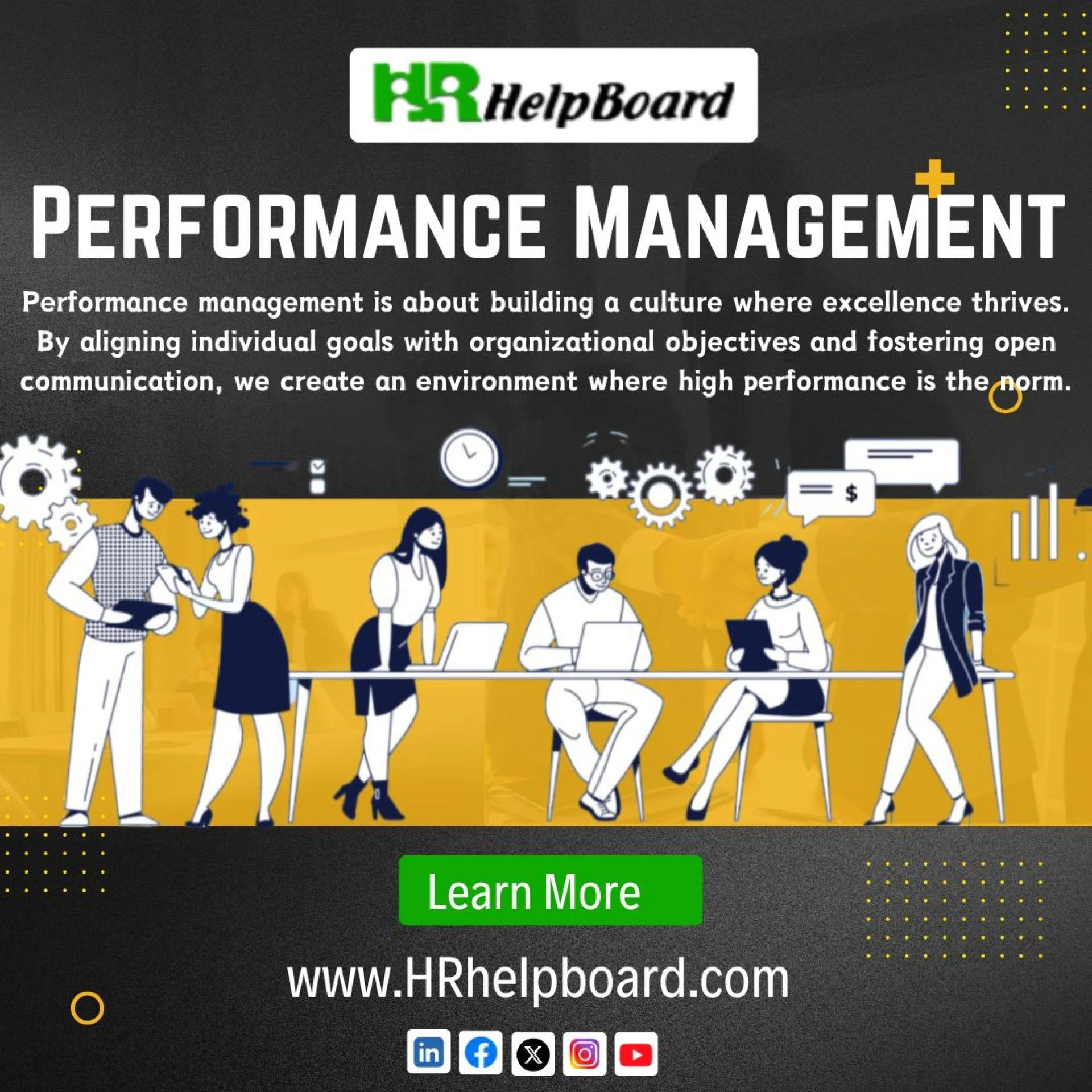

Performance management is an essential aspect of human resource management (HRM) that focuses on improving organizational effectiveness by ensuring employees meet their job expectations and contribute to the company's goals. It's an ongoing process that involves setting clear expectations, monitoring progress, providing feedback, and evaluating results. A well-implemented performance management system can enhance individual and team productivity, foster employee development, and drive business success.
The Importance of Performance Management
The primary goal of performance management is to align employees' efforts with the organization’s objectives. When done correctly, performance management helps organizations:
- Boost Productivity: By setting clear goals and providing regular feedback, employees know what is expected of them and can perform at their best.
- Develop Employees: Performance management supports professional development through training, skill development, and growth opportunities.
- Enhance Employee Engagement: Regular performance discussions help employees feel valued, leading to higher job satisfaction and motivation.
- Identify and Address Performance Issues: Early identification of performance gaps allows managers to address issues before they affect overall performance.
- Support Strategic Goals: Aligning individual and team performance with business goals helps the organization achieve its strategic objectives.
Key Components of Performance Management
A robust performance management system includes several key components that work together to ensure optimal performance:
1. Goal Setting
Effective performance management begins with setting clear, measurable, and achievable goals. This ensures that both employees and managers are aligned on expectations and outcomes. Goals should be linked to the organization’s broader strategic objectives, and they should be SMART—Specific, Measurable, Achievable, Relevant, and Time-bound.
- Individual Goals: Goals should reflect the employee's role and contribution to the organization.
- Team Goals: Team-based goals encourage collaboration and collective success.
- Organizational Goals: Aligning individual and team goals with the company’s strategic vision ensures that everyone is working toward the same end result.
2. Continuous Feedback and Communication
Feedback is an ongoing process, not something that happens only during annual performance reviews. Regular, constructive feedback helps employees stay on track, refine their skills, and adjust their performance if needed. Feedback can be:
- Positive Feedback: Reinforcing good performance, motivating employees, and promoting desired behaviors.
- Constructive Feedback: Addressing performance gaps, offering solutions, and setting expectations for improvement.
Best Practices for Feedback:
- Be timely: Provide feedback as close to the event as possible.
- Be specific: Focus on particular behaviors and results, rather than general comments.
- Encourage two-way communication: Allow employees to share their perspectives and concerns.
- Use a balanced approach: Mix positive reinforcement with constructive criticism.
3. Performance Reviews
While continuous feedback is crucial, periodic performance reviews remain an essential part of performance management. These reviews allow for a more structured discussion about an employee's progress, achievements, and areas for improvement. Annual or semi-annual performance reviews are common, but they can also be done more frequently, such as quarterly or biannually, depending on the needs of the organization.
Key Elements of a Performance Review:
- Self-assessment: Allowing employees to reflect on their own performance encourages self-awareness and accountability.
- Manager assessment: Managers evaluate employees based on performance against goals, behaviors, and competencies.
- Development plan: Discuss opportunities for skill-building, career growth, and training needs.
- Setting new goals: Adjust goals for the next review period based on the current performance.
4. Training and Development
One of the primary purposes of performance management is to identify opportunities for employee development. Regular performance reviews and feedback sessions help managers understand employees’ strengths and areas for improvement, providing a foundation for targeted training.
- Skill development: Offering training to close skill gaps and help employees enhance their performance.
- Career development: Supporting long-term career growth by identifying new challenges or leadership opportunities.
- Mentorship: Pairing employees with mentors can help them navigate their careers and grow professionally.
5. Recognition and Rewards
Recognizing and rewarding good performance is a critical motivator for employees. A well-designed performance management system acknowledges the hard work of employees and provides incentives for continued excellence. Recognition can be both formal (e.g., awards, bonuses) and informal (e.g., verbal praise, thank-you notes).
Types of Recognition:
- Monetary Rewards: Bonuses, salary increases, profit sharing, and commission-based incentives.
- Non-Monetary Rewards: Public recognition, additional responsibilities, professional development opportunities, or extra time off.
Best Practices for Performance Management
To maximize the effectiveness of performance management, organizations should implement best practices that ensure fairness, transparency, and alignment with business goals.
1. Set Clear Expectations
Ensure that both employees and managers are clear about what is expected. This involves not just setting specific goals, but also defining the behaviors, competencies, and values that are important to the organization.
2. Encourage Regular Check-ins
Performance management should be an ongoing process, not a once-a-year event. Regular check-ins and feedback sessions help to address issues early, keep employees motivated, and prevent misunderstandings.
3. Be Objective and Fair
Performance reviews and feedback should be based on facts and evidence, not subjective opinions. Use performance data, examples, and specific outcomes to ensure that the process is fair and unbiased.
4. Promote Two-Way Communication
Performance management should not be a one-way street. Employees should have the opportunity to provide feedback on their managers, the organization, and the performance management process itself. This creates a culture of openness and continuous improvement.
5. Align with Business Strategy
Performance management should directly align with the organization’s strategic goals. This ensures that every employee’s efforts contribute to the company’s overall success. Make sure individual goals reflect organizational priorities.
Common Challenges in Performance Management
Despite its importance, performance management can face challenges such as:
- Bias in evaluations: Managers may unintentionally show favoritism or allow personal biases to influence performance assessments.
- Lack of consistency: Without clear standards and guidelines, performance management processes can become inconsistent, leading to confusion and dissatisfaction.
- Inadequate feedback: Some employees may receive little or no feedback, making it difficult for them to improve or know where they stand.
Conclusion
Performance management is an ongoing process that plays a crucial role in organizational success. It involves setting clear expectations, providing continuous feedback, conducting periodic reviews, and offering development opportunities. By focusing on these elements and following best practices, companies can improve employee performance, foster a culture of continuous learning, and achieve their long-term strategic goals. The ultimate aim is to create a high-performance workplace where employees are motivated, engaged, and equipped to contribute to the organization’s success.






Sign in to leave a comment.