Understanding the Difference Between Pallet Supports and Rack Decking


Warehouse storage systems rely on properly selected components to keep products organized, accessible, and securely positioned. Understanding how different support options function helps facility managers make informed purchasing decisions and improve storage efficiency. Pallet rack supports provide additional support beneath pallets in compatible racking configurations, while rack decking creates a broader surface for storing goods. Although these components serve related purposes, their designs, applications, and installation requirements differ. Recognizing these distinctions helps warehouse operators choose suitable equipment, maintain appropriate load distribution, and develop storage arrangements that meet their operational requirements.
What Are Pallet Supports?
Pallet supports are structural components installed across or between compatible rack beams to provide additional bearing points for pallets. They are particularly useful in storage configurations where pallet dimensions, construction, or loading conditions require support beyond the primary beam arrangement. Depending on their design, supports can help reduce unsupported spaces beneath pallets and improve compatibility with certain pallet types. Their suitability depends on the rack configuration, pallet construction, load characteristics, and manufacturer specifications. Selecting appropriate supports requires accurate measurements and a clear understanding of the intended storage application.
What Is Rack Decking?
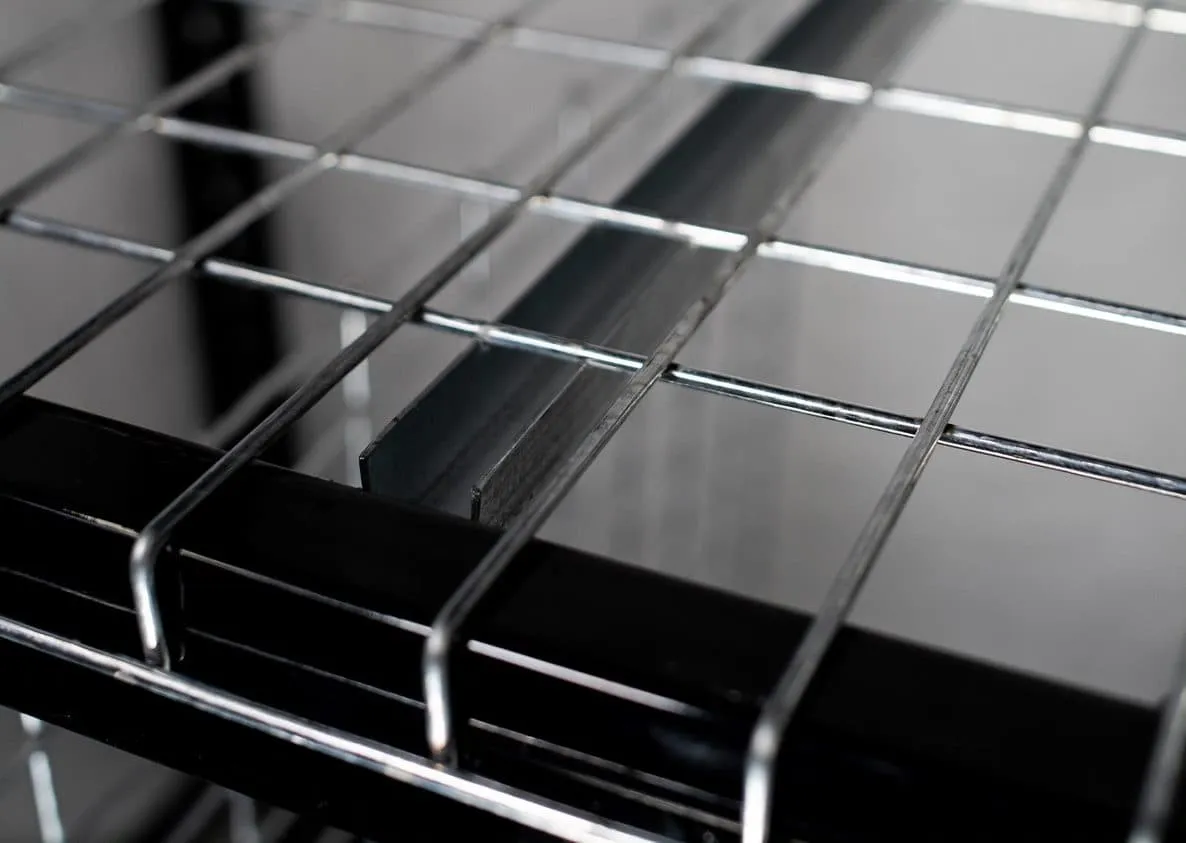
Rack decking is a platform installed across compatible pallet rack beams to provide a supporting surface for stored products. Wire decking commonly features an open construction that allows airflow, improves visibility through storage levels, and permits certain debris to pass through. Depending on its configuration, decking can accommodate a variety of palletized goods and other approved storage applications. Its dimensions, wire arrangement, finish, and load rating should match the rack system and intended use. Warehouse managers should verify compatibility before installation to ensure that the decking provides the intended support under specified loading conditions.
Key Differences Between Pallet Supports and Rack Decking
The primary difference between pallet supports and rack decking lies in their construction and coverage. Pallet supports generally provide localized support at designated positions beneath a pallet, whereas decking spans a larger portion of the rack level to create a more continuous surface. These components are not automatically interchangeable, and each must be evaluated according to the requirements of the storage system. Some installations may use supports alone, while others may require decking or a manufacturer approved combination. The appropriate choice depends on pallet design, product dimensions, loading arrangements, and the specifications of the rack manufacturer.
Comparing Load Distribution and Storage Applications
Load distribution is an important consideration when selecting either component. Pallet supports provide specific bearing points that help transfer loads to compatible rack beams, while decking distributes contact across a wider supporting surface. However, actual load transfer depends on the complete system, including pallet construction, product placement, beam spacing, and component ratings. Concentrated loads can behave differently from evenly distributed loads, even when their total weight is similar. Warehouse operators should review wire decking load capacity and testing information to better understand why stated ratings and approved loading conditions matter.
Material Selection and Durability Considerations
Material quality influences the strength, service life, and maintenance requirements of both pallet supports and rack decking. Buyers should assess the working environment, expected loading frequency, exposure to moisture, and potential contact with handling equipment. Suitable protective finishes can help reduce corrosion under appropriate operating conditions, while consistent manufacturing quality supports dimensional accuracy and dependable installation. The selection process should consider initial purchase costs alongside inspection needs and expected replacement frequency. For applications requiring corrosion protection, reviewing the differences between Galva Deck and standard wire decking can help purchasing teams evaluate relevant finish and product characteristics.
Choosing the Right Component for Pallet Compatibility
Pallet construction has a direct influence on which support arrangement is appropriate. Some pallets rely on runners or defined bearing surfaces, while others have different base configurations that may require a broader supporting area. Pallet supports may suit certain designs when installed according to approved specifications, whereas rack decking can provide a more continuous surface for compatible applications. Buyers should confirm pallet dimensions, base construction, rack beam spacing, and the intended load before selecting equipment. Reviewing double flanged and top hat pallet support designs can provide additional context when comparing different support configurations.
Installation and Warehouse Safety Requirements
Correct installation is essential for reliable storage performance. Pallet supports must be positioned and secured according to their design and manufacturer instructions, while rack decking must fit the specified beam arrangement without unsuitable gaps or improper placement. Employees should avoid modifying components without authorization and should never exceed applicable load limits. Warehouse teams should also maintain clear procedures for reporting displaced supports, bent wires, damaged connections, or other visible defects. Consistent inspections help identify problems early and allow damaged components to be assessed before continued use creates additional risks for workers or stored products.
Maintenance and Replacement Planning
Routine maintenance helps warehouse operators identify deterioration that may affect storage reliability. Inspections should include checking for corrosion, deformation, broken welds, loose connections, displaced components, and damage caused by handling equipment. Pallet supports and decking that no longer meet the required specifications should be assessed promptly, with repairs or replacements performed according to approved procedures. Repeated damage may indicate overloading, unsuitable pallet selection, or frequent equipment impacts. Guidance on identifying bent, rusted, or aging wire decking can help teams recognize conditions that require further evaluation and corrective action.
Making a Cost Effective Purchasing Decision
A suitable purchasing decision considers more than the initial price of individual components. Warehouse managers should compare compatibility, load requirements, material quality, installation needs, maintenance costs, and expected service life. Pallet supports may be appropriate when localized support meets the application requirements, while decking may be preferable when a broader supporting surface is needed. The choice should be based on the actual storage configuration rather than appearance or price alone. Reviewing warehouse storage solution trends can also help businesses consider how equipment selection fits into wider storage planning and operational improvement.
Conclusion
Pallet supports and rack decking serve related but distinct purposes within warehouse storage systems. Supports provide designated bearing points for compatible pallets, while decking creates a broader surface across the rack level. Choosing between them requires careful consideration of pallet construction, load distribution, rack compatibility, material quality, installation requirements, and maintenance needs. Regular inspections and adherence to manufacturer specifications help maintain reliable storage conditions and reduce avoidable equipment problems. Businesses evaluating suitable wire based storage solutions can explore the product expertise and capabilities offered by J&L Wire Cloth when determining which components best meet their warehouse requirements.





Sign in to leave a comment.