
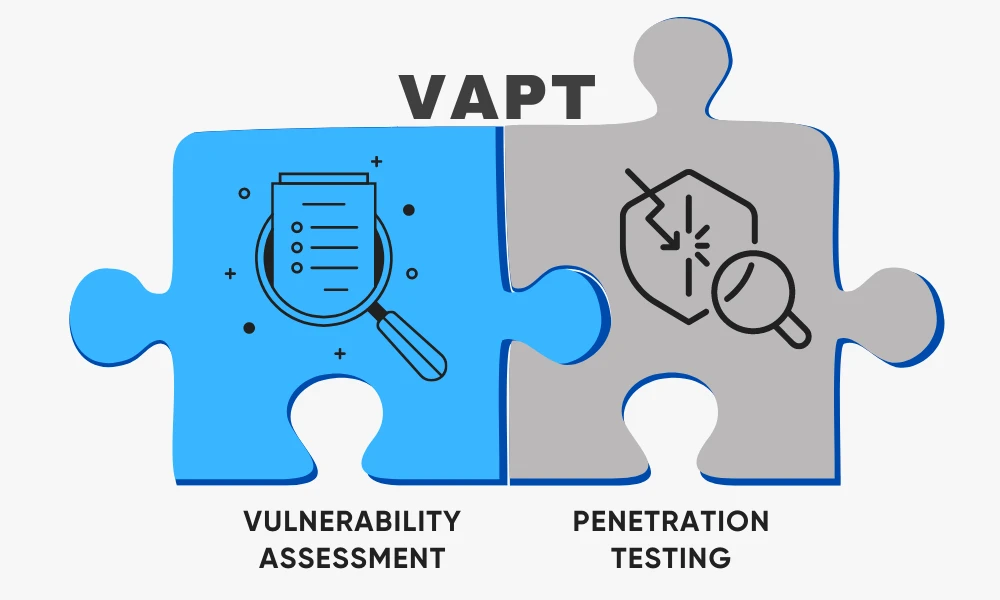
As companies grow and become more digitalized, their security risks increase as well. To mitigate these risks, companies have to adopt various security measures. Two such measures are Vulnerability Assessment (VA) and Penetration Testing (PT). While both VA and PT are security testing methodologies, there are differences between them. In this blog, we'll explore the differences between Vulnerability Assessment and Penetration Testing.
What is Vulnerability Assessment (VA)?
Vulnerability Assessment is the process of identifying vulnerabilities in a system or network infrastructure using automated tools or manual techniques. The main aim of a VA is to discover vulnerabilities and weaknesses that an attacker could exploit. VA is typically carried out regularly and is a proactive measure to ensure that a company's security posture remains strong.
What is Penetration Testing (PT)?
Penetration Testing, on the other hand, is a process of simulating a real-world attack on a system or network. The aim of PT is to identify vulnerabilities that are exploitable, and to test the effectiveness of a company's security controls. PT is a more intrusive test than VA, as it involves the exploitation of vulnerabilities to gain access to a system or network.
Key Differences between VA and PT
ObjectivesThe main objective of VA is to identify and categorize vulnerabilities in a system or network. PT, on the other hand, aims to exploit these vulnerabilities to test the effectiveness of a company's security controls.
ScopeVA typically focuses on identifying vulnerabilities in a specific system or network, whereas PT often covers a wider scope, including social engineering and physical security testing.
MethodologyVA is typically an automated process that uses tools to scan for vulnerabilities. PT, on the other hand, involves a more manual approach and is conducted by experienced security professionals who try to exploit vulnerabilities in a real-world scenario.
OutputThe output of a VA is a report that details the vulnerabilities found, including their severity and recommendations for remediation. The output of a PT includes a report of vulnerabilities found, along with proof-of-concept exploits and recommendations for remediation.
Conclusion
While both VA and PT are important security measures, they differ in their objectives, scope, methodology, and output. VA is a proactive measure that identifies vulnerabilities, while PT is a more intrusive test that simulates real-world attacks. Companies should consider both VA and PT in their security strategy to ensure they have a comprehensive security posture.








Sign in to leave a comment.