
Investment casting, also known as lost wax casting, is a precision casting method that has been employed for centuries to produce intricate and high-quality metal components. This process is renowned for its ability to create complex shapes and achieve tight tolerances, making it a popular choice in industries such as aerospace, automotive, and medical.
1. Pattern Creation: The Lost Wax Method
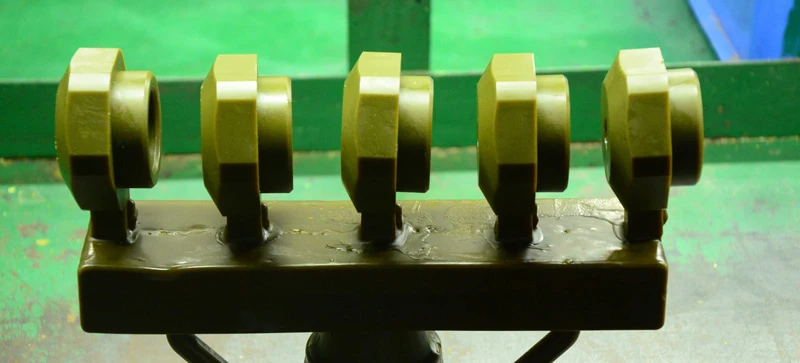
The investment casting process begins with the creation of a wax pattern, which is an exact replica of the final metal part. This can be achieved through various methods, including injection molding or hand sculpting. The wax pattern is then attached to a gating system to form what is known as a wax tree.
2. Ceramic Shell Formation: Protecting the Pattern
The wax tree is coated with a ceramic slurry to create a ceramic shell around the wax pattern. This shell serves as a mold for the molten metal and must withstand the high temperatures involved in the casting process. The ceramic shell is built up in several layers, with each layer being dried and cured before the next is applied.
3. Dewaxing: Removing the Wax
Once the ceramic shell is complete and has hardened, the wax within is melted or "dewaxed" to leave a hollow cavity in the shape of the desired metal part. This step is crucial to the investment casting process and contributes to its "lost wax" moniker.
4. Preheating: Ensuring Proper Metal Flow
Before pouring the molten metal, the ceramic shells are preheated to remove any remaining moisture and ensure an even flow of metal during the casting phase. This preheating process helps prevent defects and ensures a smoother, more consistent casting.
5. Pouring: Introducing the Molten Metal
The preheated ceramic shells are then filled with molten metal. The choice of metal depends on the specific application, with commonly used materials including aluminum, bronze, and stainless steel. The controlled pouring of molten metal into the ceramic shell is a critical step to achieve accurate and high-quality castings.
6. Cooling and Solidification: Forming the Final Shape
Once the molten metal is poured, the filled ceramic shells are allowed to cool and the metal solidifies within the shell, taking the exact shape of the wax pattern. This cooling process is carefully monitored to avoid thermal stresses and ensure the integrity of the final casting.
7. Shell Removal and Finishing: Unveiling the Casting
After the metal has solidified and cooled, the ceramic shell is broken or removed, revealing the metal casting inside. The casting may undergo additional finishing processes, such as grinding, machining, and heat treatment, to achieve the desired final specifications.
Advantages of Investment Casting: Precision and Versatility
Investment casting offers several advantages that contribute to its popularity:
1. Precision: The process allows for the production of intricate and highly detailed parts with tight tolerances.
2. Versatility: Investment casting accommodates a wide range of metals and alloys, providing flexibility in material selection for diverse applications.
3. Smooth Finish: The casting process often results in a smooth surface finish, reducing the need for extensive post-casting machining.
4. Complex Geometry: The method excels in producing parts with complex shapes, internal cavities, and fine details that may be challenging for other casting processes.
Conclusion: Crafting Precision through Tradition
Investment casting stands as a testament to the marriage of traditional craftsmanship and modern engineering precision. Its ability to transform intricate wax patterns into high-quality metal components has made it a cornerstone in the production of critical parts across various industries. As technology advances, investment casting continues to evolve, ensuring that it remains a reliable and versatile method for creating components with uncompromising precision.









Sign in to leave a comment.