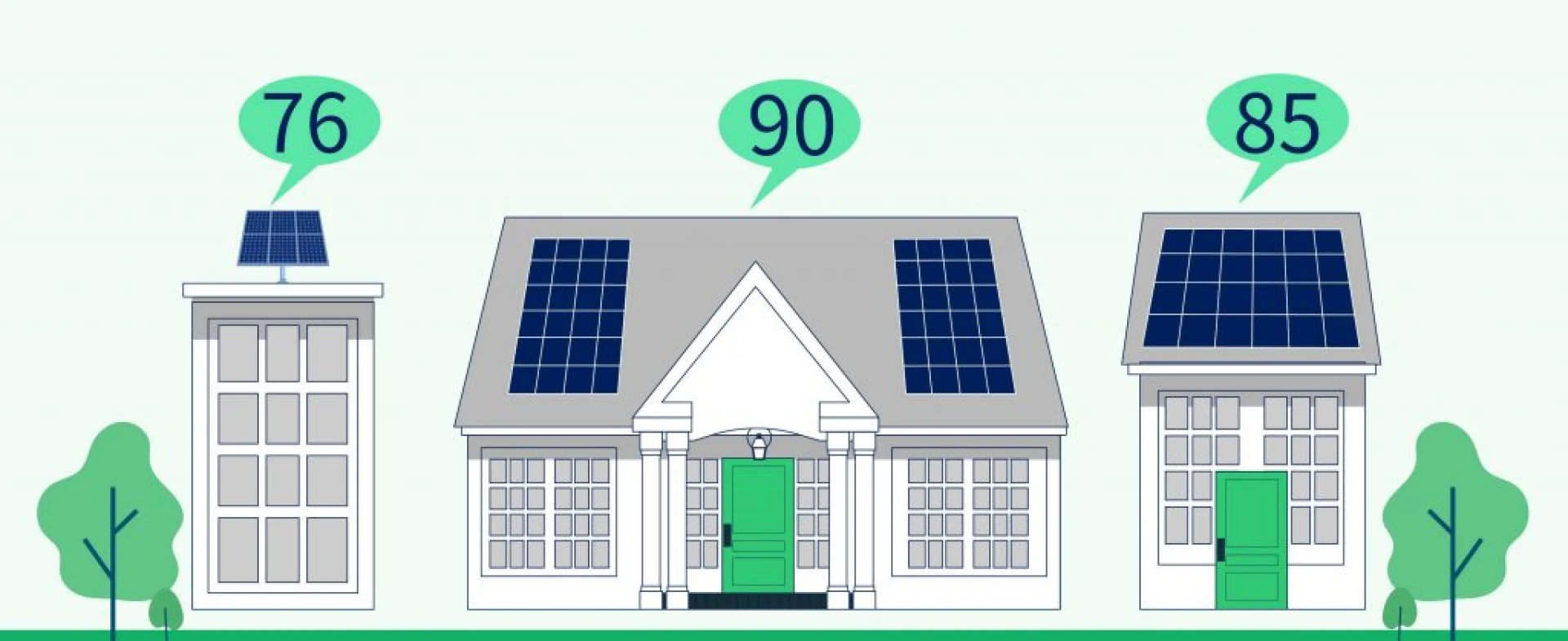

For anyone contemplating the installation of solar panels, comprehending the concept of a "Sun Number Score" is pivotal. This score, which quantifies your property's potential for harnessing solar energy, is crucial for tailoring the perfect solar panel setup for your specific needs.
Key Insights:
A Sun Number Score is a standardized measure assessing a property's solar potential.It comprises four primary factors: Building suitability, regional climate, electricity costs, and upfront installation expenses.Scores above 70 are ideal, but innovative technologies like microinverters enable efficient solar arrays for properties with lower scores.Solar energynot only contributes to cost savings but also enhances property value.Governments worldwide offer tax credits for residential and commercial solar installations.Demystifying the Sun Number Score
A Sun Number Score, often referred to as a "Sun Score," is a numerical representation determined through professional evaluation, indicating a property's potential for solar energy generation. This score ranges from 1 to 100, with higher scores indicating greater potential. Understanding your property's Sun Number is crucial as it provides essential insights for optimizing your solar panel array and accommodating specific project requirements.
Components of a Sun Number
Calculating a Sun Number involves evaluating four key aspects, each contributing differently to the final score. These factors are blended to create the property's Sun Number:
Building Solar ScoreRegional Climate ScoreElectricity Rate ScoreSolar Cost ScoreCalculation and Functionality of a Sun Number
Sun Numbers result from a combination of weighted scores, typically assessed by certified solar installation experts when evaluating a property's solar potential. These scores encompass:
Building Sun Score (Max Score: 80 points):This metric primarily evaluates solar panel placement on rooftops. It considers factors such as roof pitch, orientation, size, and shading.Roof Pitch: The angle of the roof influences daily sunlight exposure.Roof Orientation: South-facing roofs (in the northern hemisphere) maximize sun exposure.Roof Size: Sufficient roof space is necessary for an effective solar panel array.Roof Shading: Nearby shade sources can diminish solar energy harvesting.A Building Sun Score should exceed 50, with scores above 60 being ideal. South-facing roofs typically capture ample sunlight, but modern technologies, such as microinverters, can optimize solar collection for roofs with unique characteristics.
Regional Climate Score (Max Score: 8 points):Environmental conditions and weather patterns impact solar panel energy capture. Properties in regions with frequent overcast skies tend to receive lower Regional Climate Scores.Electricity Rate Score (Max Score: 8 points):Higher local electricity rates result in more significant savings when replacing conventional electricity with solar power. Consequently, higher electricity rates yield higher Electrical Rate Scores.Solar Cost Score (Max Score: 4 points):This score reflects the local cost of installing a quality solar panel system. Lower installation prices reduce initial investments and accelerate payback periods.Assessing Sun Number Quality
While a perfect score of 100 is optimal, a Sun Number above 70 signifies that solar energy is a lucrative investment for your property, offering long-term financial savings. Higher Sun Numbers indicate superior solar energy collection potential and increased property value through solar panel installation.
Addressing Low Sun Number Scores
Low Sun Number scores do not necessarily preclude solar panel installation. These properties may require customized solutions and adaptations. Collaborating with certified solar panel installers can help identify and address specific challenges. Microinverter technology offers flexibility by independently optimizing each panel's sun exposure, even on complex roofs.
Microinverters, like those from Hoymiles, enable individual panels to operate at maximum capacity, boosting energy production by up to 15%. This level of granularity ensures that a single underperforming panel does not compromise the entire system's output.
Incentives for High Sun Number Scores
The current climate presents an excellent opportunity for US homeowners to explore solar panel systems and leverage the Federal Solar Investment Tax Credit (ITC). Many states and local governments offer rebates, with some covering up to 20% of the system's cost.
Furthermore, solar-energy systems consistently elevate home sale values in the US by an average of 4.1%, equating to nearly $10,000 in added value. A study by the National Renewable Energy Laboratory (NREL) also highlights that each dollar saved on annual utility bills through solar energy results in a $20 increase in home value. These incentives not only offset initial investment costs but also enhance long-term property investments.




























Sign in to leave a comment.