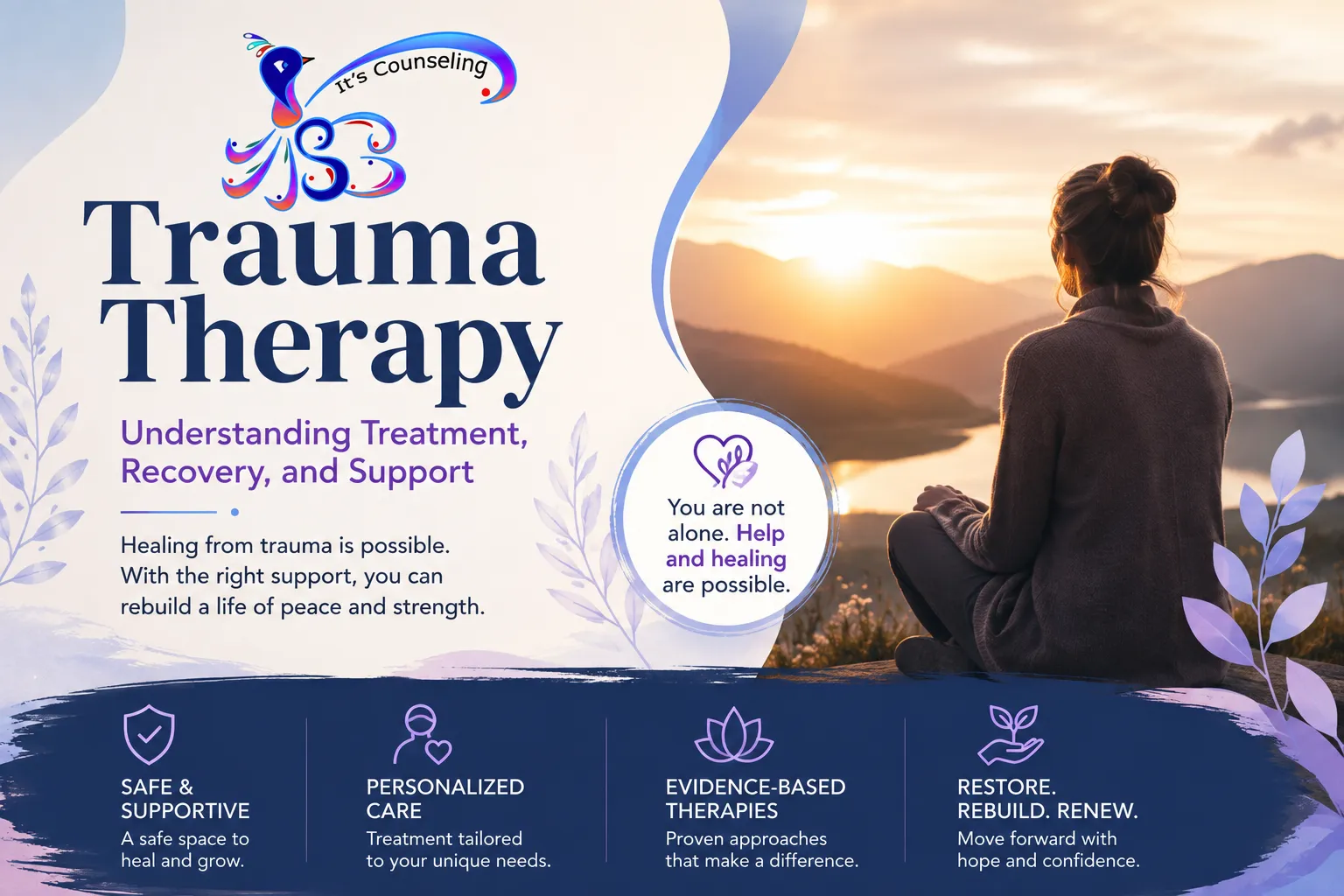

Trauma therapy is specialized psychotherapy designed to help people understand and work through the psychological and emotional effects of traumatic experiences. Depending on the person's symptoms, history, goals, and readiness, treatment may involve approaches such as Cognitive Processing Therapy (CPT), Prolonged Exposure (PE), EMDR, Trauma-Focused CBT, or other evidence-based methods.
The important point is that trauma treatment is not a single technique. A good treatment plan is individualized, paced appropriately, and built around safety.
Trauma can follow many experiences, including violence, abuse, serious accidents, military experiences, natural disasters, medical events, sudden loss, or prolonged exposure to threatening circumstances. SAMHSA describes trauma as an event, series of events, or circumstances experienced as physically or emotionally harmful or threatening that can affect functioning and well-being.
What Does Trauma Therapy Actually Address?
Trauma can affect much more than memory. Some people experience intrusive thoughts, nightmares, avoidance, emotional numbness, irritability, difficulty concentrating, sleep problems, or a heightened sense of danger.
Others may notice changes in relationships or self-esteem. They might struggle to trust people, set boundaries, regulate emotions, or feel comfortable in situations that once seemed ordinary.
Importantly, experiencing trauma does not automatically mean someone has PTSD. Trauma responses vary considerably from one person to another.
Trauma and PTSD Are Not the Same Thing
PTSD is a specific mental health condition associated with exposure to traumatic events. Diagnosis involves a particular pattern of symptoms and functional impact.
Trauma therapy may be appropriate for someone with PTSD, but it can also address trauma-related distress that does not meet criteria for PTSD.
That distinction matters because treatment should focus on the person's actual needs rather than forcing every experience into the same diagnostic category.
What Happens in Trauma Therapy?
One of the biggest questions people have is, “What happens in trauma therapy?”
Usually, therapy does not begin with a therapist immediately asking someone to describe the most painful details of their experience.
1. Assessment and Goal Setting
Early sessions generally involve learning about the person's concerns, history, current symptoms, coping strategies, relationships, and goals.
A therapist may also explore sleep, anxiety, mood, substance use, physical symptoms, previous treatment, and current sources of support.
This information helps determine what kind of treatment may be appropriate.
2. Building Safety and Coping Skills
For some people, the first priority is developing emotional regulation and grounding skills.
This might include learning how to recognize triggers, manage overwhelming emotions, improve awareness of physical responses, or stay connected to the present moment.
Trauma-informed care emphasizes safety, trust, collaboration, empowerment, and avoiding practices that may unnecessarily retraumatize someone.
3. Processing Trauma
Once the therapist and client determine that deeper trauma processing is appropriate, treatment may involve carefully structured work with memories, beliefs, emotions, or avoidance patterns.
The approach depends on the therapy being used.
For example, CPT focuses on trauma-related beliefs and interpretations. Prolonged Exposure uses gradual, structured exposure to trauma memories and avoided situations. EMDR uses bilateral stimulation as part of a structured treatment protocol. These approaches are among the evidence-based psychotherapies recommended for PTSD.
4. Rebuilding Daily Life
Recovery isn't only about reducing symptoms.
Therapy may also address relationships, confidence, communication, boundaries, work, sleep, emotional regulation, and the ability to participate in everyday activities.
The goal is to help a person develop a life that isn't organized entirely around avoiding reminders of the past.
What Types of Trauma Can Therapy Address?
Childhood Trauma
Childhood abuse, neglect, bullying, family instability, or exposure to violence can influence emotional development and later relationships.
Adults may notice these effects through persistent self-criticism, difficulty trusting others, fear of abandonment, people-pleasing, or problems with boundaries. These patterns don't prove that childhood trauma is the cause, but they can be worth exploring with a qualified therapist.
Medical Trauma
Serious illness, emergency treatment, surgery, childbirth complications, or frightening medical experiences can sometimes leave people with ongoing distress.
Medical trauma therapy may focus on anxiety, avoidance of healthcare settings, intrusive memories, fear, and rebuilding a sense of safety.
Relationship and Interpersonal Trauma
Domestic violence, sexual abuse, coercive relationships, or repeated emotional harm can affect trust and emotional regulation.
Treatment should prioritize safety and should never pressure someone to remain in an unsafe situation.
How Do You Know If You Might Need Trauma Therapy?
There isn't one symptom that automatically means someone needs therapy.
Professional support may be worth considering when trauma-related reactions persist or begin interfering with sleep, relationships, work, school, physical well-being, or everyday functioning.
When looking for a trauma therapist, consider asking what trauma treatments they are trained to provide and whether they have experience working with your type of trauma. You can also ask how they approach emotional safety, what typically happens during the first few sessions, and how you will decide when to begin trauma processing. It can also be helpful to understand how progress will be measured and what options are available if a particular treatment approach isn't working for you.
If you're unsure whether therapy makes sense for your situation, this resource on recognizing signs that it may be time to seek therapy offers additional context.
Trauma-Focused Therapy vs. Trauma-Informed Therapy
These terms sound similar, but they are not interchangeable.
Trauma-informed care is a framework for providing services safely. It recognizes the potential effects of trauma and emphasizes practices that reduce the risk of retraumatization.
Trauma-focused therapy directly addresses trauma-related memories, thoughts, emotions, or behaviors.
A provider can be trauma-informed without delivering a specialized trauma-focused treatment. Understanding this distinction can make it easier to ask informed questions when choosing a therapist.
How Is Trauma Treated?
There is no universal treatment that works identically for everyone.
Evidence-based approaches for PTSD include Prolonged Exposure, Cognitive Processing Therapy, and EMDR. Other therapies may also be useful depending on the person's symptoms, age, diagnosis, circumstances, and treatment goals.
For children and adolescents, Trauma-Focused CBT may be considered when clinically appropriate. Other approaches can address emotional regulation, relationships, anxiety, depression, or related concerns.
Medication may also be considered for some people with PTSD, usually as part of a broader treatment plan and under the supervision of an appropriately qualified medical professional.
Does Trauma Therapy Work?
Research supports several trauma-focused psychotherapies for PTSD, but treatment outcomes vary.
Therapy is not a guarantee that someone will never experience difficult memories or emotions again. A more realistic goal is learning to respond to trauma-related experiences differently and reducing the degree to which they control daily life.
The pace also varies. Some people make meaningful progress over a relatively short period, while others need longer-term support, particularly when trauma is complex or accompanied by other mental health concerns.
Choosing a Trauma Therapist
Common concerns related to trauma can include frequent nightmares or intrusive memories, avoiding certain people, places, or situations, feeling constantly on edge, emotional numbness or detachment, strong reactions to reminders of the past, persistent shame or guilt, difficulty trusting others, changes in mood or behavior, problems with concentration or sleep, and relying on substances or other behaviors to cope.
A qualified therapist should be willing to explain the treatment process and discuss alternatives without making unrealistic promises.
For a closer look at trauma-focused care, including approaches such as EMDR, CBT, somatic therapy, IFS, mindfulness-based therapy, and narrative therapy, you can explore this trauma and PTSD therapy resource.
Trauma Recovery Is More Than Revisiting the Past
A common misconception is that trauma therapy is simply talking about something terrible that happened.
In reality, effective treatment can involve learning skills, understanding patterns, changing trauma-related beliefs, working with memories, improving relationships, and developing healthier responses to stress.
That is why trauma recovery therapy should be viewed as a process rather than a single conversation or technique.
For some people, improving self-esteem is an important part of that process. Trauma can influence the way someone interprets their own worth, particularly when shame, criticism, abuse, or neglect have been part of their history.
For others, the focus may be managing anxiety, improving sleep, reducing avoidance, or reconnecting with relationships.
Conclusion
Trauma therapy is not about forcing someone to relive painful experiences. At its best, it is a structured, collaborative process that helps people understand trauma-related patterns, develop coping skills, process difficult experiences when appropriate, and regain greater control over everyday life. You can also explore available mental health support and counseling resources here for additional information.
The right approach depends on the person, the type of trauma, current symptoms, treatment goals, and clinical circumstances. Evidence-based treatments such as CPT, Prolonged Exposure, EMDR, and Trauma-Focused CBT can be important options, particularly when PTSD is present.
If you want a more detailed explanation of what trauma therapy is, including symptoms, treatment approaches, recovery, and how to find appropriate professional support, read the complete trauma therapy guide from PS IT’s Counseling.
The most important takeaway is simple: struggling after trauma does not mean someone is weak or permanently damaged. With appropriate support and a treatment plan that respects the person's needs and pace, recovery can be a realistic clinical goal.
FAQs
What is trauma therapy?
Trauma therapy is specialized psychotherapy that addresses emotional, psychological, behavioral, and sometimes relationship difficulties associated with traumatic experiences. The specific treatment depends on the person's needs and clinical presentation.
What is a trauma therapist?
A trauma therapist is a mental health professional with training and experience in working with trauma-related concerns. Depending on their credentials and training, they may provide approaches such as CPT, EMDR, Prolonged Exposure, CBT, or other trauma-focused interventions.
What happens in trauma therapy?
Treatment often begins with assessment, goal setting, and establishing safety. Depending on the person's needs, later work may involve coping skills, trauma processing, cognitive restructuring, exposure-based work, or other structured interventions.
Can therapy help with childhood trauma?
Yes. Therapy can help people explore how difficult childhood experiences may relate to current emotions, beliefs, behaviors, or relationships. Treatment should be individualized and paced according to the person's circumstances and readiness.
What is therapy for severe trauma like?
Treatment for severe or complex trauma may require careful pacing and attention to safety, emotional regulation, dissociation, relationships, and other co-occurring concerns. There is no single protocol appropriate for every person.
Is trauma therapy the same as PTSD treatment?
Not always. PTSD is a specific diagnosis, while trauma-related concerns can occur without meeting full PTSD criteria. Trauma therapy can address a wider range of difficulties related to traumatic experiences.
How long does trauma therapy take?
There is no fixed timeline. Treatment length depends on the type and duration of trauma, symptoms, treatment approach, goals, response to therapy, and other individual factors.
Can trauma therapy make things worse?
Trauma-focused treatment can temporarily bring up difficult emotions or memories, which is one reason for appropriate preparation, pacing, monitoring, and therapeutic support. A qualified clinician should discuss potential challenges and adjust treatment when necessary.
What is the best trauma therapy?
There is no single “best” therapy for every person. For PTSD, evidence supports treatments including Prolonged Exposure, Cognitive Processing Therapy, and EMDR. The appropriate choice depends on clinical needs, preferences, availability, and therapist expertise.
When should someone seek trauma therapy?
Consider professional support when trauma-related symptoms persist, cause significant distress, interfere with daily functioning, or affect relationships, work, school, sleep, or safety.



























Sign in to leave a comment.