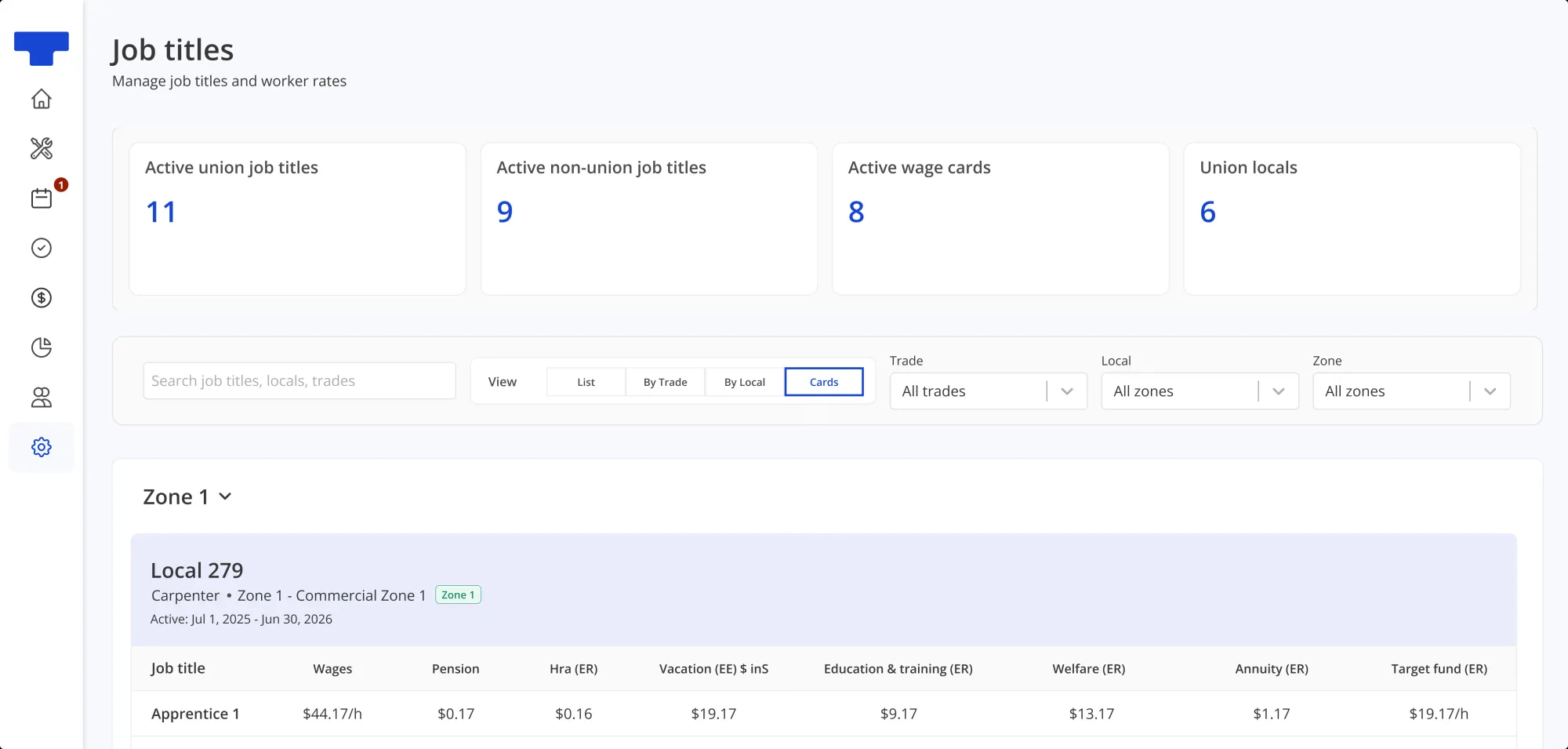

Union payroll is an important system used by contractors who work with unionized labor. It ensures workers receive correct wages, benefits, and protections under union agreements. This type of payroll follows strict rules that differ from standard payroll systems.
Managing union payroll can be complex because it includes multiple wage rates, benefit contributions, and reporting rules. Contractors must stay accurate and organized to avoid mistakes that can lead to penalties or disputes.
Many construction companies also use digital tools to handle reporting tasks more easily. These systems help track hours, calculate wages, and manage required deductions in one place.
Union payroll rules and contractor responsibilities explained
Union payroll follows specific agreements between employers and labor unions. These agreements set wage rates, overtime rules, and benefit requirements that must be followed carefully.
Contractors working on union projects must ensure every worker is paid correctly and reported properly. Many companies rely on union payroll systems to help manage these strict requirements and reduce errors in reporting.
Key responsibilities include:
- Paying agreed union wage rates
- Tracking daily and weekly work hours
- Reporting fringe benefits and contributions
- Following union contract rules
- Keeping accurate payroll records
These steps help ensure fair pay and full compliance with labor agreements.
Union payroll processing and reporting steps
Union payroll processing requires careful tracking and detailed reporting. Every hour worked must match the correct job classification and wage rate.
A typical workflow includes:
- Recording employee work hours daily
- Applying correct union wage rates
- Calculating overtime and benefits
- Preparing weekly payroll reports
- Submitting required union documentation
Many contractors use union payroll tools to automate calculations and improve accuracy. This helps reduce manual errors and keeps reports consistent.
Union payroll benefits for contractors and workers
Union payroll offers strong benefits for both employers and employees. It ensures fair pay and clear records for all work performed under union agreements.
Contractors benefit from:
- Clear wage structure rules
- Reduced payroll disputes
- Better compliance with labor agreements
- Organized reporting systems
Workers benefit from:
- Guaranteed wage standards
- Protected overtime pay
- Health and benefit contributions
- Transparent payment records
Union payroll helps build trust between workers and employers by keeping pay systems fair and consistent.
Union payroll compliance challenges and solutions
Even though union payroll is structured, it can still be difficult to manage. Different job roles and wage rules can create confusion.
Common challenges include:
- Multiple wage classifications
- Complex benefit contributions
- Frequent reporting requirements
- Risk of calculation errors
To solve these issues, many contractors use automated payroll systems designed for union reporting. These tools help reduce manual work and improve accuracy across all payroll tasks.
Using a reliable union payroll system also helps businesses stay prepared for audits and inspections by keeping records organized and up to date.
Frequently Asked Questions
What is union payroll?
Union payroll is a system used to pay workers under union agreements with set wages, benefits, and rules.
Who needs to follow union payroll rules?
Contractors and employers working with unionized workers must follow union payroll requirements.
How is union payroll different from regular payroll?
It includes specific wage rates, benefits, and reporting rules based on union contracts.
Why is union payroll important?
It ensures fair pay, legal compliance, and proper tracking of worker benefits.
What information is included in union payroll?
It includes wages, hours worked, overtime, benefits, and job classifications.
Can union payroll be automated?
Yes, many companies use software tools to manage calculations and reporting automatically.
Conclusion
Union payroll is essential for contractors working with union labor. It ensures fair wages, proper benefits, and compliance with strict labor agreements. By maintaining accurate records and following clear processes, businesses can avoid errors and keep operations smooth. Using structured systems also helps simplify reporting and improve overall payroll management.





























Sign in to leave a comment.