
Trauma is a pervasive issue that affects countless individuals worldwide. It can stem from various experiences, such as abuse, accidents, natural disasters, or witnessing violence. The effects of trauma can be long-lasting and impact various aspects of a person\'s life, including their mental health, relationships, and overall well-being.
While traditional talk therapy has been the go-to approach for treating trauma, a growing body of research suggests that somatic experiencing, a body-oriented therapy, can be highly effective in helping individuals heal from trauma. In this blog post, we will explore what somatic experiencing is, how it works, and why it can be a powerful tool for trauma recovery. If you are looking for professional somatic experiencing therapy in Vancouver to heal your trauma then Empower Health can be your reliable partner.
What is Somatic Experiencing?
Somatic experiencing is a therapeutic approach developed by Dr. Peter Levine, a psychologist and biophysicist. It is based on the idea that trauma is not just a psychological issue but also a physiological one. When a person experiences a traumatic event, their body\'s natural fight, flight, or freeze response is activated. If the person is unable to complete this response and discharge the energy associated with it, the trauma can become trapped in the body, leading to a wide range of physical and emotional symptoms.
Somatic experiencing aims to help individuals release this trapped energy and restore their body\'s natural equilibrium. It does this by gently guiding the person to become aware of their bodily sensations, feelings, and emotions related to the traumatic event. By doing so, the individual can begin to process the trauma in a safe and controlled manner, allowing their body to complete the natural response that was interrupted during the original event.
How Does Somatic Experiencing Work?
Somatic experiencing sessions typically involve a therapist guiding the client through a series of exercises designed to help them become more aware of their bodily sensations and feelings. These exercises may include:
Body scanning
The therapist may ask the client to focus their attention on different parts of their body, noticing any sensations, tension, or emotions that arise.
Pendulation
This involves guiding the client to alternate their attention between areas of comfort and discomfort in their body, helping them to build resilience and regulate their nervous system.
Titration
The therapist may encourage the client to slowly and gradually approach traumatic memories or sensations, allowing them to process the trauma in small, manageable doses.
Resource building
The therapist may help the client identify and strengthen internal and external resources, such as positive memories, supportive relationships, or calming imagery, which can be used to counterbalance the distressing sensations associated with the trauma.
Throughout the process, the therapist remains attuned to the client\'s bodily responses, helping them to stay grounded and within their window of tolerance. By working at a pace that feels safe and manageable for the client, somatic experiencing can help them to gradually release the trapped energy associated with the trauma and restore a sense of safety and control.
Benefits of Somatic Experiencing for Trauma Recovery
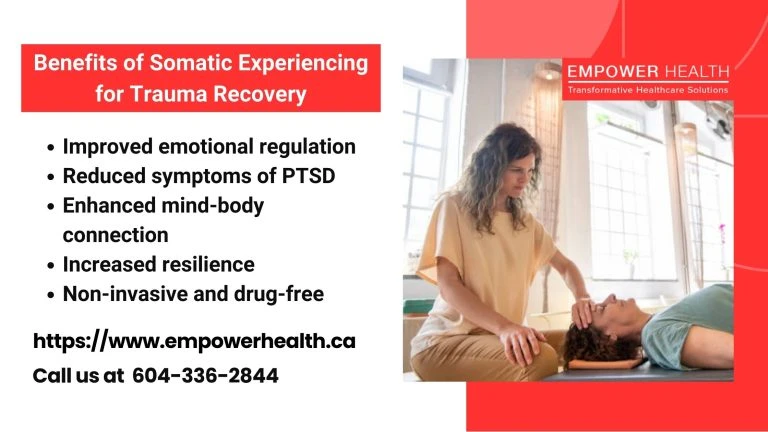
Research has shown that somatic experiencing can be highly effective in treating a wide range of trauma-related conditions, including post-traumatic stress disorder (PTSD), anxiety, depression, and chronic pain. Some of the key benefits of somatic experiencing for trauma recovery include:
Improved emotional regulation
By helping individuals become more aware of their bodily sensations and feelings, somatic experiencing can improve their ability to regulate their emotions and respond to stress in healthier ways.
Reduced symptoms of PTSD
Studies have found that somatic experiencing can significantly reduce symptoms of PTSD, such as intrusive memories, avoidance behaviors, and hyperarousal.
Enhanced mind-body connection
Somatic experiencing can help individuals develop a greater sense of connection between their mind and body, promoting a more holistic approach to healing.
Increased resilience
By building internal and external resources, somatic experiencing can help individuals become more resilient in the face of future stressors and challenges.
Non-invasive and drug-free
Unlike some other treatments for trauma, somatic experiencing is a non-invasive, drug-free approach that can be used safely with a wide range of individuals.
Conclusion
Trauma is a complex issue that requires a multifaceted approach to treatment. While traditional talk therapy can be helpful for some individuals, somatic experiencing offers a unique and powerful tool for trauma recovery. By focusing on the body\'s natural healing mechanisms and helping individuals to release trapped energy associated with traumatic experiences, somatic experiencing can promote deep and lasting healing. If you or someone you know is struggling with the effects of trauma, consider exploring somatic experiencing as a potential pathway to recovery.
FAQs (Frequently Asked Questions)
Q: What is somatic experiencing, and how does it differ from traditional talk therapy?
A: Somatic experiencing is a body-oriented therapy that focuses on the physiological aspects of trauma. Unlike traditional talk therapy, which primarily addresses thoughts and emotions, somatic experiencing emphasizes the role of the body in processing and releasing traumatic experiences.
Q: Who can benefit from somatic experiencing?
A: Somatic experiencing can be helpful for individuals struggling with a wide range of trauma-related conditions, including PTSD, anxiety, depression, and chronic pain. It can be used safely with adults, children, and adolescents.
Q: What happens during a somatic experiencing session?
A: During a somatic experiencing session, a therapist guides the client through exercises designed to increase body awareness, regulate the nervous system, and process traumatic experiences. These exercises may include body scanning, pendulation, titration, and resource building.
Q: How long does somatic experiencing treatment typically last?
A: The length of somatic experiencing treatment varies depending on the individual\'s needs and the severity of their trauma. Some people may experience significant improvement after just a few sessions, while others may require longer-term treatment.
Q: Is somatic experiencing supported by research?
A: Yes, numerous studies have demonstrated the effectiveness of somatic experiencing in treating trauma-related conditions. Research has shown that somatic experiencing can significantly reduce symptoms of PTSD, anxiety, and depression, and improve overall well-being.
Q: Can somatic experiencing be used in conjunction with other therapies?
A: Yes, somatic experiencing can be used in conjunction with other therapies, such as cognitive-behavioral therapy (CBT), eye movement desensitization and reprocessing (EMDR), or medication management. Many therapists incorporate somatic experiencing techniques into their existing treatment approaches.
Q: Is somatic experiencing covered by insurance?
A: Coverage for somatic experiencing varies depending on your insurance provider and plan. Some insurance companies may cover somatic experiencing as part of mental health treatment, while others may not. It\'s best to check with your insurance provider to determine your coverage options.
Q: Can somatic experiencing be done online or remotely?
A: Yes, somatic experiencing can be conducted online or remotely through video conferencing platforms. Many practitioners have adapted their services to offer virtual sessions, making somatic experiencing more accessible to individuals who cannot attend in-person sessions.
Q: What can I expect after completing somatic experiencing treatment?
A: After completing somatic experiencing treatment, many individuals report feeling more grounded, resilient, and empowered. They may experience a reduction in trauma-related symptoms, improved emotional regulation, and a greater sense of mind-body connection. However, it\'s essential to remember that healing is an ongoing process, and it\'s crucial to continue practicing self-care and seeking support when needed.











Sign in to leave a comment.