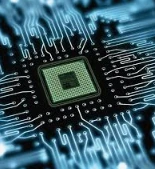

Integrated Circuits (ICs) are the unsung heroes of the electronics world, serving as the building blocks for countless electronic devices. Their ability to integrate multiple electronic components onto a single chip has revolutionized the field of semiconductors. In this exploration, we unveil the diverse landscape of Integrated Circuits, showcasing their types, applications, and the pivotal role they play in shaping modern technology.
Understanding Integrated Circuits:
What are Integrated Circuits?
Integrated Circuits, commonly known as ICs or microchips, are compact assemblies of transistors, resistors, capacitors, and other electronic components. These components are fabricated on a semiconductor material, typically silicon, forming a miniature electronic circuit.
Types of Integrated Circuits:
Analog Integrated Circuits (ICs):
Designed for continuous signals.Common applications include amplifiers, voltage regulators, and audio processors.Notable examples: Operational Amplifiers (Op-Amps), Analog-to-Digital Converters (ADCs).Digital Integrated Circuits (ICs):
Process discrete signals (0s and 1s).Found in microprocessors, microcontrollers, memory chips, and digital signal processors.Notable examples: Microcontrollers (e.g., PIC, AVR), Field-Programmable Gate Arrays (FPGAs).Mixed-Signal Integrated Circuits:
Combine both analog and digital functions on the same chip.Widely used in applications where analog and digital components coexist, such as in data converters.Notable examples: Analog Front-End (AFE) ICs, Digital Signal Controllers (DSCs).Power Management ICs:
Specialized ICs for managing power distribution and consumption.Found in battery chargers, voltage regulators, and power supply units.Notable examples: Voltage Regulators, Power Management Units (PMUs).Radio-Frequency Integrated Circuits (RFICs):
Designed for handling radio frequencies.Integral in wireless communication devices, such as RF transceivers.Notable examples: RF Amplifiers, RF Mixers.Application-Specific Integrated Circuits (ASICs):
Tailored for specific applications.Custom-designed for dedicated functions, optimizing performance and power efficiency.Notable examples: ASICs for automotive control, industrial automation.Applications of Integrated Circuits:
Consumer Electronics:
ICs power devices like smartphones, televisions, and audio systems.Digital signal processors enhance audio and video processing.Computing Systems:
Microprocessors and microcontrollers drive computers and embedded systems.Memory ICs store and retrieve data in various computing devices.Communication Systems:
RFICs enable wireless communication in mobile phones and Wi-Fi routers.Digital ICs process data in communication networks.Automotive Electronics:
ASICs control engine management systems and in-car entertainment.Power management ICs regulate electrical systems in vehicles.Industrial Automation:
ICs play a crucial role in programmable logic controllers (PLCs) and automation systems.Analog ICs monitor and control industrial processes.Medical Devices:
ICs are integral to medical imaging devices, patient monitors, and diagnostic equipment.Analog ICs process signals from sensors in medical applications.Conclusion:
Integrated Circuits are the backbone of modern electronics, enabling the seamless integration of complex electronic functions. From powering smartphones to controlling industrial processes, their diverse types cater to an extensive range of applications. As technology continues to advance, the role of Integrated Circuits in shaping our interconnected world becomes even more pronounced. Embracing the diversity of ICs is key to unlocking the full potential of electronic innovation and pushing the boundaries of what is possible in the realm of semiconductor technology. Exploring Xecor, a prominent distributor of electronic components in Japan. It provides new, original Semiconductors electronic components and tailored solutions to fulfill your requirements.









Sign in to leave a comment.