A well-equipped nutrition laboratory is essential for delivering practical knowledge and skill-based learning in nursing education. The Nutrition Lab Articles List as per INC plays a crucial role in helping institutions meet academic standards while ensuring students gain hands-on experience. With evolving healthcare needs, aligning lab infrastructure with updated requirements is more important than ever. Institutions that follow structured guidelines not only improve learning outcomes but also enhance their credibility in the education sector.
Importance of a Nutrition Lab in Nursing Education
Nutrition labs are designed to teach students about balanced diets, therapeutic nutrition, food preparation, and patient care. These labs bridge the gap between theoretical knowledge and practical application. As per the Indian Nursing Council Norms and Guidelines, every nursing college must maintain a fully functional nutrition lab to support comprehensive training.
A properly set-up lab helps students understand dietary planning for different health conditions such as diabetes, hypertension, and malnutrition. It also prepares them to guide patients in real-world healthcare settings.
Key Components of Nutrition Lab Articles List
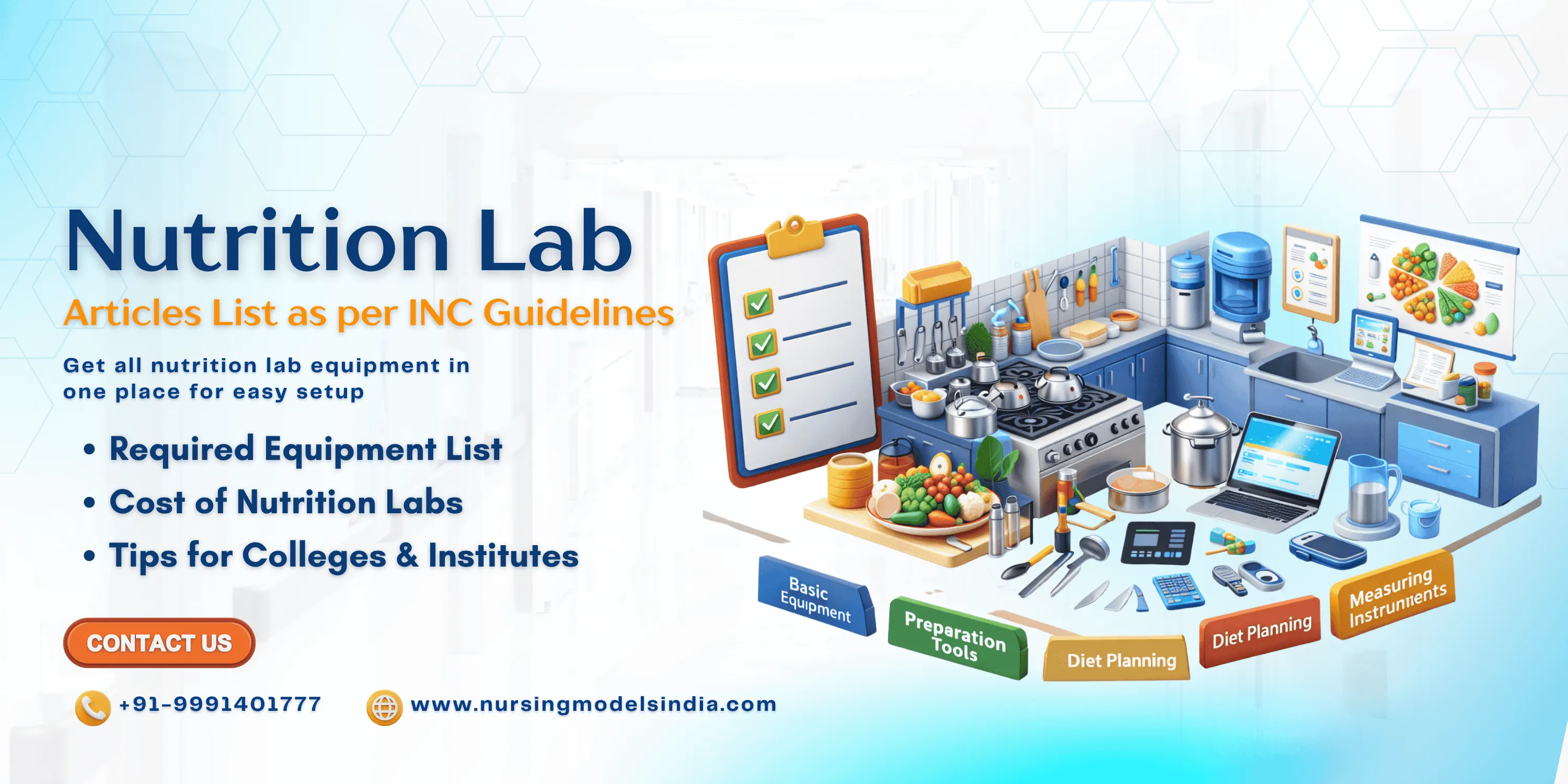
When preparing a Nutrition Lab Articles List as per INC, institutions must ensure inclusion of essential tools and equipment that support both demonstration and practice. Below are the major categories:
1. Basic Kitchen Equipment
- Gas stove or induction cooktop
- Pressure cookers
- Cooking utensils (pans, pots, ladles)
- Mixer grinder and blender
- Refrigerator
These items form the backbone of any nutrition lab, enabling students to prepare various diets and recipes efficiently.
2. Measuring and Weighing Instruments
- Digital weighing scale
- Measuring cups and spoons
- Food portion scales
Accurate measurement is a critical aspect of diet planning, and these tools help students learn precision in nutritional calculations.
3. Food Preparation Tools
- Cutting boards and knives
- Peelers and graters
- Mixing bowls
- Baking trays
These tools support the preparation of diverse meals while maintaining hygiene and safety standards.
4. Storage and Serving Equipment
- Food storage containers
- Serving dishes and trays
- Diet plates and bowls
Proper storage ensures food safety and hygiene, which are key aspects of nursing practice.
5. Educational Aids
- Charts on food groups and nutrients
- Models showing balanced diets
- Posters on therapeutic diets
Visual aids play a vital role in helping students understand nutritional concepts effectively.
Aligning with Standards
To ensure compliance, institutions must regularly update their lab infrastructure according to the Indian Nursing Council Norms and Guidelines. These standards are designed to maintain uniformity across nursing colleges and ensure quality education nationwide.
At the same time, having a well-structured Nutrition Lab Articles List as per INC helps administrators plan procurement, manage budgets, and maintain consistency in lab setup. It also simplifies inspections and accreditation processes.
Modern labs are now incorporating advanced tools such as digital nutrition analysis software and smart kitchen appliances. While these are not always mandatory, they add value to the learning experience and prepare students for technologically advanced healthcare environments.
Benefits of Following INC Guidelines
Adhering to standardized guidelines offers multiple advantages:
- Improved Learning Outcomes: Students gain hands-on experience with real-life scenarios.
- Better Compliance: Institutions meet regulatory requirements easily.
- Enhanced Reputation: A well-equipped lab attracts more students and recognition.
- Practical Skill Development: Students become confident in dietary planning and patient care.
Tips for Setting Up an Effective Nutrition Lab
Creating a functional nutrition lab requires careful planning and attention to detail. Here are some practical tips:
- Ensure proper ventilation and hygiene standards.
- Arrange equipment systematically for easy access.
- Maintain regular inventory checks.
- Train staff and students on equipment usage.
- Upgrade tools periodically to match modern standards.
By following these steps, institutions can create a lab that supports both teaching and learning efficiently.
Future Trends in Nutrition Labs
With advancements in healthcare education, nutrition labs are evolving rapidly. Digital tools, simulation-based learning, and interactive modules are becoming common. Institutions are also focusing on sustainability by using energy-efficient appliances and eco-friendly materials.
These trends highlight the importance of continuously updating the Nutrition Lab Articles List as per INC to stay relevant and competitive in the education sector.
Conclusion
In conclusion, setting up a nutrition lab according to standardized requirements is essential for delivering quality nursing education. A well-planned Nutrition Lab Articles List as per INC ensures that students receive practical exposure and develop essential skills for patient care. By aligning infrastructure with the latest Indian Nursing Council Norms and Guidelines, institutions can maintain compliance, improve training quality, and build a strong foundation for future healthcare professionals.
Investing in the right equipment and maintaining updated standards is not just a requirement—it is a step toward excellence in nursing education.




























Sign in to leave a comment.