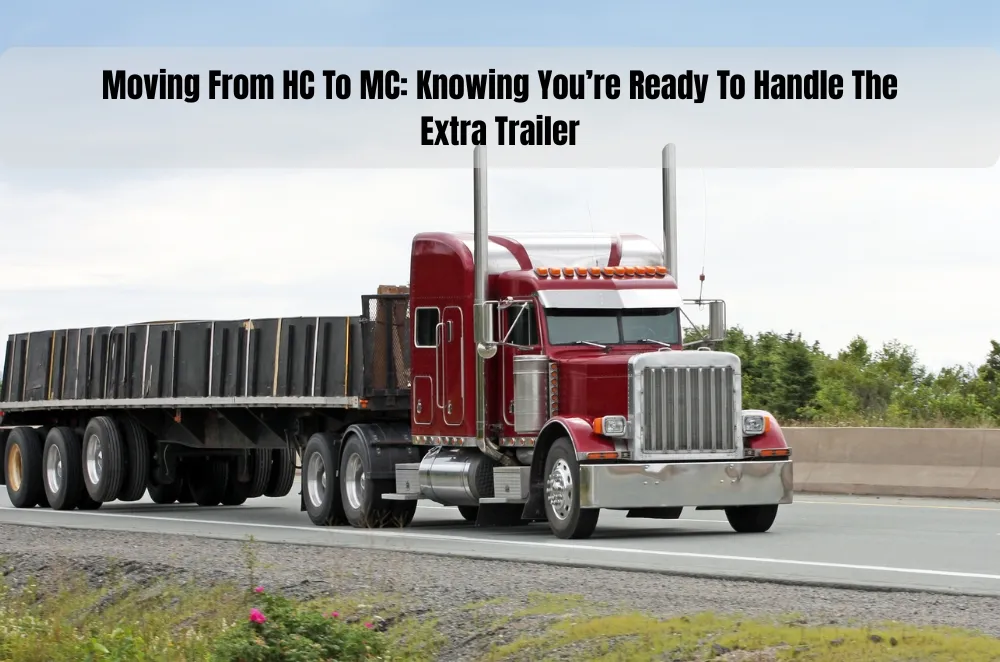

A Licence Is More Than A Card In Your Wallet
Hauling a second trailer changes everything: turning arc, braking distance, fatigue management and the way traffic treats you on Sydney’s M5. The jump from Heavy Combination (HC) to Multi-Combination (MC) isn’t just about ticking another box; it’s about proving you can keep people, freight and infrastructure safe. If you’re eyeing bigger contracts or line-haul work, start by reading up on the official pathway to a Multi Combination licence in NSW and the competencies the assessor will look for.
HC Versus MC: Where The Real Differences Kick In
The lingo makes it sound like you’re simply adding another trailer, but the step up ripples through every shift.
| Area | Heavy Combination (HC) | Multi-Combination (MC) |
|---|---|---|
| Legal gross mass | Up to 42.5 t (general mass limits) | 62.5 t B-double, 68.5 t road train (with permits) |
| Typical set-up | Prime mover + single semi or rigid + trailer | B-double, B-triple, A-double, road train |
| Extra articulation points | One | Two or more |
| Turning clearance | Wide but predictable | Requires off-tracking calculation at every corner |
| Coupling checks | Standard fifth-wheel and air-line routine | Multiple couplings plus converter dolly inspection |
| Training hours (average) | 1–2 days for experienced HR drivers | 3–5 days of competency-based assessment plus simulated road-train scenarios |
Notice how the environment gets exponentially more complex once you add joints. It’s why experienced HC drivers still hit the yard after work to practise crawling in reverse between witches’ hats before test day.
Signs You’re Ready To Step Up
A formal prerequisite is holding your HC for at least 12 months, but the calendar alone doesn’t build muscle memory. Look for these practical cues:
- You finish long HC runs without arriving mentally wiped.
- Loading managers trust you with oversize or time-sensitive freight.
- You correct a trailer drift instinctively rather than reacting late.
- Yard hands already ask for your help parking their rigs.
If those boxes feel familiar, diving into a detailed breakdown of the MC truck licence requirements can show you which gaps still need closing before test day.
Getting Comfortable With Additional Couplings
A converter dolly demands routine checks most HC drivers never touch: pintle hooks, safety chains, turntable tension. Practise the walk-around until each latch position is second nature—better to spot a loose ring-feeder in the yard than on the Hume.
2026 Training Trends Shaping The Classroom
Simulation rigs have moved beyond basic VR headsets. Many Sydney schools now run motion-platform sims that replicate trailer sway on cross-winds roaring off the Blue Mountains. Trainees who spend at least two hours in a modern sim pick up low-speed reversing up to 30 percent quicker, according to TAFE facilitators we spoke with. Schools charging extra for sim time might feel pricey, yet those sessions often shave a full day off on-road assessment.
Fatigue Modules Are Getting Stricter
Since the 2025 review of the Heavy Vehicle National Law, trainers must document not just that you know the work diary rules but that you can apply split-rest strategies on multi-leg runs. Expect scenario-based quizzes mid-course rather than a single theory exam at the end.
Regulatory Watch: Permits And Network Access
Even after you pass the test, parts of metropolitan Sydney remain off-limits to B-doubles during peak windows. The National Heavy Vehicle Regulator’s interactive map updates route curfews quarterly, so set a calendar reminder. Recent changes mean Victoria Road now allows B-doubles overnight between Rozelle and West Ryde—handy intel for container work out of Port Botany. Final decisions sit with the National Heavy Vehicle Regulator, and ignorance won’t save you from an on-the-spot fine.
The Road Ahead
Upgrading to MC isn’t about chasing a shinier plastic card. It’s about expanding your earning ceiling while proving you can haul heavier loads without raising the risk curve for everyone else stuck in the 6 pm crawl through Liverpool. Take stock of your current confidence, seek trusted truck driver training advice, drill the new coupling checks until they feel mundane, invest in realistic simulation hours and keep one eye on route permits that shift with every council review. Nail those pieces and the extra trailer becomes routine—just another day behind the wheel rather than a white-knuckle leap into the unknown.

























Sign in to leave a comment.