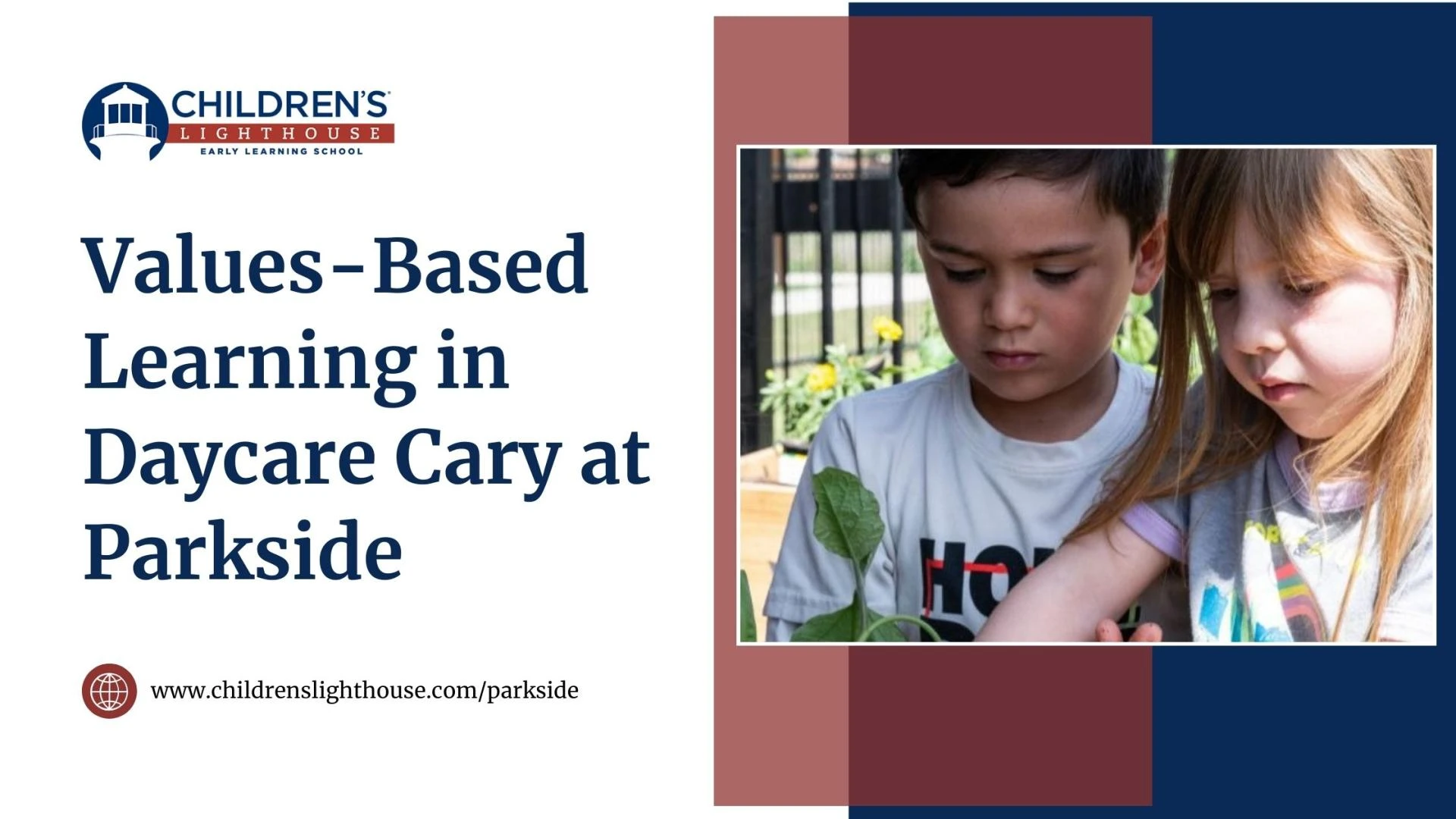

Children spend a significant portion of their early years in childcare. So what they're actually learning there, beyond the ABCs and 123s, really matters. Most parents don't realize just how important this is. Daycare Cary centers that focus only on academics are missing something big. Real growth occurs when values are woven into everyday learning, rather than being treated as something separate.
Beyond Traditional Academics
Look, most childcare places stick to the basics. Reading, math, shapes, and colors. Sure, that's important. But it's not enough on its own. Kids need to learn how to treat people. How to handle disappointment when things don't go their way. What honesty actually looks like in real situations, not just in storybooks.
Children's Lighthouse Parkside gets this. They blend character development straight into the daily routine. It's not an afterthought or a lesson they tack on at the end of the day. It's built right in.
Integrating Values with Core Skills
Here's what's interesting: teaching values doesn't slow down academic progress at all. It actually makes it stronger. When kids understand why sharing matters, they grasp cooperation better. When they learn about respect, they listen more carefully. These skills feed into each other.
That's the beauty of mixing them. You're not taking time away from math or reading. You're making both of them more meaningful and actually easier to learn.
Character Value Friends in Action
Each month brings a new character focus into the mix. Kids meet these value-centered characters through stories and activities that feel natural and engaging, not preachy or forced. They talk about what these values actually look like in real life. On the playground. At home. In the classroom. Not just abstract ideas floating around, but situations kids face every single day.
- Monthly character introductions keep learning fresh and engaging
- Real-world stories help kids connect values to their own experiences
Building the Whole Child
Children's Lighthouse Cary knows that development isn't one-size-fits-all. Every kid is different, and they deserve to be seen that way. Small group instruction means teachers actually notice each child. They catch their strengths and their struggles. They figure out what clicks for each kid. Personalized support makes a real difference in how kids grow.
A kid who needs extra help with social skills gets it. Another who's ready to move ahead gets challenged to do better. That's the personalized approach that works.
Small Groups and Personalized Support
When groups are smaller, teachers can actually respond to what each child needs. Kids get more attention. They ask more questions because they feel like someone's listening. They take bigger risks in learning because they feel safe doing it. That safety matters way more than people think.
All-Inclusive Convenience for Families
Families juggle a lot. Between work and life and everything else, childcare logistics can get messy. That's why flexible options make such a difference. Full-day programs, part-time options, flexible scheduling, and age-appropriate classes mean the daycare actually works with your family life, not against it.
Long-Term Impact on Success
Kids who learn values early tend to do better when they get to school and beyond. They handle conflict better. They make smarter choices. They care about more than just getting good grades or winning at everything.
Final Words
Choosing childcare is honestly one of the biggest decisions families make. Options vary all over the place, but finding one that builds character alongside academic skills sets kids up for real success. Parkside manages to do both well, and that makes all the difference.




























Sign in to leave a comment.